





















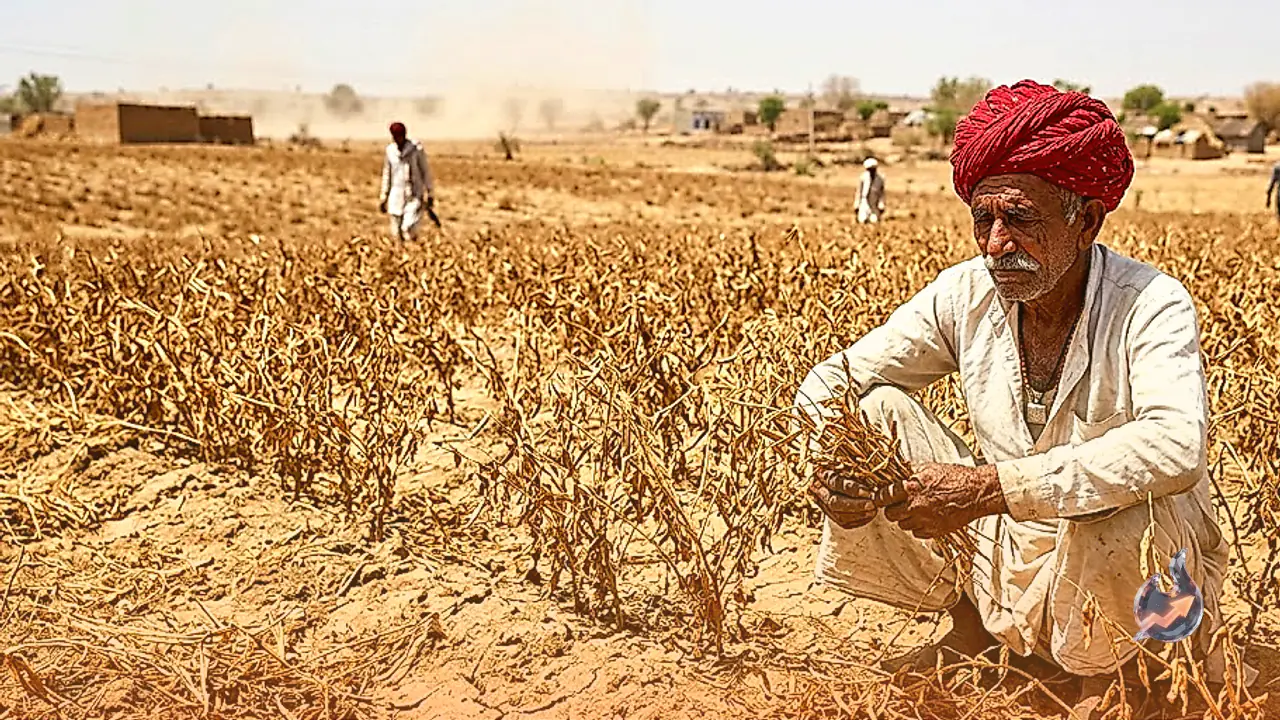

Farmers across Butati Dham and most rural pockets in Rajasthan's Nagour district watched their high hopes for the guar harvest turn into despair as adverse weather ravaged the fields. Buoyed by a promising onset of the monsoon season, cultivators had sown guar on a massive scale. Hoping for a bountiful yield, they invested thousands of rupees per bigha on expensive seeds, fertilizers, ploughing, weeding, and pesticides. However, just as the crops reached the crucial final stage of growth and pod formation, the rains abruptly halted, leaving the standing plants in the fields to turn yellow, black, and wither away entirely.
Dependence on Rain-Fed Farming Wsors the Drought
A vast majority of cultivators in the district rely heavily on rain-fed agriculture. With no rainfall for an extended period, the moisture content in the soil has almost completely depleted. The plants, which desperately needed adequate moisture and precipitation at this juncture, have grown frail from water scarcity. Farmers note that in the absence of proper irrigation facilities, they have zero alternative options to save their drying fields. Left helpless, cultivators now gaze constantly toward the sky, praying for rain to salvage whatever is left.
Hot Dry Winds and Pests Compound the Damage
Adding insult to injury during the rain deficit, recent spells of hot and dry western winds severely aggravated the agricultural distress. Locally referred to as okar, these searing winds rapidly drained the moisture from the stems and leaves of the plants. Blossoms are withering and dropping off, weakening the crop even before pods can form. In many fields, the plants appear scorched from top to bottom. Compounding this moisture stress, the sudden surge of destructive pests and diseases such as whitefly and wilt has further deepened the anxiety of local growers.
Sunk Investments and Wasted Labour
Growers emphasize that they left no stone unturned in trying to protect their yields. They purchased top-quality seeds for sowing, carried out meticulous weeding, and sprayed chemical treatments twice over the fields. Despite all these efforts and expenses, the lack of rainfall rendered their hard work completely worthless. Cultivators point out that timely precipitation would have easily covered their expenditures on seeds, tractor rentals, fertilizers, labour, and medicines, while leaving some anticipated income for their families.
Impending Fodder Shortage Threatens Livestock
The fallout of this ruined harvest extends far beyond a hit to agricultural incomes. There is little to no likelihood of obtaining the customary fodder derived from guar and mung bean crops this season. This shortfall threatens to create an acute shortage of fodder and water for livestock owners across the region. Farmers warn that if good rains do not arrive within the next few days, guar production will plummet drastically, potentially triggering famine-like conditions across the area. For now, the gaze of every farmer remains fixed squarely on the sky rather than the soil.