



















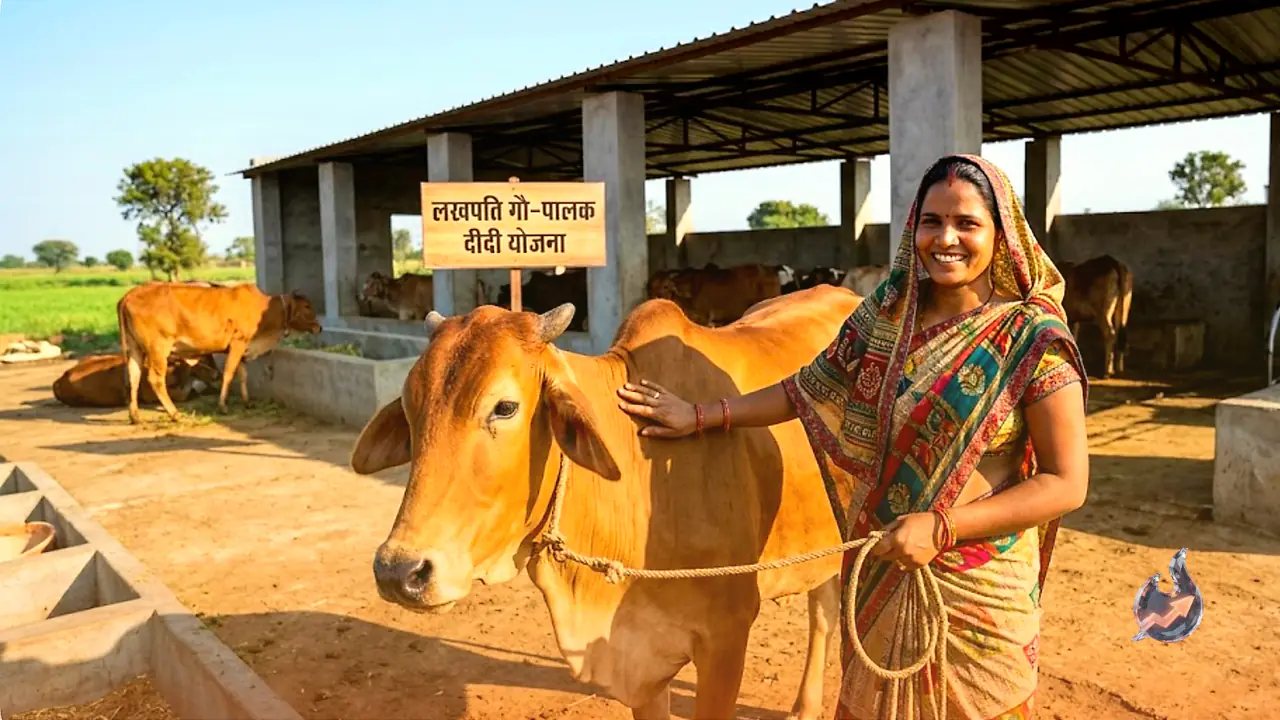

Whether it is farming or animal husbandry, the work stays unfinished without the women of the village. From transplanting paddy to weeding and harvesting, their labour goes into every task, big and small. That is exactly why government schemes are now being designed with these women at the centre. In that spirit, the Animal Husbandry and Dairy department of Madhya Pradesh has launched the 'Lakhpati Gau-Palak Didi' scheme, aimed at boosting women's income. Here is what the scheme is and which women stand to benefit directly from it.
The biggest draw of the scheme is that women do not have to spend a single rupee of their own. With zero capital investment, it offers maximum benefit on both the genetic and the financial side. The method is simple: native, ordinary breed cows and buffaloes undergo artificial insemination using high breed semen, which produces improved breed female calves. The Madhya Pradesh government has rolled out the scheme with the goal of doubling milk production.
How the earnings cross 10 lakh
Balaghat veterinarian Pankaj Pusam broke down the entire process in plain terms. According to him, semen from an improved breed animal is used to artificially inseminate an ordinary animal, which then gives birth to an improved breed calf. The advantage is that an improved breed animal can raise milk output by up to two and a half times.
Pankaj Pusam explains that a single improved breed calf gives birth five to 8 times over its lifetime. By this measure, a livestock owner can earn between three and four lakh rupees from just one animal. If a woman keeps three to four such animals, she can comfortably earn up to 10 lakh rupees.
Balaghat leads in artificial insemination
On this front, Balaghat district has secured the top spot in the entire state. The district came first by carrying out 58 percent artificial insemination among native animals, and it has also recorded a 67 percent achievement in total artificial insemination.
The list of the district's achievements does not stop there. It managed the return of 66 kits from inactive Maitri Gau Sevaks, used 1756 sex sorted semen straws, carried out 96 artificial inseminations through AVFO, and organised 277 camps in Ksheerdhara villages. On top of that, the district completed 67.51 percent vaccination in the seventh phase of the FMD vaccination drive.