



















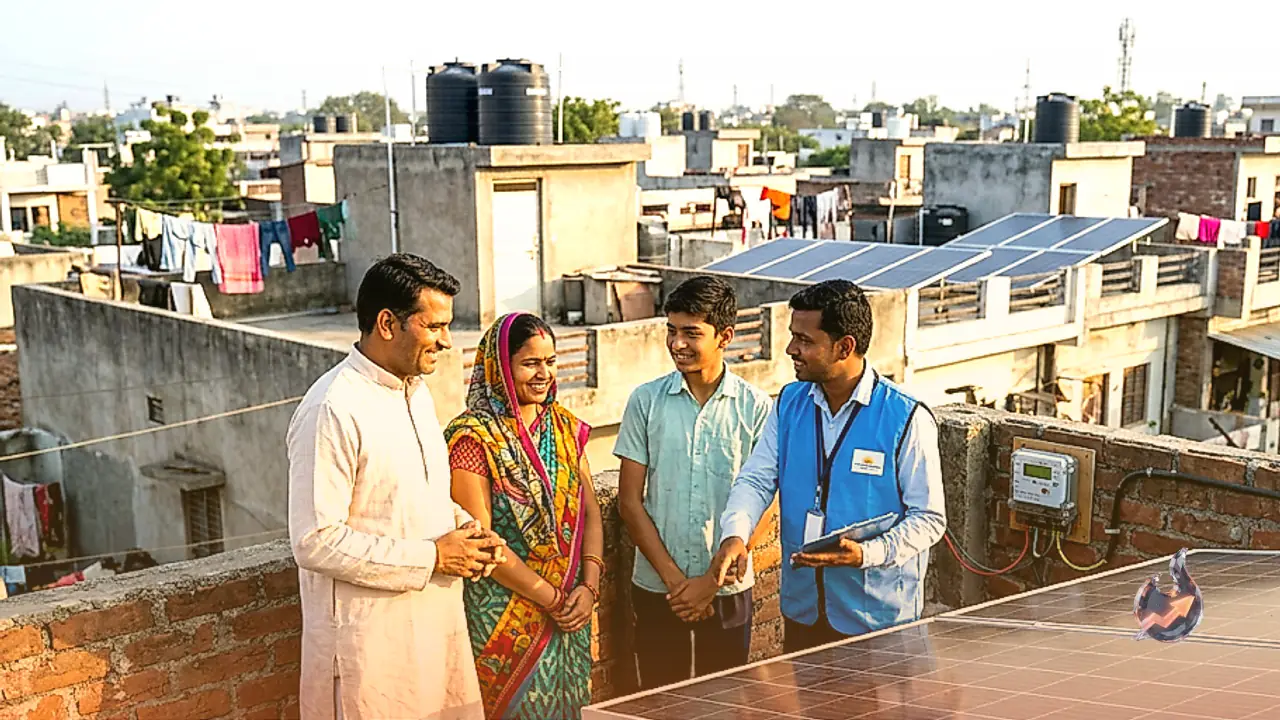

Millions of households across the nation have found major relief from expensive electricity costs. Prime Minister Narendra Modi initiated a focused effort that has successfully lowered power bills for 66 lakh homes in the country. Union Minister Pralhd Joshi announced that under the 'PM Surya Ghar Muft Bijli Yojana', which was launched to promote clean energy, solar power plants have now been installed in nearly 66 lakh homes. This initiative is directly delivering financial benefits to ordinary citizens by reducing their monthly utility expenses.
Rapid Acceleration in Rooftop Solar Installations
The speed of installing rooftop solar power plants has accelerated significantly over recent periods. According to official data, during the initial phase of the scheme, installing the first one lakh plants used to take 118 days. However, the operational pace has transformed drastically, and currently, a similar number of plants are being installed in an average of just six days. The ministry is now working toward reducing this duration further to five days to fast-track adoption nationwide.
Progress Toward Targets and State Contributions
The overarching scheme initially set a target to benefit one crore families, out of which 66 lakh households have already reaped the rewards. Highlighting regional participation, Andhra Pradesh alone has connected 7.86 lakh homes with rooftop solar energy systems. Through this framework, the electricity bills for farmers and ordinary families have not only been reduced to zero, but they are also generating surplus electricity beyond their domestic needs and earning an income from it.
Massive Growth in Capacity and Non-Fossil Fuel Share
Solar energy generation capacity within the country has witnessed a phenomenal surge, climbing from 2.8 gigawatts in 2014 to a massive 175 gigawatts today. The Union Minister noted that the share of non-fossil fuel sources in the country's total installed electricity generation capacity now stands at approximately 55 percent. Driven by these figures, India is steadily advancing toward its ambitious national target of achieving 500 gigawatts of non-fossil energy capacity by the year 2030.
Furthermore, reference was made to the upcoming 'PM-Kusum 2' scheme, which will further expand the scope of running agricultural equipment and irrigation pumps using solar power. Within the renewable energy sector, investment proposals worth Rs 43,871 crore have been lined up through 17 Memorandums of Understanding and three government orders. This influx of capital is expected to generate approximately 4,700 new employment opportunities.
Addressing the broader picture of energy security, the official highlighted that India's peak electricity demand has escalated from 123 gigawatts in 2012 to a recent high of 270 gigawatts. Reflecting on past vulnerabilities, a major grid failure in 2012 had previously caused a complete power outage across northern India lasting about 72 hours, but robust preventive measures and solutions have now been established beforehand to handle such challenges effectively.