





















Since antiquity, India has been romantically and economically referred to as the 'Golden Bird' due to its legendary wealth and abundant precious metals. Recently, the commencement of operations at the country's first major private gold mine in the Kurnool district of Andhra Pradesh has reignited this historical imagery, triggering widespread curiosity and discussion. Across the nation, citizens and economic observers are asking whether this development signals a return to domestic gold self-sufficiency. People are also questioning whether this breakthrough will substantially lower the nation's massive import reliance and inject much-needed strength into the national economy. While the announcement appears highly promising on the surface, the underlying economic reality is far more nuanced. This initiative represents much more than the mere launch of a commercial mining site; it marks the dawn of a new era of private sector participation in India's highly regulated mineral resource industry. However, it is vital to recognize that this single development will not instantly transform India into a self-reliant gold producer. To truly comprehend the scope and impact of this milestone, we must analyze the entire narrative in detail.
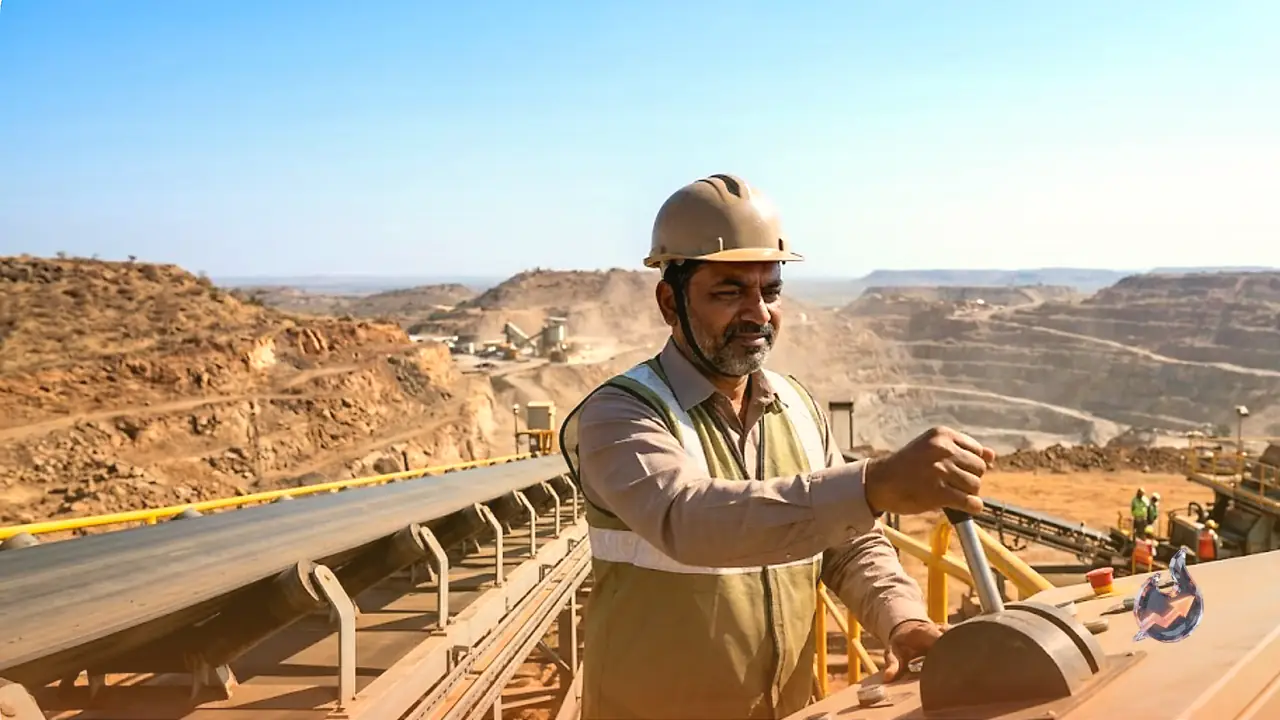
Situated in the Jonnagiri village of Kurnool district, Andhra Pradesh, which has now been aptly rechristened Swarnagiri, the nation's first major private sector gold mining facility has officially kicked off its operations. Constructed with an impressive capital investment of approximately Rs 400 crore, the project leverages state-of-the-art open-pit mining techniques to extract precious metal ores. Early geological surveys and advanced core drilling research have already confirmed a resource base of over 13 metric tons of pure gold within the designated site. Furthermore, geological experts estimate that continued exploration and deeper assessments could reveal expanded reserves of up to 42 metric tons over time. Crucially, this immense reserve will not be extracted all at once. According to the operational roadmap, the site is projected to yield about 400 kilograms of gold in its inaugural year of operation. As the facility scales up its processing capacity, output is expected to rise gradually to between 900 kilograms and 1 metric ton per annum. While this marks an exceptional milestone for the domestic extraction industry, it represents only a small fraction of the country's massive annual gold appetite.
The Mechanics of Open-Pit Mining and Private Investment
The establishment of the Swarnagiri mine represents a fundamental departure from India's traditional mining policies. Since independence, the exploration and extraction of precious minerals have been almost exclusively under the purview of public sector undertakings. This project represents the first instance where a substantial, commercially viable gold deposit has been leased to and developed by a private corporation. The Rs 400 crore infrastructure built at the site is designed to optimize efficiency and safety. Unlike the hazardous and expensive deep-shaft underground mining methods of the past, Swarnagiri utilizes the open-pit mining method. This technique involves excavating ore from an open pit on the surface, eliminating the need to construct unstable underground tunnels. This approach dramatically enhances worker safety and significantly reduces operational overheads. With a projected operational lifespan of about 15 years, the mine is anticipated to generate considerable direct and indirect employment opportunities, boosting the regional economy of Kurnool and setting a benchmark for private mining practices in India.
A Historical Overview: From Ancient Eras to the British KGF Legend
Gold has always occupied a sacred and economic centerpiece in Indian civilization. Ancient Vedic texts, the epics of Ramayana and Mahabharata, and classical historical records frequently describe a society deeply adorned with gold ornaments and powered by gold currencies, indicating highly developed extraction and purification methods thousands of years ago. However, organized, industrial-scale scientific mining of gold only truly began during the British colonial era. Around the year 1880, the British mining firm John Taylor & Sons established modern mining operations at the Kolar Gold Fields, universally known as KGF, in Karnataka. KGF rapidly became one of the deepest mining operations in the world, plunging to depths of approximately 3.2 kilometers beneath the Earth's surface. Over its historic 120-year operational history, KGF yielded an astounding 800 to 900 metric tons of pure gold. During its peak years of production, this single mining complex was responsible for nearly 95 percent of India's total domestic gold output, symbolising the nation's immense mineral potential.
Following India's independence, the federal government nationalized the Kolar Gold Fields in 1956, transferring all management and mining duties to the state-owned Bharat Gold Mines Limited (BGML). Over the subsequent decades, however, the mine faced severe geological and financial headwinds. As the easily accessible gold veins were depleted, workers had to dig deeper, causing extraction costs to skyrocket. Eventually, the cost of extracting a single gram of gold far exceeded its prevailing market value. Faced with mounting financial deficits and unsustainable operational losses, the government made the difficult decision to permanently shut down KGF in 2001. This shutdown marked the end of a legendary chapter in India's industrial history, leaving a stark warning about the economic challenges of ultra-deep mining without highly cost-effective technology.
Current Domestic Production and the Massive Import Deficit
The closure of KGF did not entirely halt India's domestic gold production. Today, the primary source of domestic gold is the Hutti Gold Mines, located in the Raichur district of Karnataka, which continues to produce between 1 and 1.5 metric tons of gold annually. While a few other small-scale artisanal mining operations exist across the country, their outputs are so minuscule that they barely register in macroeconomic calculations. An annual domestic production of 1 to 1.5 tons may sound substantial in isolation, but it is practically negligible when compared to India's voracious domestic appetite. Driven by cultural traditions, weddings, festivals, and a strong preference for gold as a secure investment asset, India remains one of the largest gold markets globally. To satisfy this unrelenting demand, India is forced to import between 700 and 800 metric tons of gold every single year from international markets, rendering domestic production almost invisible in the face of national demand.
Global Gold Production Dynamics: Where Does India Stand?
In the global arena of gold production, India's output is minuscule compared to leading international producers. China holds the undisputed crown as the world's top gold miner, generating between 370 and 380 metric tons of gold every year. Russia follows closely in second place, with an annual output of approximately 325 metric tons. Australia ranks third, extracting between 280 and 290 metric tons per year, while Canada remains a dominant player with around 200 metric tons of annual production. Other notable global producers include the United States, Ghana, Peru, and Mexico. Interestingly, South Africa was once the undisputed king of gold mining, occasionally producing over 1,000 metric tons of gold annually during the 20th century. However, as its rich, easily accessible reserves were depleted over time, its annual production plummeted to just about 100 metric tons today. This global comparison highlights the long journey India must undertake to become a notable player on the global extraction stage.
Can the Swarnagiri Venture Alter India's Economic Trajectory?
Even when the newly launched Swarnagiri mine reaches its peak targeted output of 1 metric ton of gold per year, its direct impact on India's macroeconomic import bill will remain exceptionally modest. In the previous fiscal year, India spent a staggering $72 billion—equivalent to approximately Rs 6 lakh crore—on gold imports. Against this massive financial outflow, the addition of 1 ton of locally mined gold will do little to reduce the national current account deficit or preserve foreign exchange reserves. Nevertheless, industry experts and mineral economists argue that the true value of the Swarnagiri project lies in its role as a strategic catalyst. If this private enterprise proves to be commercially highly successful and highly lucrative, it will serve as a powerful proof of concept. This success could inspire substantial private capital investments in other mineral-rich states, such as Odisha, Madhya Pradesh, and Rajasthan. By attracting advanced global exploration technologies and private efficiency, Swarnagiri could pave the way for a more robust domestic mining industry, slowly reducing India's heavy reliance on foreign gold over the coming decades.