























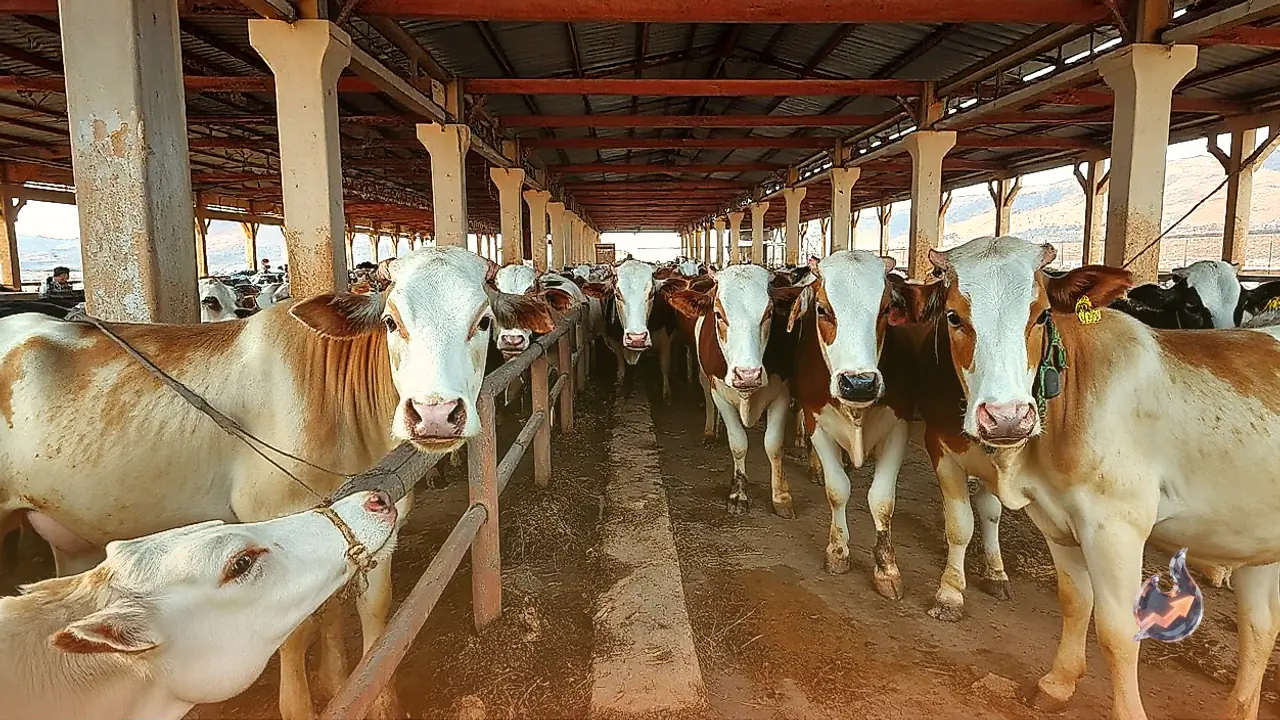

With the arrival of winter, changing weather conditions require dairy farmers to pay close attention to the feeding habits of their cattle. During this season, cows and buffaloes frequently experience a drop in milk production, which directly hurts the earnings of livestock owners. Financial losses often occur when the expected milk volume is not met. However, farmers can easily avoid this problem and protect their income by incorporating a few essential items into the daily diet of their animals.
How Seasonal Changes Impact Cattle Health
Experts explain that even minor negligence in a livestock diet during shifting weather can impact milk yields. Especially in winter, the lack of sufficient energy and nutrients directly reduces the milking capacity of animals, while weakness and sluggishness also become common among them. Rather than relying solely on standard fodder, owners should provide green fodder alongside concentrated feed, calcium, and mineral mixtures to ensure adequate nutrition and sustain steady milk production.
The Role of Fresh Fodder in Daily Rations
Doctor Bharat Patel from Khargone noted that fresh and green fodder serves as the finest diet for dairy animals because it contains necessary vital nutrients. However, when green fodder is unavailable, animals must receive adequate quantities of dry fodder paired with sufficient concentrated feed. This supplies vital energy and keeps their overall health in optimal condition.
Calculating Feed Rations Based on Milk Output
The amount of feed given to an animal should match its daily milk yield. For buffaloes, roughly 500 grams of feed should be provided for every single liter of milk produced. For cows, about 400 grams of feed per liter of milk is considered sufficient. Furthermore, during the cold winter months, maintaining body condition requires an extra one kilogram of dry feed daily to supply necessary internal energy. If an animal receives abundant green fodder, the total concentrated feed quantity can be reduced by roughly 30 percent.
Special Dietary Requirements for High-Yielding Cattle
According to experts, cows and buffaloes that produce more than 10 liters of milk daily require extra calcium and minerals. Such animals should receive 100 ml of liquid calcium every day, along with 30 grams of mineral mixture added to their feed to supply essential mineral elements. These supplements are readily available at local animal feed stores and can be easily mixed into wheat bran, corn bran, sorghum, pearl millet, or other routine cattle feed.