


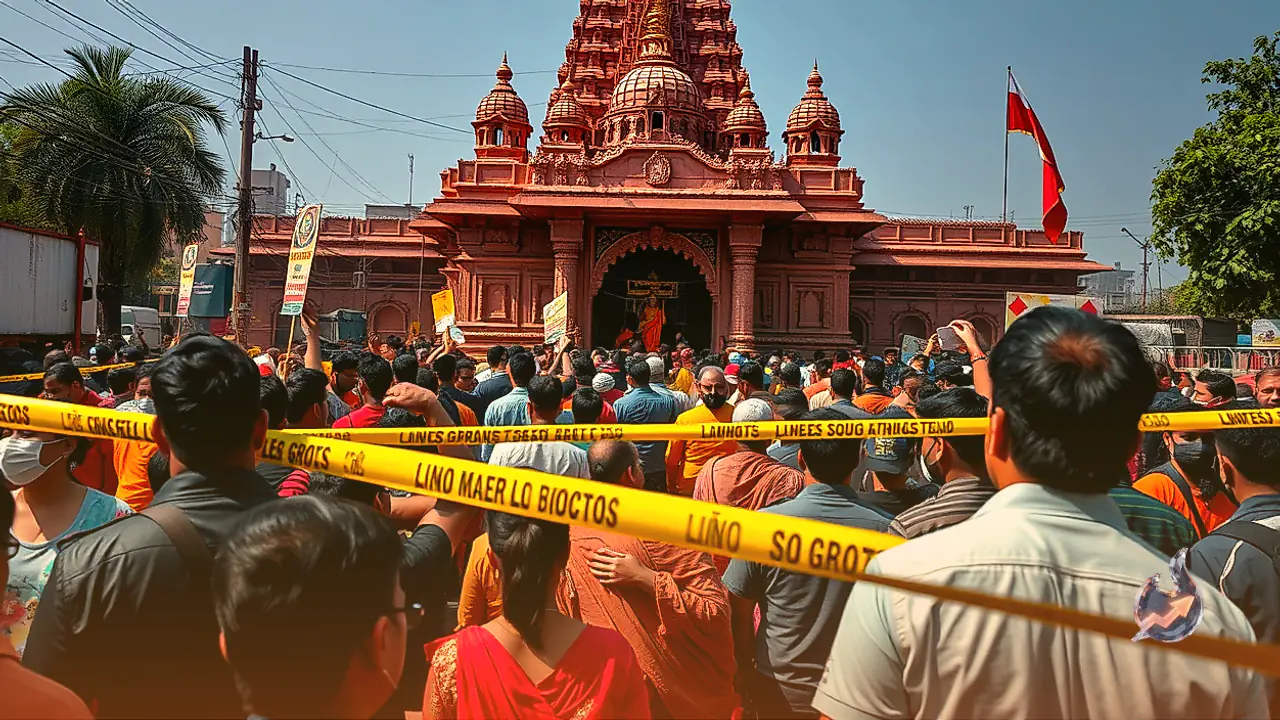














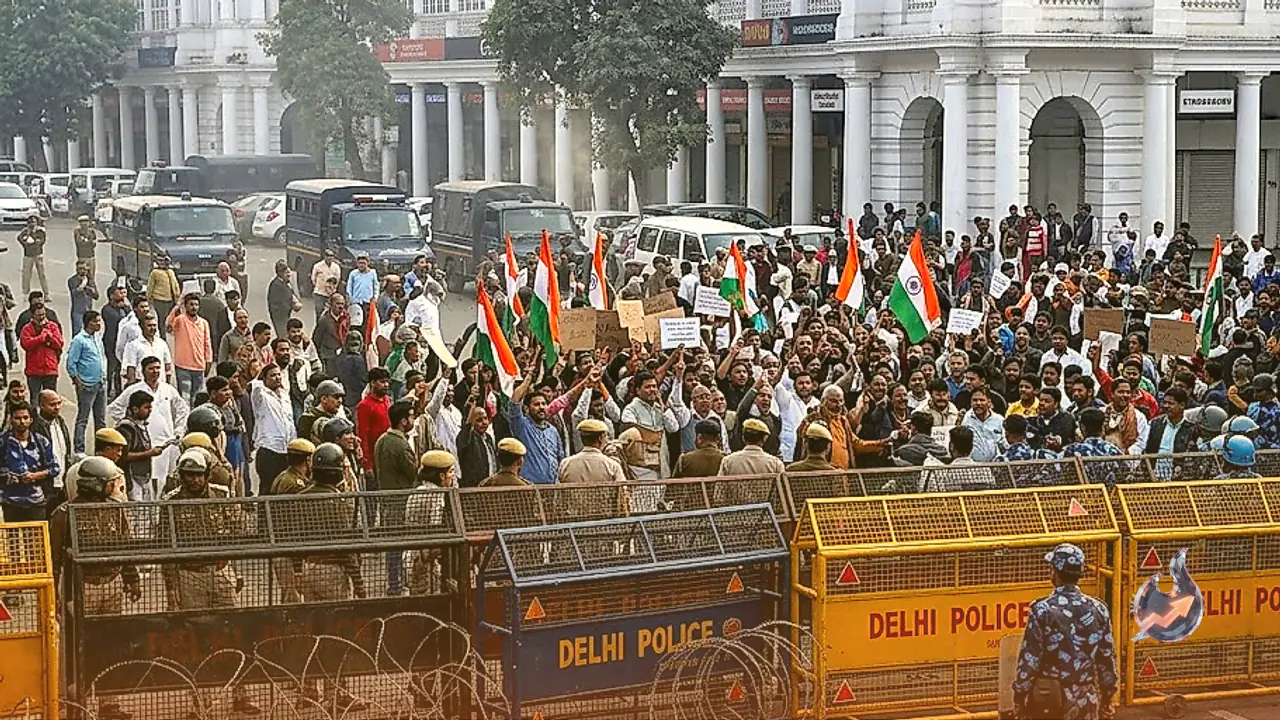

Central Delhi's premier commercial and shopping districts are reeling under a sharp downturn as relentless public agitations and heavy security cordons keep regular shoppers away. Establishments across Khan Market and Connaught Place are facing an unprecedented slump at a time when retail activity usually hits its seasonal peak. According to representatives of the Khan Market Association, the ongoing disruptions are causing cumulative daily financial losses of roughly 50 crore rupees. Pushed into a corner by collapsing footfall and unyielding fixed overheads, local traders have written directly to the Prime Minister and are urging the Supreme Court of India to grant them a formal hearing.
Skyrocketing Commercial Rents Create Financial Crisis
Khan Market ranks among the most expensive retail spaces across the globe, where maintaining a storefront involves massive capital expenditure. Market representatives highlighted that single commercial units in the complex incur daily rentals reaching up to 3 lakh rupees. When customer footfall completely dries up owing to closed perimeter access and extensive police blockades, sustaining day-to-day operations, paying store staff, and meeting landlord obligations becomes unsustainable. The business community has stressed that whenever demonstrations erupt in the national capital, local merchants absorb the hardest economic hit. Consequently, they are pleading for judicial intervention to ensure their right to conduct business unhindered is acknowledged.
Connaught Place Sales Plummet to Merely Ten Percent
The operational crisis is just as severe across the colonnades of Connaught Place. Atul Bhargava, President of the New Delhi Traders Association, stated that continuous rallies and strict administrative restrictions over the past five to seven days have devastated retail volume. He noted that during the earlier demonstration by CJP, business across the market cratered to barely 10 percent of typical turnover. Just as shop owners began attempting to stabilize operations, fresh agitations led by the INDIA bloc were launched. The prospect of further planned sit-ins has heightened panic among merchants who have already endured nearly two months of suppressed commercial activity.
Festive Stockpile at Risk as Customers Stay Home
The final quarter of the year, spanning October, November, and December, serves as the financial backbone for Indian retail due to back-to-back festive celebrations. Anticipating strong customer demand, store owners had built up substantial inventories through significant advance capital commitments. However, potential buyers are actively avoiding central retail hubs to steer clear of heavy traffic detours, police blockades, and volatile protest scenes. The traders emphasized that holding immense piles of unsold stock while servicing working capital loans threatens to push many independent establishments into severe distress.
Central Park Closure and Pressure on Ancillary Markets
The broader Connaught Place commercial ecosystem includes roughly 2000 diverse business units. Between 1300 and 1400 of these establishments, including corporate offices, flagship boutiques, and buzzing cafes, are spread across the Inner, Middle, and Outer Circles. The security mandate enforcing the closure of Central Park on the 16th and 17th is expected to choke normal foot movement even further. Nearby trade clusters are facing identical pressures, including Palika Bazaar with around 300 underground stalls and Shankar Market with roughly 200 outlets. Traders fear that customer reluctance during these sensitive dates could push transaction numbers down by another 25 percent.
Business Community Demands Dedicated Protest Zones
Seeking systemic relief, trade delegations have dispatched formal memorandums to key authorities, including the Prime Minister, the Union Home Minister, the Lieutenant Governor of Delhi, and the Commissioner of Delhi Police. Their central demand is that vibrant commercial districts like Connaught Place must not serve as battlegrounds for political showdowns or intensive police barricading. Such disruptions paralyse trade, inconvenience commuters, and risk obstructing critical emergency services. Retail leaders maintain that while the constitutional right to peaceful demonstration must be protected, protests should remain confined to designated open areas to preserve the delicate balance between civic expression and economic survival.