

















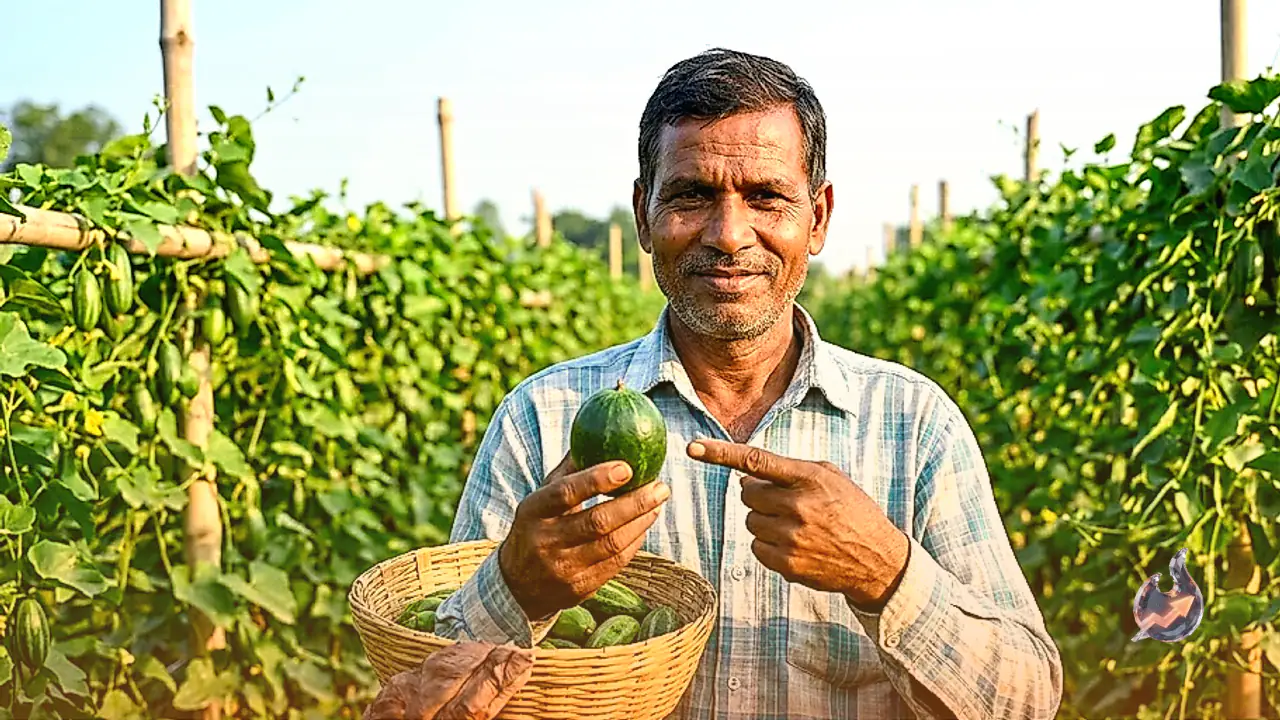

Vegetable farming shows plenty of variety in Bihar's East Champaran district, and parwal cultivation has emerged as a particularly profitable option for local farmers. Champaran's markets sell two kinds of parwal, a native or desi variety and an outside or bahari variety, and the two differ clearly in both price and taste.
Shankar Prasad's parwal farm in Pannapur
Farmer Shankar Prasad, who lives in Pannapur village under the Harsiddhi block of East Champaran district, has grown desi parwal on roughly one and a half acres of land. He is currently earning a good profit from this crop. He says desi parwal farming benefits growers because demand for it never really dries up, no matter the season, which is why he views it as a dependable source of income.
Rs 10 more than the outside variety
Shankar Prasad says desi parwal always sells for Rs 10 more than the bahari variety in Champaran's markets. The biggest reason, he says, is its rising demand. According to him, this demand is not limited to East Champaran alone, it is also strong across the West Champaran district. Buyers in both districts prefer desi parwal when shopping, which lets farmers command a better price without much extra effort in selling their produce.
A difference in taste and texture
Shankar Prasad explains that desi parwal has a somewhat softer texture than the bahari variety, and this is exactly why the vegetable made from it tastes better. Urban buyers often end up picking bahari parwal thinking it is the desi kind, only to notice the difference in taste and texture afterward, leaving them feeling shortchanged.
How to identify desi parwal
Shankar Prasad says spotting desi parwal is not actually difficult, it just needs a bit of attention. It carries a deep green colour and has a somewhat round shape. The bahari variety, by contrast, is slightly elongated, which is the easiest way to tell the two apart. If buyers pay close attention to the colour and shape while purchasing parwal in the market, they can easily identify the genuine desi variety and avoid being cheated by sellers.
Current wholesale and retail prices
Shankar Prasad says desi parwal is currently selling at a wholesale rate of Rs 4000 per quintal. In Champaran's retail markets, it is fetching a maximum price of Rs 50 per kg. He adds that because desi parwal has a soft texture, dishes like bhujiya and chokha made from it turn out especially tasty, which keeps demand for it strong in households.