






















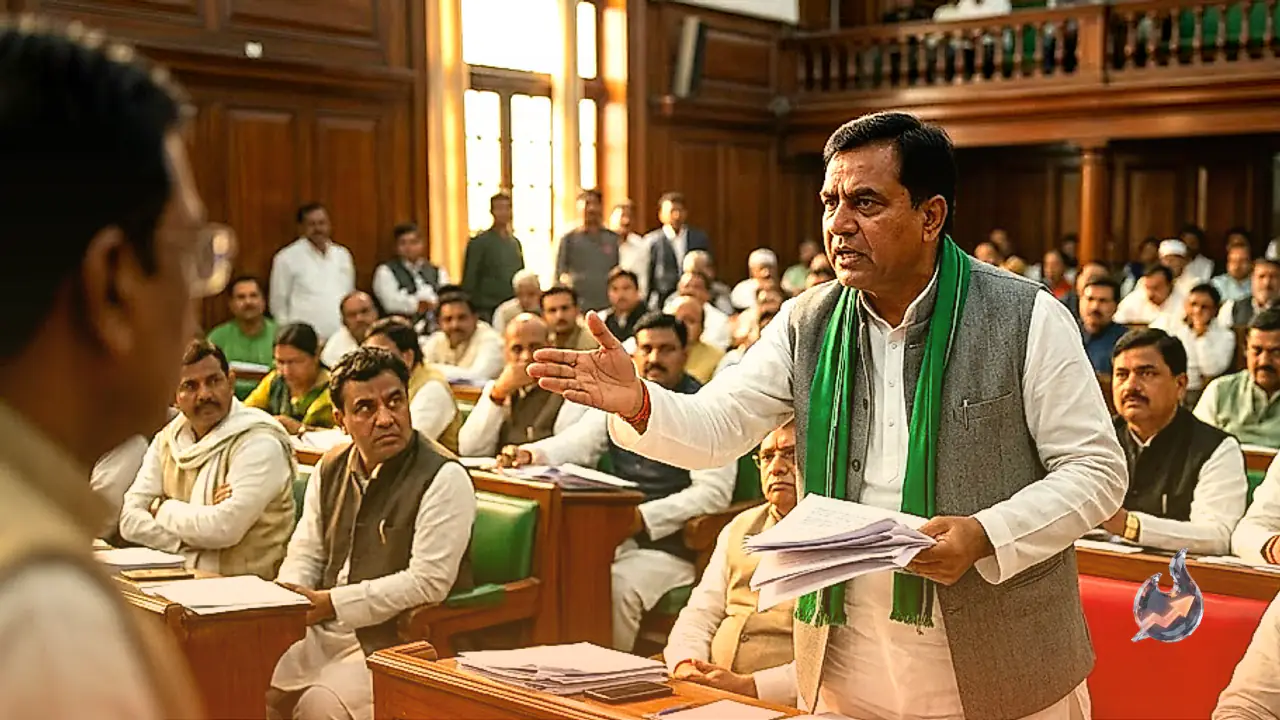

The prolonged closure of the Sasamusa Sugar Mill in Gopalganj has sparked heated debates during the monsoon session of the Bihar Assembly on Wednesday. JD(U) legislator Manjit Singh passionately raised the issue, urging the state government to halt the ongoing auction process that aims to dismantle the factory for scrap. He emphasized that reviving the facility is the only viable path to provide much needed relief to thousands of distressed farmers and unemployed factory workers who are awaiting massive unpaid dues.
Mounting Financial Liabilities and Unpaid Dues
The financial collapse of the sugar mill has left behind a massive trail of unpaid arrears. According to the figures presented in the legislative house, local sugarcane cultivators are owed approximately 43 crore rupees for their produce. In addition to the agrarian crisis, the factory workforce has been left unpaid, with employee dues mounting to 9 crore rupees. Furthermore, various banking institutions are entangled in a severe debt crisis, with outstanding loans amounting to around 68 crore rupees. This massive bank default has led to protracted legal battles which are currently pending before the judiciary. The sheer scale of these liabilities highlights the severe economic distress inflicted on the Gopalganj region by the prolonged shutdown of this industrial unit.
Controversial Auction and New Revival Hopes
Despite these immense pending liabilities, the process of auctioning the mill and breaking it down into scrap metal has already been initiated. This drastic move has triggered widespread anger and resentment among local residents and agricultural communities who depend on the factory for their livelihood. During the assembly proceedings, the JD(U) legislator firmly demanded that the government must abandon the scrap sale strategy. In a major revelation, he informed the house that a private investor has stepped forward with a concrete revival proposal. This potential backer has expressed readiness to clear the 68 crore rupees owed to the banks. Moreover, the investor aims to resume sugarcane crushing operations from the very current season. If the state administration proactively facilitates this proposal, it could directly benefit thousands of laborers and cultivators in the region.
Government Response and Legal Hurdles
Addressing the concerns raised in the assembly, Sugarcane Industries Minister Sanjay Kumar assured the lawmakers that the Bihar government is treating the matter with utmost seriousness. The minister clarified the legal complexities surrounding the case, noting that the National Company Law Tribunal (NCLT) Kolkata bench has officially mandated the auction of the bankrupt facility. However, the state administration is currently conducting a thorough examination of all available legal avenues. The objective is to stage a necessary intervention within the framework of the law to explore all possibilities of restarting the mill operations.
Awaiting the Critical Tribunal Verdict
The minister reiterated the government commitment to safeguarding the fundamental interests of both the farming community and the mill workers. Future strategies will be formulated by taking all stakeholders into confidence. The entire resolution process now hinges on the upcoming legal proceedings. The Kolkata bench of the National Company Law Tribunal is scheduled to hold its next crucial hearing on this matter on August 8. Until then, the eyes of the affected employees, debt burdened farmers, and the entire local populace remain firmly fixed on the government next moves and the impending judicial decision.