























Turmeric remains in high demand throughout the year, serving not only as an essential culinary spice in Indian households but also as a vital raw material for pharmaceutical, cosmetic, and food processing industries. Due to its extensive medicinal attributes and commercial applications, cultivating turmeric has emerged as a highly lucrative cash crop for farmers. Agricultural experts emphasize that selecting suitable varieties, maintaining balanced nutrition, and executing timely field care can help farmers achieve superior yields and higher economic returns. Shiv Shankar Verma, In-charge Officer at the State Agricultural Center in Shivgarh within Raebareli district, outlined the scientific procedures required for successful turmeric production. He holds a BSc in Agriculture from Dr. Ram Manohar Lohia Avadh University, Faizabad.
Optimal Climate and Soil Specifications
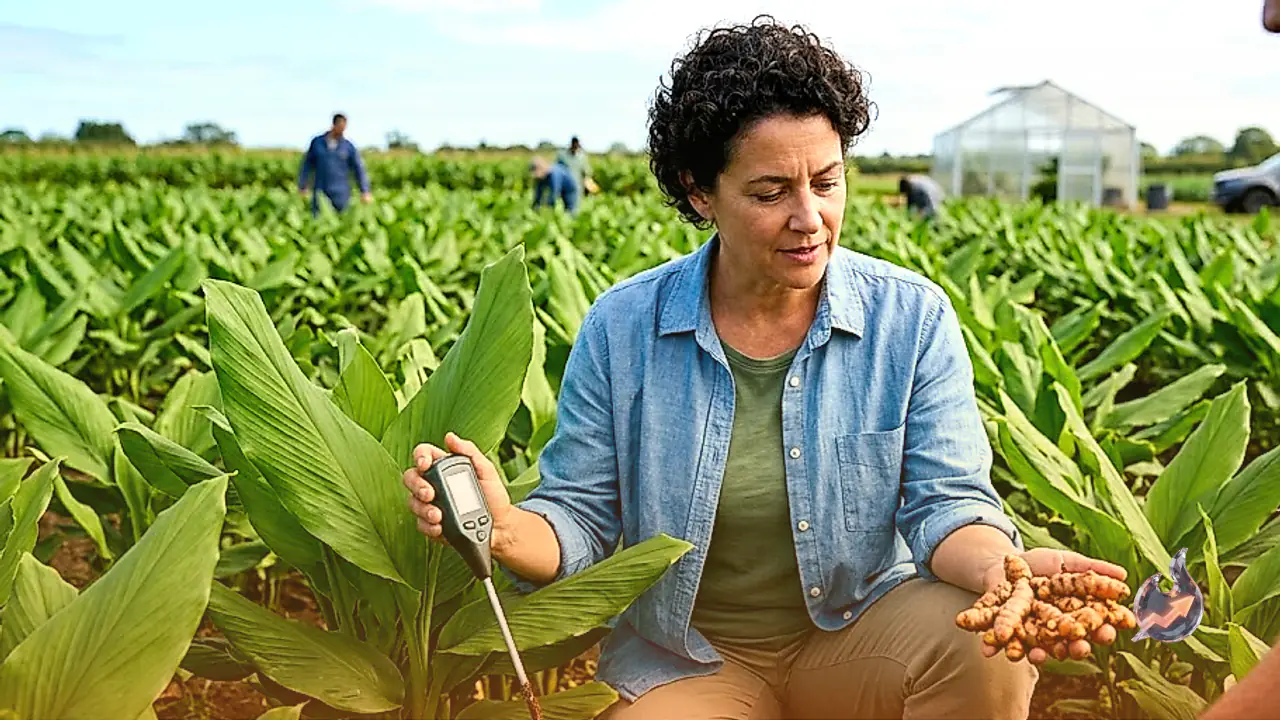
Warm and humid climatic conditions are ideal for commercial turmeric cultivation. For proper vegetative growth and robust rhizome formation, a temperature range between 20 and 35 degrees Celsius is considered optimal. Farmers must select field sites that possess excellent natural drainage to prevent water accumulation. Loamy or sandy loamy soils equipped with effective drainage facilities provide the best environment for root development. Furthermore, the soil pH should strictly range between 5.5 and 7.5 to ensure optimum absorption of essential soil nutrients.
Field Preparation and Soil Nutrition
Thorough land preparation is a vital prerequisite before sowing turmeric rhizomes. The field requires deep ploughing 2 to 3 times to render the soil porous, loose, and well-aerated. To enhance organic matter and long-term soil fertility, incorporating 20 to 25 tonnes of well-rotted cow dung manure or compost per hectare during final ploughing is recommended. After mixing the manure, the field must be leveled precisely. Creating structured ridges and furrows across the field facilitates efficient irrigation and smooth drainage of excess rainwater during heavy monsoons.
Seed Selection, Treatment, and Sowing Techniques
Crop quality and total output depend heavily on seed rhizome health. Farmers should select disease-free, plump, and vigorous rhizomes for planting. Seed rhizomes weighing between 25 and 30 grams are ideal for propagation. Prior to planting, treating the selected rhizomes with appropriate fungicides or bio-agents is essential to safeguard the crop against soil-borne fungal pathogens. In North India, the window between May and June, coinciding with the arrival of early monsoon showers, serves as the most suitable period for sowing.
Irrigation, Drainage, and Weed Management
Proper plant architecture ensures optimal access to sunlight and air circulation. Maintaining a row-to-row spacing of 45 centimeters and a plant-to-plant distance of 30 centimeters allows the crop to absorb nutrients without overcrowding. Continuous soil moisture must be maintained following sowing. In case of delayed rainfall, light irrigation should be supplied periodically. However, stagnant water must be strictly avoided, as waterlogging rapidly induces rhizome rot. Regular weeding and hoeing operations are vital to eliminate resource competition. Additionally, performing earthing-up operations around the root zone promotes better rhizome expansion and shape. Applying balanced doses of Nitrogen, Phosphorus, and Potash significantly boosts overall harvest volume.
Harvesting, Processing, and Value Addition
Turmeric typically requires 7 to 9 months to reach full maturity. The primary signal for harvesting is the yellowing and subsequent drying of the plant leaves. Once dug up, the harvested rhizomes are thoroughly cleaned of dirt and washed. The cleaned rhizomes then undergo a standardized process of boiling and sun-drying to stabilize their color and aroma. Farmers can either sell the dried rhizomes directly in commercial markets or process them into powdered form for retail packaging, which yields significantly higher profit margins. Integrating scientific farming with processing and value addition turns turmeric cultivation into a sustainable agricultural business.