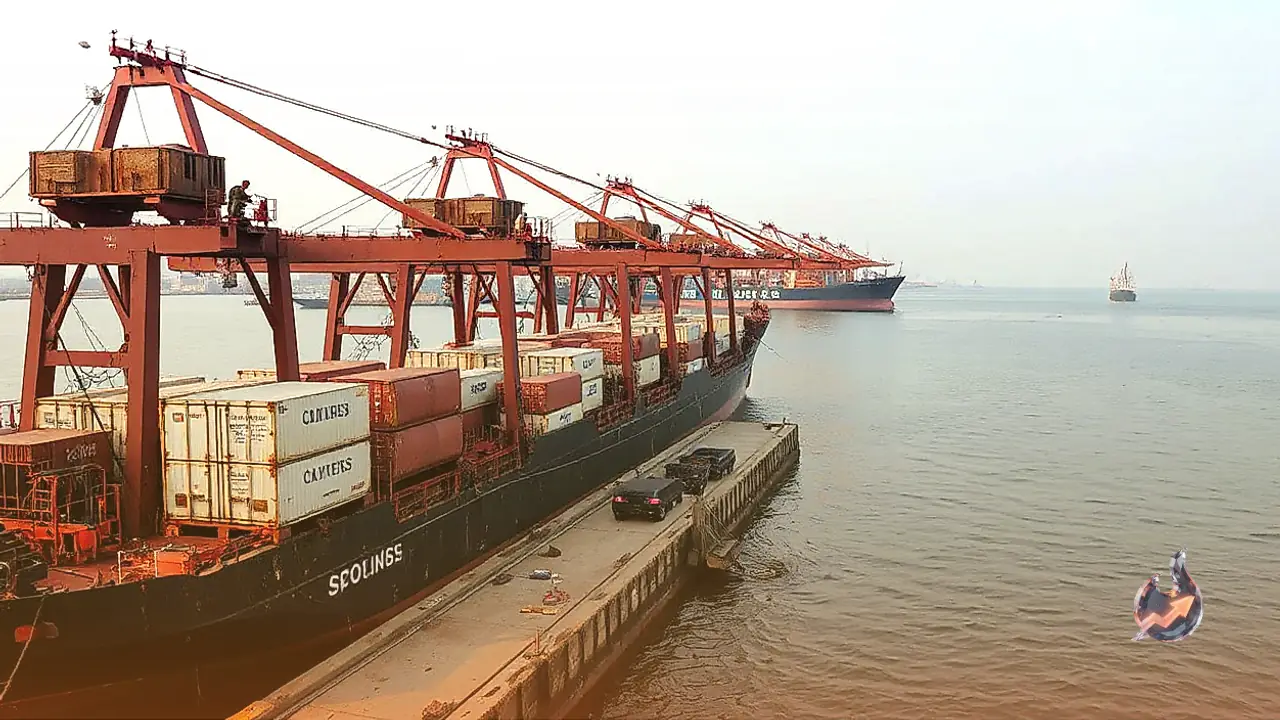

Just four months after the landmark Free Trade Agreement (FTA) between India and the United Kingdom came into effect, a significant trade impasse has erupted, leaving large shipments of Scotch whisky stranded at Indian ports. The deadlock stems from sharply conflicting interpretations of agreement terms and tariff classifications between customs authorities and importers. Following more than three years of rigorous bilateral negotiations, the trade deal was finalized in May 2025 and officially implemented in July 2026. However, four months into its rollout, friction over how imported whisky is categorized has brought bulk shipments to a halt. In response, India's Ministry of Commerce and the Customs Department have initiated joint efforts to resolve the dispute before it impacts broader diplomatic and trade relations.
Product Classification Dilemma and Harmonized System Codes
According to official sources, the dispute centers on the legal language of the agreement and the potential misclassification of imported products. A senior official, speaking on the condition of anonymity, emphasized that Indian authorities have no intention of violating the established terms of the FTA. Instead, the current stand-off is the result of differing operational understandings between the two sides. The core of the confusion relates to the Harmonized System (HS) code utilized for assigning custom duties, which segregates imported whisky into distinct categories based on its processing state.
Under standard regulatory frameworks, Scotch whisky entering India from the UK generally falls into two categories. The first comprises bottled Scotch whisky that is fully finished and ready for direct consumer consumption upon arrival, requiring no further processing or blending within India. This ready-to-drink bottled whisky is assigned a specific HS code. The second category consists of bulk concentrated whisky imported in large casks and containers. This bulk Scotch is intended for local bottling and blending operations in domestic facilities, which places it under a different classification code.
Tariff Discrepancies and Importer Arguments
The bilateral trade agreement establishes different tariff structures across product categories, sparking debate over which exact duty rule applies to bulk Scotch imports. Prior to the implementation of the FTA, all variants of UK whisky imported into India were subject to a uniform basic custom duty of 150 percent. Under the negotiated terms of the new agreement, the duty specifically on Scotch whisky was slashed to 75 percent. Furthermore, the pact mandated progressive annual reductions in equal tranches over a 10-year period, eventually bringing the duty down to 40 percent.
Importers and liquor industry stakeholders contend that the term "whisky" as defined in the FTA text is comprehensive. They argue that the word encompasses both retail-ready bottled Scotch and bulk Scotch shipped in large containers. Importers maintain that since the FTA specifies a reduced 75 percent custom duty rate for Scotch whisky, this concession must apply equally to bulk shipments. In their view, excluding bulk whisky used as an intermediate input contradicts the spirit and intent of the trade treaty.
Indian Customs Stance and Reversion to MFN Rates
Conversely, Indian customs officials hold a distinctly different view from importers. Customs authorities have applied a separate tariff line for bulk Scotch, categorizing it as a raw material input rather than a finished beverage. Customs officials argue that bulk concentrated whisky constitutes a "compound alcoholic preparation" used in the manufacture of beverages. Because this specific category is not explicitly listed under the FTA concession schedule for whisky, authorities treat it as a raw material, subjecting it to the standard Most Favoured Nation (MFN) rate of 150 percent.
This tariff distinction carries immense commercial weight because bulk Scotch accounts for more than 50 percent of all Scotch whisky imported into India. The sharp difference between the 75 percent FTA rate and the 150 percent MFN rate disrupts financial projections for both domestic and international liquor manufacturers. Indian bottling plants face severe supply chain bottlenecks due to delayed raw material clearances, threatening operational continuity and driving up costs.
Enforcement by the DRI and Port Bottlenecks
Complicating matters further, recent enforcement actions by the Directorate of Revenue Intelligence (DRI) have exacerbated tensions for beverage companies. The DRI has begun collecting an effective duty rate of 162.5 percent on bulk Scotch imports. This effective rate exceeds even the pre-FTA baseline tariff of 150 percent. The aggressive stance taken by the DRI has disrupted supply chains for both domestic distillers and multinational brands.
Dozens of shipping containers filled with concentrated whisky remain stranded at major Indian seaports. Beyond inventory delays, importers face accumulating demurrage charges as cargo clearance remains suspended. Industry representatives point out that such operational ambiguity surrounding a landmark trade agreement raises serious questions about ground-level implementation and legal clarity, creating an atmosphere of uncertainty for commercial partners.
Questions Over Four Months of Unhindered Clearances
Industry executives note that during the three-plus years of FTA negotiations, assurances were repeatedly given that preferential tariff cuts would cover Scotch whisky in all its imported forms. What puzzles industry players most is that for the first four months of the agreement's implementation, bulk Scotch shipments cleared customs seamlessly without any regulatory objections. The sudden pivot from granting concessionary entry to enforcing a 162.5 percent effective duty has caught businesses off guard.
Standard import protocols require exporters to secure a Customs Registration Number (CRN) prior to dispatching cargo. This pre-registration system allows customs officers to inspect documentation in advance, expedite clearance upon arrival, and catch discrepancies early. Industry sources confirm that all bulk Scotch shipments currently detained at Indian ports possess valid CRN numbers, raising further frustration among importers over the abrupt change in enforcement.
Expert Outlook and Potential Escalation
Trade analysts express concern that despite over three years of detailed clause-by-clause scrutiny by negotiators from both nations, such a fundamental discrepancy has emerged. Expanding market access for Scotch whisky in India was a top priority for the UK during FTA discussions. Analysts point out that before the FTA, both bottled and bulk Scotch faced an identical 150 percent duty, giving customs officers no cause for differential treatment. However, the introduction of tiered rates combined with divergent legal interpretations has created a complex regulatory hurdle.
Despite the standoff, representatives from both government and industry remain optimistic that a resolution will be reached within the next two to three weeks. Inter-ministerial discussions between the Commerce Ministry and Customs officials are actively underway. Nevertheless, trade experts warn that if the issue remains unresolved, the UK could consider retaliatory trade measures. For now, both the Ministry of Finance and the Ministry of Commerce have refrained from issuing formal public comments on the matter.