




















Setting up a disposable paper plate and bowl manufacturing unit has emerged as a practical self-employment pathway for individuals in rural and semi-urban communities. The venture requires minimal upfront capital while addressing a commodity need that persists throughout the calendar year. An initial financial outlay ranging between Rs 30,000 and Rs 40,000 is sufficient to get operations underway, especially with supportive programs managed by the Khadi and Village Industries Department making equipment and financial guidance far more accessible to first-time business owners.
Sourcing Raw Materials and Production Economics
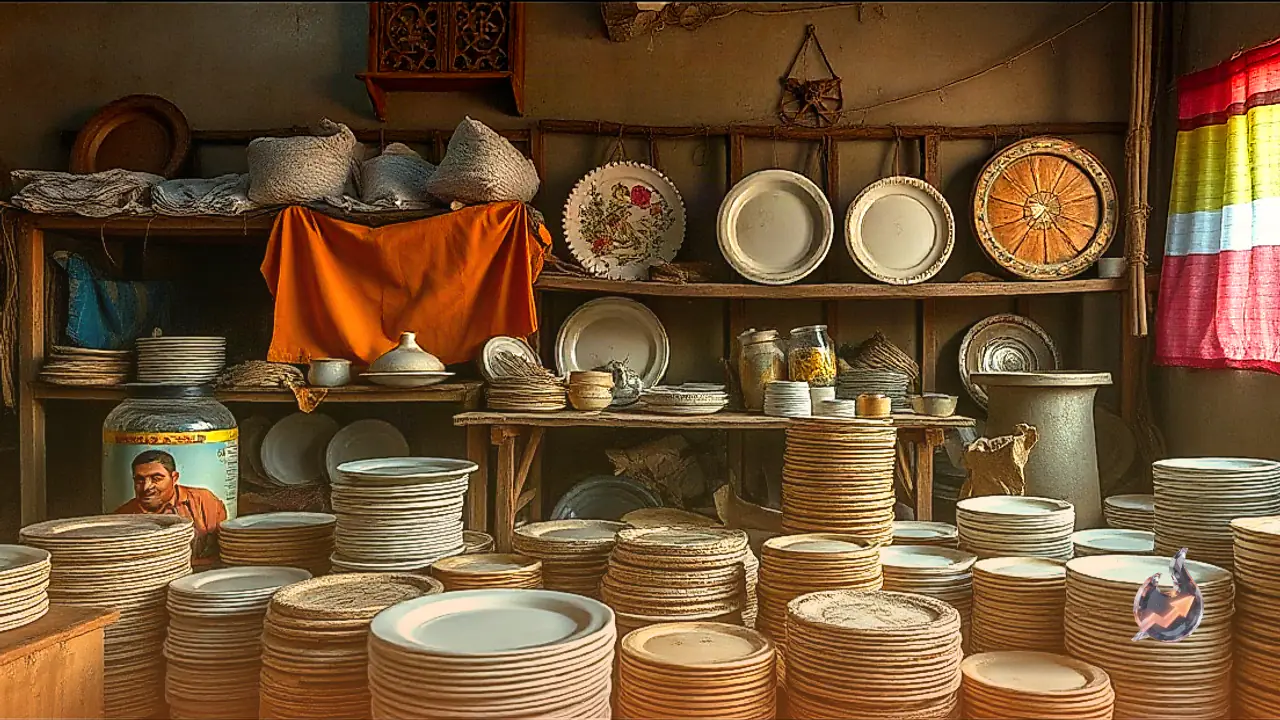
Maintaining a dependable supply of input stock is essential for uninterrupted output. Entrepreneurs operating across Amethi and neighboring territories source their paper reels and press dies from wholesale distribution centers situated in Lucknow, Kanpur, Sultanpur, and Prayagraj. The primary paper material arrives in reel sets weighing approximately 28 to 30 kilograms each. A single reel set can yield around 11,000 to 12,000 finished bowls or plates.
Finished stock is packaged and sold in bundles across regional wholesale networks, fetching between Rs 200 and Rs 300 per bundle. Operating with a steady distribution channel enables an enterprise owner to comfortably generate net daily earnings ranging from Rs 1,000 to Rs 1,500 after factoring in recurring raw material and operational overheads.
Machinery Costs and Departmental Grants
The manufacturing units required for pressing plates and bowls can be procured from commercial machinery vendors at price points generally between Rs 40,000 and Rs 50,000. Individuals who prefer self-financing can purchase these systems directly from distributors in nearby cities. Alternatively, eligible applicants can receive machinery free of cost or under substantial state assistance through their local Khadi and Village Industries office. Receiving state-sponsored equipment allows an owner to channel working capital strictly into inventory purchases and distribution logistics.
Application Criteria and Necessary Documentation
To qualify for institutional backing, an applicant must fall within the age bracket of 18 to 50 years. Departmental official Amar Chand Pandey noted that candidates seeking assistance must furnish copies of their Aadhaar card, PAN card, bank passbook, an active mobile phone number, and a completed proforma project form. Machine allotments take place periodically on a first-come, first-served basis, accompanied by bank financing that features a capital subsidy ranging from 25 to 30 percent.
Market Longevity and Community Proof Points
Consumption of paper utensils remains consistent throughout every season, driven by community events, festive gatherings, and street food vendors, with noticeable surges during the wedding season. In the Amethi region, micro-producers such as Sumitra Devi and Mahesh Kumar from Jagdishpur, alongside Salma from Musafirkhana, are already running stable enterprises based on this manufacturing model. By serving local grocery stores and village markets, these operators have created resilient sources of independent income.