



















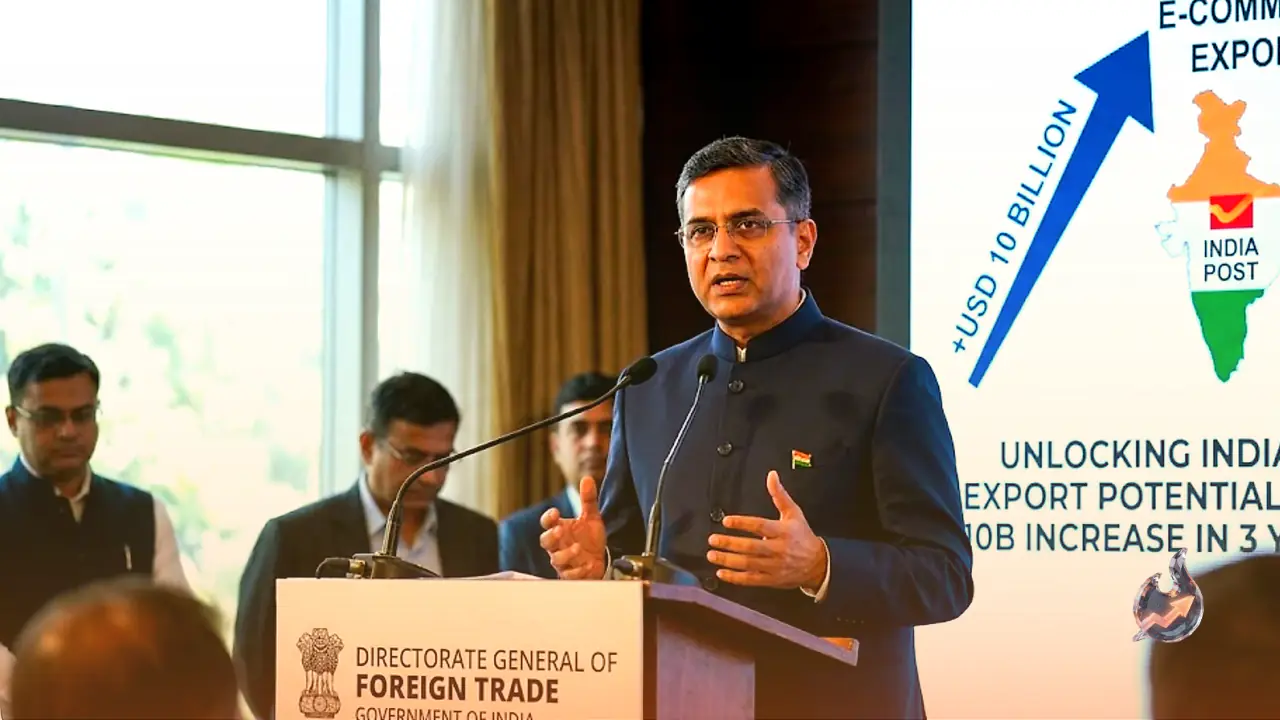

India's e-commerce export sector holds substantially more potential than it has realised so far, and a senior government trade official is confident the country can add at least USD 10 billion to those figures within the next two to three years. Rajesh Kumar Mishra, an additional director at the Directorate General of Foreign Trade (DGFT), anchored his argument by drawing attention to the enormous distance between India's current performance and the benchmark set by China, which ships out USD 300 billion worth of goods through e-commerce channels every year.
A Structural Advantage That Remains Underused
Mishra placed India's large MSME base at the heart of the opportunity. The country has an extensive network of small and medium manufacturers who are capable of producing quality goods at scale, yet this strength has not been fully channelled into cross-border digital trade. "We should add to USD 10 billion dollars or more exports by e-commerce, so the potential is very huge because we are a large country with large number of MSMEs having capacity to manufacture quality products," he said. The logic is clear: with the right digital platforms, reliable logistics, and market readiness, Indian small manufacturers could be reaching far more buyers overseas than they currently do, and doing so profitably.
India Post as an Affordable Logistics Option for Small Exporters
Among the practical tools Mishra highlighted, India Post emerged as a particularly significant lever. The government's own postal network, he said, offers competitive international shipping rates that small exporters can use to move their goods abroad at a price that makes sense. "The e-commerce caters to requirements of a global consumer base, so the platforms which are there, online platforms and leveraging the supplies, supply chains like India Post, our own postal department government of India entity, which provides very competitive rates for supply of goods abroad, so that can be leveraged to create a situation where our small consignments can be sent at a competitive rate to a foreign country," he explained. This is meaningful because the cost of international shipping has historically been one of the biggest barriers preventing small Indian exporters from accessing global markets. A government-backed solution that meaningfully lowers that cost can directly enable more MSMEs to serve international customers for the first time.
Free Trade Agreements Need Exporters to Be Ready
India has been actively pursuing free trade agreements with a number of countries, but Mishra was clear that these deals are only as good as the exporters who are equipped to capitalise on them. MSMEs and manufacturers need to thoroughly understand the rules, product standards, and specific market requirements that come attached to each agreement. Without that level of preparation, the potential benefits of FTAs risk remaining theoretical rather than translating into tangible export gains on the ground for businesses.
MSMEs at the Core of India's 25 Per Cent GDP Manufacturing Ambition
Mishra also placed the e-commerce export push squarely within the context of India's longer-term industrial goals. Government policy is targeting manufacturing at 25 per cent of GDP, and MSMEs, given how widely they are distributed across the country, are considered central to achieving that shift. He stressed that businesses in this segment must raise their quality standards and think at a bigger scale, since growth in firm size directly amplifies the collective economic contribution the sector makes to the national economy.
The USD 1 Trillion Merchandise Export Target
India has set a target of USD 1 trillion in merchandise exports over five years. Mishra was direct in stating that free trade agreements on their own cannot deliver that outcome. Multiple forces must work together, each reinforcing the others, for the target to come within reach. "It is a bouquet of everything, all factors e-commerce will add, our quality improvements will add, the kind of credit that is being provided through the export promotion mission because it is not in a vacuum, it is a combination of all the factors that we are encountering right now," he said. Mishra specifically tied together e-commerce growth, quality improvements in Indian goods, and credit support extended through the export promotion mission as three elements that must work in tandem to drive meaningful and sustained export expansion over the years ahead.