



















Throughout the year 2026, a single geographic bottleneck dominated global headlines and economic discussions, namely the Strait of Hormuz. Prior to this period, ordinary citizens rarely spared a thought for the vulnerability of this maritime passage, but recent events have made everyone acutely aware of its indispensable necessity. For India, the reliance on this corridor has been far more critical compared to many other nations. However, emerging indicators suggest that within the next five years, the strategic significance of the Strait of Hormuz will virtually fade away as Gulf nations rapidly construct alternative transport corridors to completely eradicate their dependency on this single chokepoint.
Massive Investments and New Logistics Corridors
HSBC Group CEO Georges Elhedery has stated that massive capital investments will be injected into the Gulf region to mitigate the severe economic shocks caused by the regional conflict involving Iran. This substantial financial influx will open up multiple alternative logistics pathways over the coming five years, eventually rendering the traditional Hormuz route obsolete. He noted that the conflict vividly exposed the world's over-reliance on Hormuz, through which approximately 20 percent of global oil and gas traverses. The disruptions have inflicted considerable economic damage on Gulf states, prompting regional authorities to accelerate plans for direct pipelines terminating at alternative maritime ports.
Anticipated Influx of $1.4 Trillion in Investments
The top HSBC executive emphasized that while the conflict-affected region will soon recover, the revival necessitates monumental financial backing. A recent report published by HSBC reveals that ongoing projects across the Middle East, North Africa, and Turkey currently command $872 billion in investments. Projections indicate that cumulative capital inflows into this broader region could reach approximately $1.4 trillion. The report highlights that over 1,600 business leaders and nearly 820 global institutional investors have expressed a strong willingness to deploy capital in these regional ventures. Furthermore, the World Bank has forecasted that substantial investments could pour into the region during 2027.
Strategic Diversification by Gulf Nations
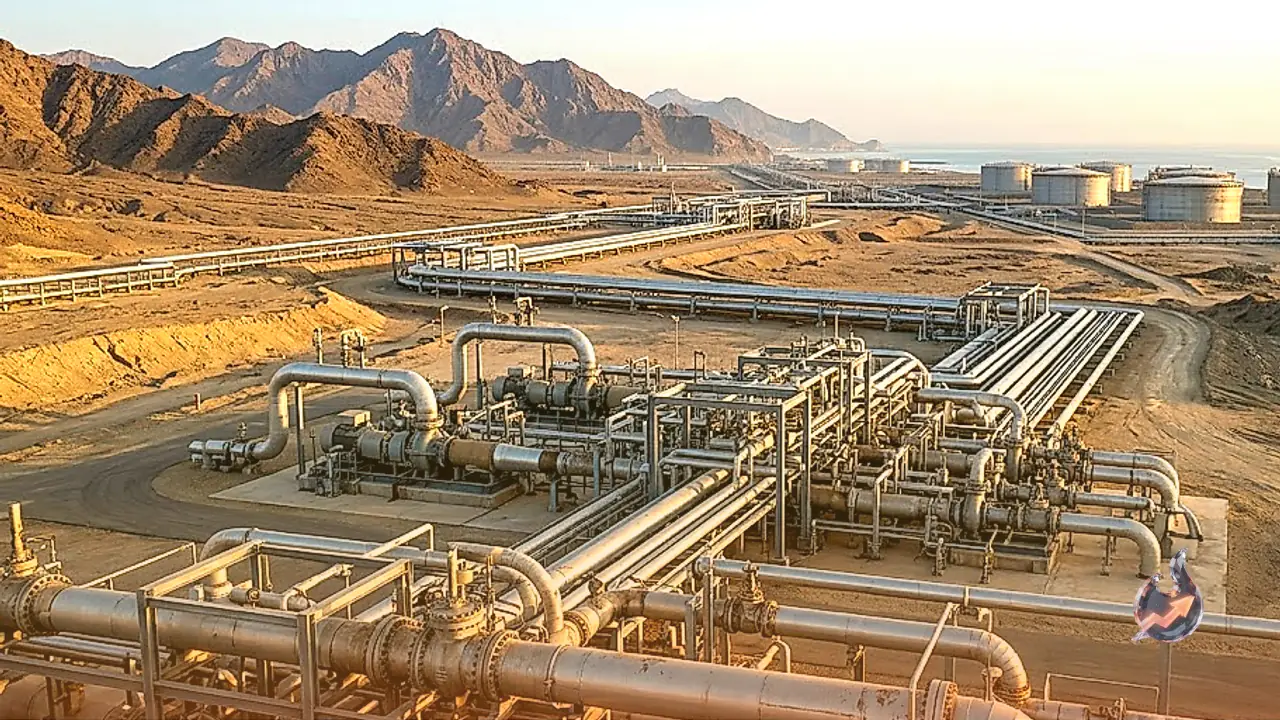
To safeguard their energy exports against future geopolitical blockades, key Gulf producers have devised robust alternative export routes. Saudi Arabia, the region's leading petroleum supplier, has formulated plans to route crude oil directly to the Red Sea and the port of Yanbu using its East-West pipeline, thereby completely bypassing the Strait of Hormuz. Meanwhile, the United Arab Emirates is executing plans to transport its crude oil through the Abu Dhabi crude pipeline directly to the port of Fujairah. This strategic port is situated on the Gulf of Oman, safely outside the restrictive waters of Hormuz. Additionally, Oman has heavily promoted its port facilities located on the Arabian Sea to establish a secure and reliable alternative export hub for regional trade.
India Energy Sourcing and Adaptation
Historically, India procured a massive proportion of its imported crude oil and natural gas through the Strait of Hormuz. Before the onset of the conflict, Indian refiners sourced roughly 45 percent of their total crude requirements, amounting to approximately 2.5 million barrels of oil daily, via this maritime passage. Nevertheless, in response to rising vulnerabilities, India successfully diversified its supply chains, and currently about 70 percent of crude oil is procured from origins outside the Hormuz shipping lane. India imports 60 percent of its domestic LPG requirements, with roughly 90 percent traditionally originating from the Hormuz corridor, alongside 50 percent of its LNG needs supplied by nations such as Qatar, the UAE, and Oman. Since all these supplier nations previously routed their shipments through Hormuz, India has proactively diversified these vital energy imports to insulate its economy.