






















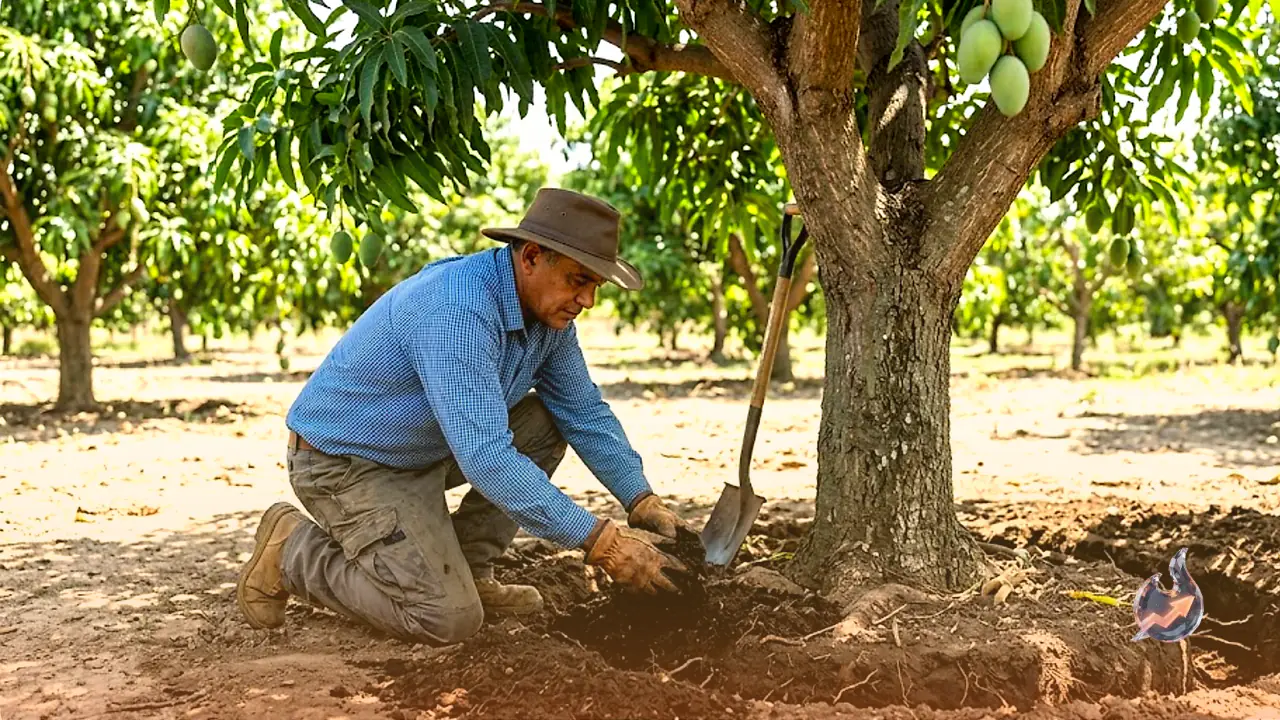

When mango trees begin to exhibit yellowing leaves, stunted growth, or a decline in fruit yield, many gardeners assume simple fertilization or watering will suffice. However, agriculture experts suggest that these methods are often insufficient if the root system is compromised. According to specialists, the health of the tree is directly tied to the condition of its roots. By implementing a systematic trenching and treatment process, you can rejuvenate the tree, promote new root development, and witness a substantial increase in overall fruit production.
The Proper Root Treatment Technique
Dr. Vikas, an agricultural scientist at the Bhojpur Krishi Vigyan Kendra, explains that a circular trench should be dug around the tree, aligned with the spread of its shade. It is crucial to keep the depth of this trench between 8 to 10 inches to avoid damaging the healthy root system. Once the area is opened, carefully trim away any dry, decayed, discolored, or diseased roots. Removing these problematic parts significantly reduces the risk of fungal infections and other soil-borne diseases. Furthermore, loosening the surrounding soil allows for better aeration, which is essential for stimulating rapid root regeneration.
Nutrient-Rich Soil Amendment
After the trench is prepared, it must be filled with a nutrient-dense mixture. Incorporate well-decomposed cow dung manure, vermicompost, and the necessary amount of neem cake. If the soil in the orchard is particularly hard, blending in a small amount of sand and organic compost will improve its structure. This mixture enhances soil fertility and encourages the growth of beneficial microorganisms. Neem cake serves as a natural deterrent against termites and other soil-dwelling pests, while vermicompost provides the balanced nutrients needed to accelerate tree growth.
Improving Fruit Quality and Quantity
Dr. Vikas emphasizes that this technique is particularly beneficial for trees that have stopped growing or are bearing fewer fruits than in previous years. Once the treatment is applied, ensure consistent watering, but be careful to prevent waterlogging around the trunk. A well-drained environment ensures that roots remain healthy and efficient at nutrient absorption. As a result of this revitalization, the tree will produce new branches and more flowers, ultimately leading to larger, higher-quality, and more abundant fruit in the following season.
Long-Term Orchard Health
For farmers who commit to this method once a year and maintain regular use of organic fertilizers, the long-term health of their mango orchards is significantly improved. This approach reduces dependence on chemical fertilizers and facilitates continuous improvements in annual yields. If your mango trees are showing signs of weakness or failing to produce adequately, adopting this scientific technique is highly recommended. This timely intervention will infuse the tree with new energy and help ensure superior, high-quality yields for many years to come.