




















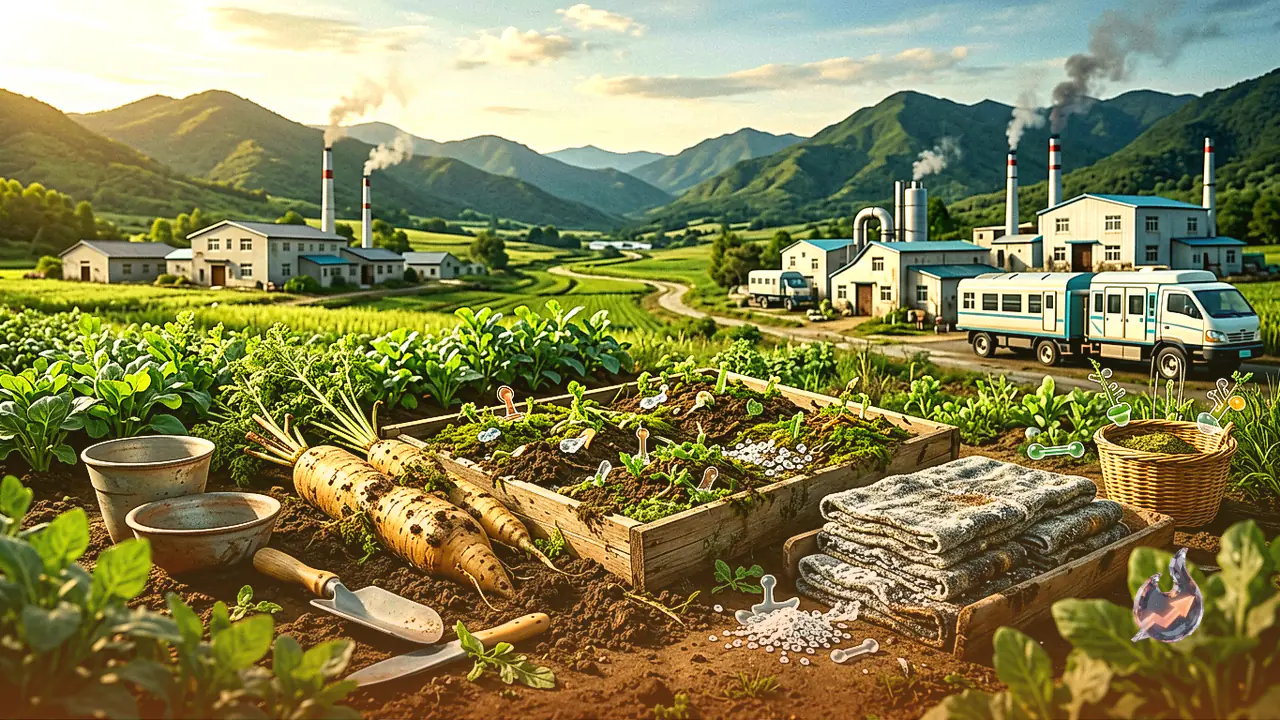

Organic kitchen and household waste is often viewed as ordinary garbage, yet it holds substantial economic potential as a valuable raw material. With proper recycling and processing techniques, organic waste can be converted into high-value products, laying the foundation for viable micro-enterprises or full-scale commercial ventures. Sustainable waste management models offer a lucrative alternative to traditional employment, generating steady revenue streams while addressing urban waste challenges.
Small-Scale Conversion: Micro-Composting and Localized Setups
For individuals and small entrepreneurs aiming to operate in limited spaces or at the neighborhood level, two primary methodologies exist for processing biological waste. Micro-composting represents a straightforward approach to creating nutrient-rich organic fertilizer. By diverting organic matter from landfills, composting yields an effective alternative to chemical fertilizers that enhances soil structure and long-term fertility. Modern decentralized technology has accelerated this process significantly. In Rajkot, for instance, localized waste management initiatives demonstrated that organic refuse fed into a specialized composting machine could be transformed into ready compost in just 10 days. To eliminate unpleasant odors associated with decomposing matter, a specialized microbial treatment known as an inoculum is introduced during the curing stage. Because these compact decentralized composting setups utilize locally collected refuse, they require significantly fewer regulatory clearances and government permits compared to large industrial processing plants, making them ideal for small-scale operations.
Anaerobic Digestion for Direct Energy Generation
Another highly efficient option for small-scale waste processing is the compact biogas unit, which operates on the principle of anaerobic digestion, decomposing organic matter in an oxygen-free environment. These localized setups prove particularly advantageous in locations where significant organic waste is generated continuously and where the resulting gas can be consumed on-site or nearby. Establishing a small biogas facility becomes economically attractive and cost-effective if a continuous supply of roughly 1 ton of organic daily waste can be secured from nearby residential complexes, commercial kitchens, or institutions to produce cooking fuel directly.
Industrial-Scale Bio-Methanation and Compressed Biogas (CBG)
When scaling waste processing to medium and commercial levels, bio-methanation serves as the foundational technology. Unlike small composting units, bio-methanation facilities can handle massive volumes of organic waste, turning community refuse into energy at scale. The primary output of bio-methanation is raw biogas, which undergoes a rigorous multi-stage purification procedure including desulfurization, gas upgradation, and high-pressure compression. This refined end product is Compressed Biogas (CBG) or Bio-CNG, possessing chemical characteristics practically identical to fossil natural gas.
Compressed Biogas provides a renewable energy source suitable for diverse applications, including domestic cooking, space heating, industrial heat processes, electricity generation, and vehicular fuel. Alongside CBG, large bio-methanation operations yield a substantial volume of nutrient-packed digestate. This organic byproduct is separated into solid and liquid fractions. The liquid portion is utilized as Liquid Fermented Organic Manure (LFOM), while the solid residue forms Fermented Organic Manure (FOM). For a commercial CBG facility to maintain financial sustainability and operational profitability, establishing consistent marketing channels and regular sales streams for both solid FOM and liquid LFOM is essential.
According to insights shared by Priyanka Singh, Senior Program Lead at the Council on Energy, Environment and Water (CEEW), understanding these technical pathways enables prospective founders to choose between compact decentralized setups or industrial bio-methanation plants based on available raw material supplies and targeted capital investment.