





















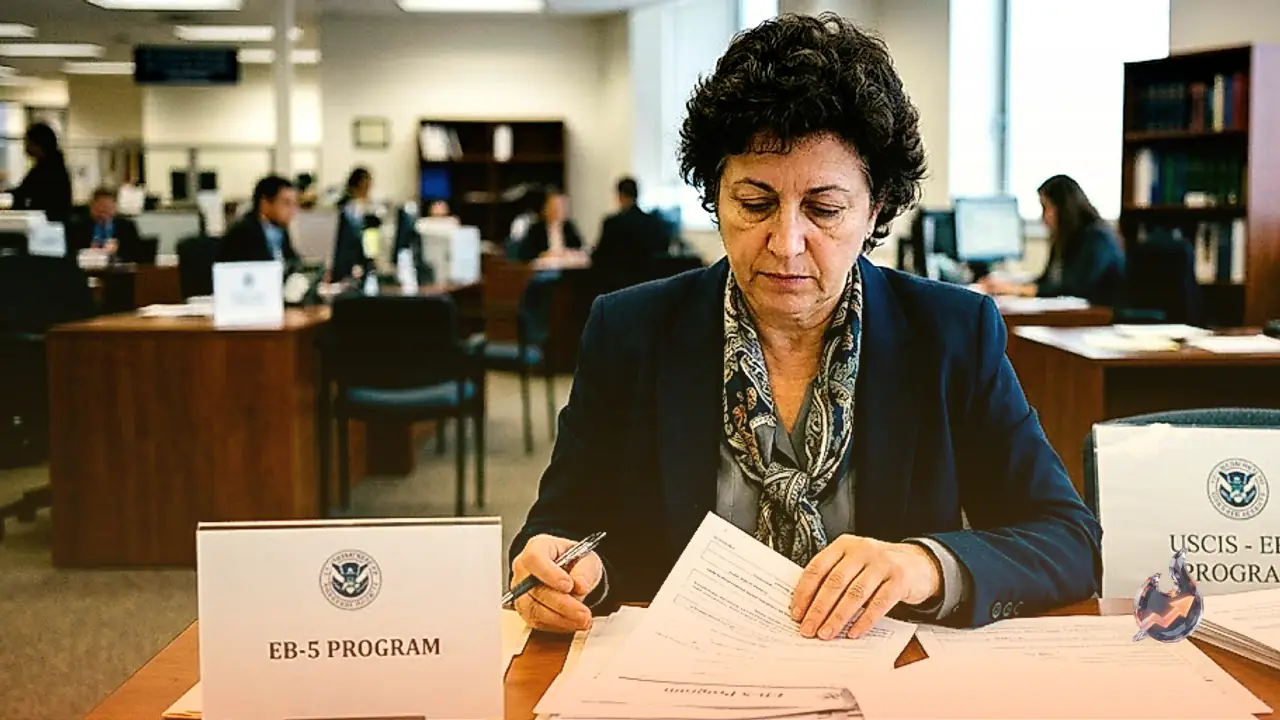

Securing permanent residency in the United States through capital investment is set to become substantially more expensive for foreign entrepreneurs. The United States Citizenship and Immigration Services finalized a comprehensive rule on Tuesday that more than doubles several key filing charges under the EB-5 investor visa category. The new fee schedule takes effect on November 30, directly impacting international applicants, including the large number of Indian families seeking Green Cards through this route.
Steep Increases for Individual Investor Petitions
Under the revised structure, the primary filing fee for standalone investors submitting Form I-526 will climb from USD 3,675 to USD 7,615. For investors participating through an approved regional center, the cost for an initial Form I-526E petition will surge from USD 3,675 to USD 7,850. Applicants filing either an initial Form I-526 or Form I-526E will also be assessed an additional USD 75 technology fee. Furthermore, regional center participants must continue to pay the program's mandatory investor integrity fee alongside the filing amounts.
Subsequent stages of the immigration pathway will also carry heavier financial requirements. The application fee for Form I-829, which investors submit to remove conditions on their two-year permanent resident status, is scheduled to increase from USD 3,750 to USD 5,000. Additionally, the finalized regulation introduces Form I-527 for investors wishing to amend older Form I-526 filings, setting the submission cost for this new form at USD 10,330.
Major Escalation in Regional Center Operating Costs
The steepest percentage adjustments target commercial regional centers operating within the program. The base fee for Form I-956, required to seek initial regional center designation, will experience an increase from USD 17,795 to USD 44,115. Entities submitting Form I-956F to obtain approval for an investment project in a commercial enterprise will see their required payment rise from USD 17,795 to USD 42,675.
In contrast to the widespread increases, the recurring annual fee for Form I-956G will undergo a reduction, moving downward from USD 3,035 to USD 2,165. Defending the comprehensive upward revision, the immigration agency pointed out that its operations are largely funded through user fees rather than general tax revenues. Consequently, the operational expenses involved in examining applications, performing security vetting, confirming investor eligibility, preventing fraudulent activity, and administering oversight must be directly covered by immigrants utilizing the service.
Program Framework and Application Backlogs
Established by the United States Congress in 1990, the EB-5 program was created to stimulate the domestic economy through job creation and foreign capital infusion. To qualify, an applicant must invest a minimum of USD 800,000 in a Targeted Employment Area or qualified infrastructure initiative, or USD 1.05 million in standard commercial enterprises. Every investment project must demonstrate the creation of at least 10 full-time jobs for American workers. Fulfilling these statutory standards permits the investor, their spouse, and their unmarried children under 21 to obtain Green Cards.
However, the pathway remains constrained by statutory limits. Much like other employment-based immigration paths, the EB-5 category is restricted by strict annual caps and individual per-country quotas. Over the past decade, surging interest from Indian applicants has created a massive backlog, stretching waiting periods for prospective migrants. The November 30 implementation date establishes a clear deadline for candidates planning their capital allocations under the existing rate schedule.