




















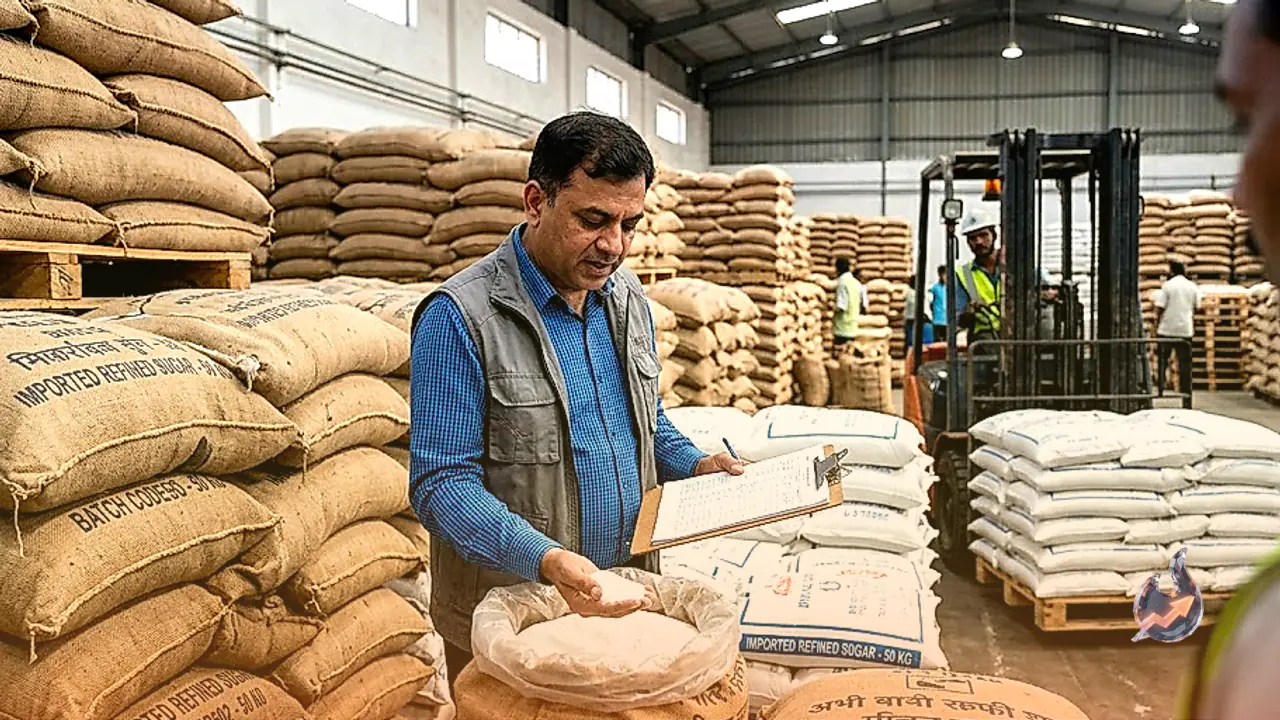

The Indian government has implemented a significant policy shift for bulk consumers of sugar by doubling their stock holding limit to 30 days. This decision, announced just before the peak festive season begins, replaces the earlier restriction that capped stock levels at a 15-day supply. However, this relaxation comes with a crucial caveat: the additional 15-day inventory can only consist of sugar imported under specific channels, namely the Advance Authorisation Scheme (AAS) and the Tariff Rate Quota (TRQ). Domestic purchases from the open market remain strictly restricted to the original 15-day consumption threshold.
Details of the Regulations and Weekly Tracking
To maintain strict oversight and prevent hoarding or speculative trading, the Ministry of Consumer Affairs, Food and Public Distribution has introduced a mandatory online reporting mechanism. Bulk consumers, defined as industrial entities consuming more than 10 metric tonnes of sugar monthly, are required to declare their stock positions every single week. This data must be updated on the government's dedicated online portal on Fridays. The decision to relax the holding limit was taken after various industrial sectors appealed to the government, citing the anticipated spike in demand during the upcoming major festivals when sweets and confectionery production peaks.
Protecting the Domestic Market from Supply Pressure
Officials have clarified that this policy adjustment is structured to support large-scale industrial consumers without creating supply bottlenecks or artificial scarcity in the domestic market. By restricting the extra 15-day storage capacity exclusively to imported sugar under the AAS and TRQ frameworks, the government ensures that bulk buyers do not aggressively purchase and hoard sugar from domestic mills. Consequently, the local supply chain remains unburdened, safeguarding retail consumers from sudden price hikes that often characterize the festive months.
Price Trends: Retail vs. Ex-Mill Rates
Analysis of recent market data reveals a notable divergence between wholesale and retail price movements. After reaching a peak of ₹65 per kilogram in August, retail sugar prices have moderated to approximately ₹58.50 per kilogram, marking a decline of around 10%. In contrast, ex-mill prices, which represent the rate at which sugar mills sell to wholesalers, have plummeted by approximately 25%. The government has pointed out that the benefits of this massive 25% drop in ex-mill rates have not yet been fully transferred to the end consumers. Officials expect further retail price corrections in the market as the festive season approaches.
Directives to the Sugar Industry and Trade Associations
In a bid to accelerate the transmission of lower prices to household consumers, senior government officials held a crucial meeting on Friday. The meeting brought together key stakeholders, including the Indian Sugar Mills Association (ISMA), the National Federation of Cooperative Sugar Factories, and prominent sugar traders. During the discussions, the government strongly urged manufacturers, distributors, wholesalers, and retail shop owners to immediately pass on the benefits of the reduced ex-mill prices to ordinary buyers, ensuring that affordable sugar is available throughout the festive period.
Looking Ahead: New Sugar Season and Fair Sugarcane Pricing
The broader sugar policy framework continues to balance the interests of both sugarcane cultivators and everyday consumers. The government announced that the upcoming sugar season is scheduled to commence on October 1, 2026. For this new cycle, the Fair and Remunerative Price (FRP) for sugarcane has been established at ₹365 per quintal, representing a revised rate for farmers. The administration has reiterated its commitment to continuously monitor domestic stock levels, production outputs, and market prices, promising to intervene with further regulatory measures if necessary to maintain price stability.