























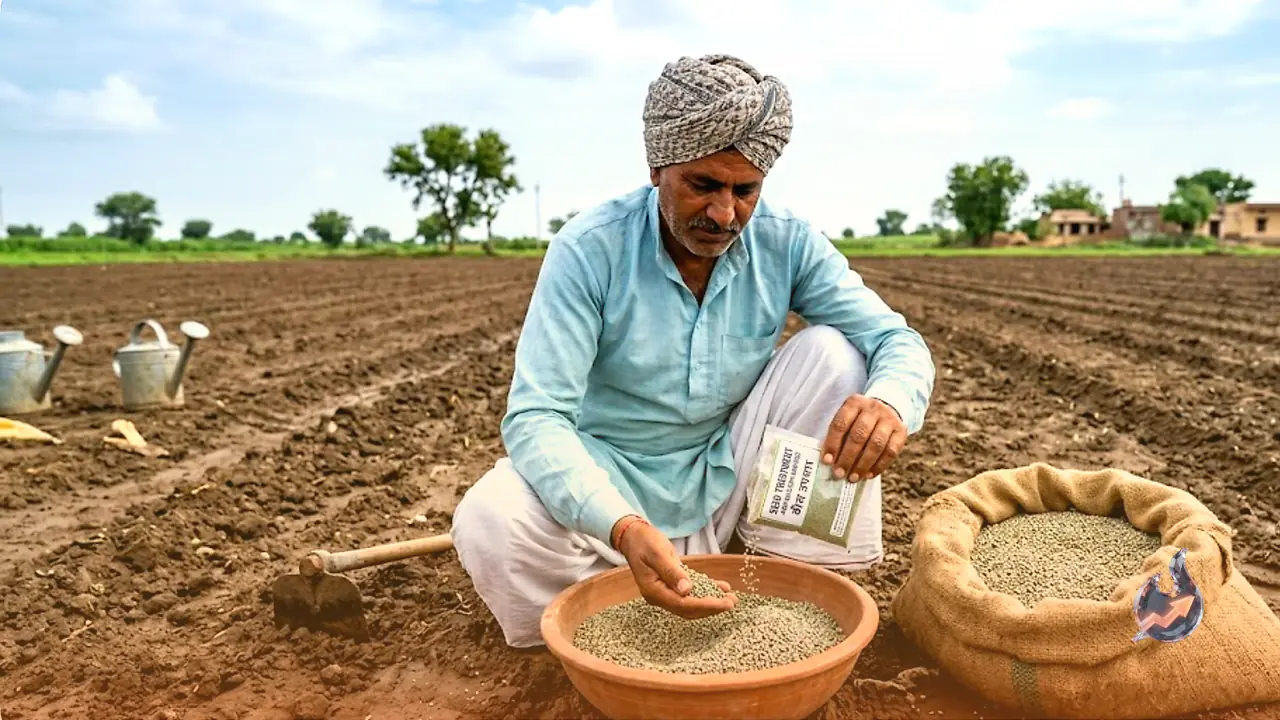

The first showers of the monsoon have brought Rajasthan's fields back to life, and farmers are now busy preparing for the kharif season. Among these crops, pearl millet stands out as one of the state's most important, cultivated across nearly 45 lakh hectares. What makes it special is its ability to deliver a good yield even with little water, which is exactly why sowing it on time and through scientific methods matters so much for a farmer's earnings.
According to agriculture officer Kailash Chandra Sharma, the best window to sow pearl millet runs from mid-June to the third week of July. He explains that sowing the seed after the first good rainfall leads to stronger germination and better plant growth.
The Right Soil and Varieties for a Good Result
Sandy loam soil with good drainage is considered most suitable for pearl millet. Before sowing, the field should be ploughed well so the soil turns loose and crumbly, making it easier for the seed to take root. The choice of variety also plays a big role in lifting the yield. Farmers are advised to opt for improved varieties such as RHB-173, RHB-177, RHB-223, RHB-228, RHB-233 (biofortified) and RHB-234 (biofortified). Around 4 kilograms of certified seed is enough for one hectare.
Don't Skip Seed Treatment Before Sowing
A good crop begins with proper seed treatment. To guard against gundiya and champa diseases, soak the seeds in a 20 percent salt solution for five minutes, which causes the light and damaged seeds to float up and separate out. After this, wash the seeds with clean water and dry them in the shade. To protect the crop from white grub and termites, the seeds should be treated with imidacloprid or clothianidin before sowing.
Kailash Chandra Sharma adds that at the time of sowing, the row to row distance should be kept at 40 to 50 centimetres and the plant to plant distance at 10 to 15 centimetres. Then, 15 to 20 days after sowing, thinning should be done to bring the gap between plants to roughly 15 centimetres, so every plant gets full nourishment.
Balanced Manure and Protection From Blast Disease
To give the crop plenty of nutrition, it helps to add 10 to 12 tonnes of well-rotted cow dung manure or 2.5 tonnes of vermicompost per hectare to the field before sowing. Chemical fertilizers should be used keeping the local rainfall in mind. Apply half the dose of nitrogen and the full dose of phosphorus at the time of sowing, while the remaining nitrogen should be added 25 to 30 days later once it rains.
If symptoms of blast disease appear in the crop, the recommended fungicide should be sprayed without delay. In short, by following these three steps, timely sowing, seed treatment and balanced nutrition, farmers can secure a healthy pearl millet harvest and raise their income.