

















Several regions within the Gaya district are currently grappling with an acute water crisis. Despite the passing of the peak summer months, the scarcity of water remains a critical issue, severely impacting the daily lives of residents. The situation is particularly dire in the Dumariya and Imamganj blocks, where approximately a dozen villages, including Magra, Maira, Sidhpur, and Jhiktia, are facing extreme difficulties. This challenge is magnified by the current timing, which coincides with the critical period for sowing paddy seeds.
Riverbed Becomes the Only Lifeline for Farming
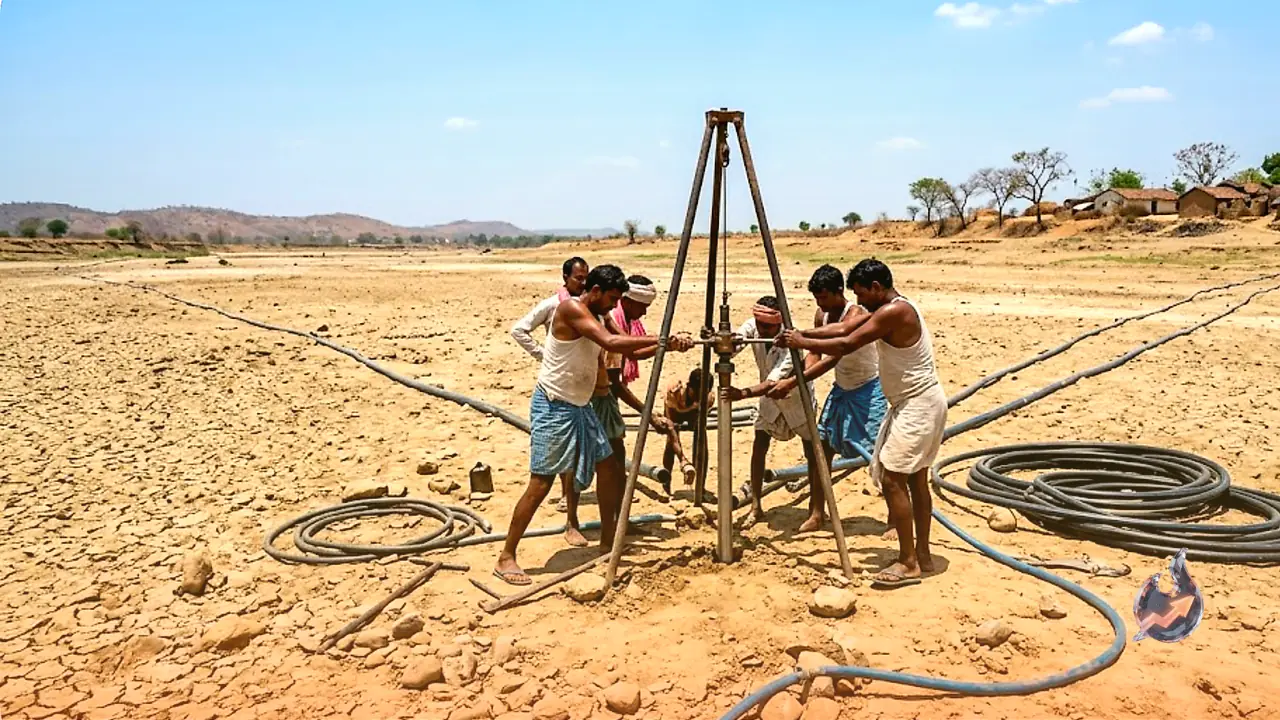
With the paddy sowing season underway, farmers in these areas are under immense pressure due to the lack of irrigation water. The Sorhar River has dried up completely, leaving local farmers with no choice but to install borewells directly in the middle of the riverbed. Using heavy-duty motors, they are pumping water and transporting it through long, makeshift pipelines that stretch between 500 and 1,000 meters to reach their homes and agricultural fields. This desperate measure is currently the only way they can manage to keep their paddy seedlings alive.
Drastic Drop in Groundwater Levels
The groundwater table in this region has receded so significantly that most public handpumps have ceased to function. In places like Magra Bazaar, a persistent drinking water crisis has existed for years. Many residents who could afford it spent thousands of rupees to install private borewells, yet even these have failed to provide an adequate supply of water. A major hurdle in the region is the geological composition; after digging about 15 feet, workers hit layers of hard stone, making further excavation and water extraction nearly impossible.
Testimonies from Local Residents
Mahavir Rajak, a resident of Jhiktia village, stated that the water scarcity has reached a critical stage across multiple surrounding villages. He explained that since it is the peak season for farming, the lack of water combined with the high rate of failed borewells is causing widespread distress. Dozens of families now rely entirely on the Sorhar River, visiting the dry bed morning and evening to collect water for their basic daily requirements, as household sources have largely run dry.
The Long-Broken Dam Problem
Locals pointed out that a stone dam was constructed across the Sorhar River near Maira village about 10 to 12 years ago to help conserve water. However, the structure was destroyed and swept away by high-velocity water currents within a few years. Since then, no restorative work has been undertaken at the site. The absence of this dam prevents water retention in the river, leaving farmers struggling significantly with their cultivation needs to this day.