






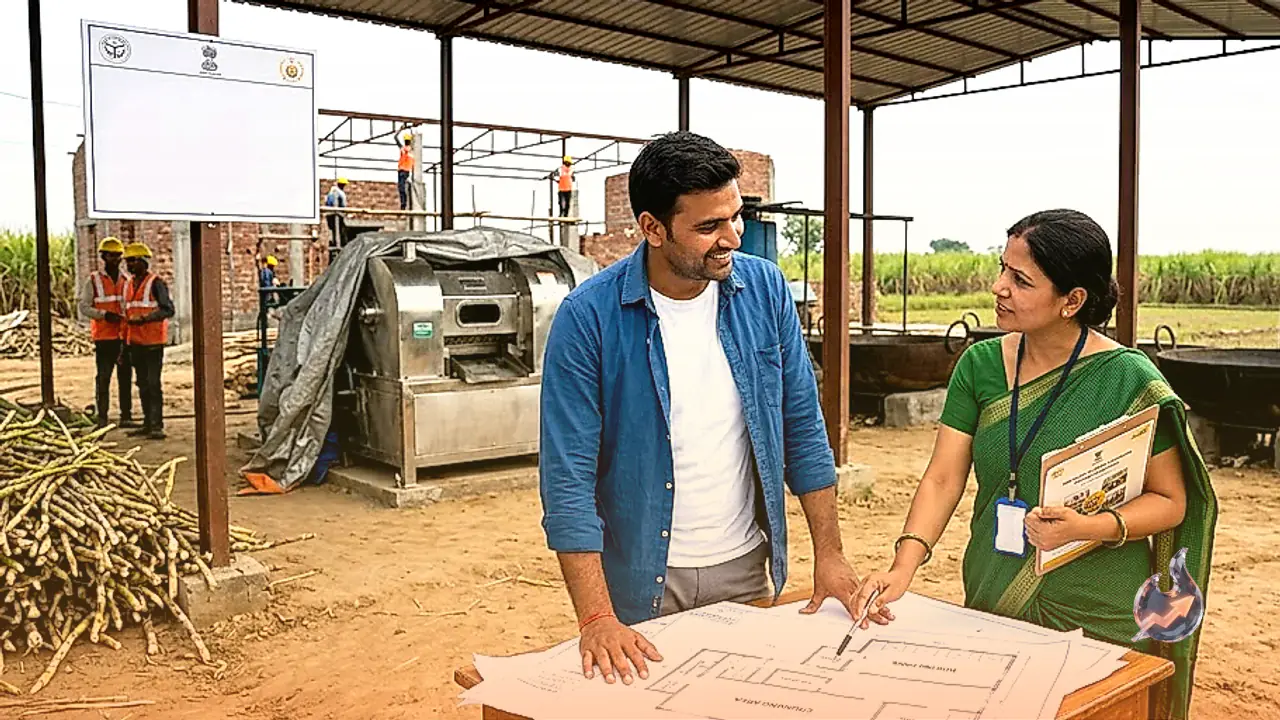















People in Moradabad, Uttar Pradesh, who are planning to start a small business now have an appealing option in setting up a jaggery, or gur, making plant. The venture requires relatively modest investment, and a central government scheme is now offering a hefty subsidy on it, making it especially attractive for farmers and new entrepreneurs in the sugarcane belt.
How Much Land, Machinery and Investment Are Needed
Setting up a gur making unit requires roughly 4,000 to 4,500 square feet of space. Alongside this, machines such as a crusher to extract juice from sugarcane and a large kadhai, or boiling pan, to cook the juice need to be installed. Running the unit needs 10 to 15 workers, while the initial investment in land, machinery and other resources comes to roughly Rs 10 to 15 lakh. The process itself is not particularly complex, the sugarcane juice is first filtered, then boiled in the kadhai, and finally poured into moulds to set into solid jaggery. This means the unit can be started with limited machinery and space.
PMFME Scheme Offers a Subsidy of Up to 35 Percent
According to Vimal Kumar Tomar, who holds the post of DRP in the Horticulture Department, the production of jaggery powder and jaggery laddoos is being promoted under the Pradhan Mantri Formalisation of Micro Food Processing Enterprises Scheme, known as the PMFME scheme. Under this scheme, the central government provides a subsidy of up to 35 percent of the total project cost for setting up a jaggery processing plant. Notably, this subsidy amount is transferred directly into the beneficiary's bank account, removing the need for any middlemen and ensuring the money reaches the beneficiary on time. Tomar said this facility is proving to be a big help for small entrepreneurs and farmers looking to set up their own business, and that many farmers and entrepreneurs in the region have already benefited from the scheme.
Applications Rise, Processing to Pick Up Pace From October
A large number of applications for the scheme have already been received at the office. The sugarcane crushing season begins from October, which leads to a sudden rise in demand for jaggery production. Keeping this in mind, processing of all the applications received so far will begin from next month. In previous years, around 7 to 8 large jaggery processing plants have been set up in the region under this scheme. Currently, 8 units are operating successfully here and supplying farmers with a quality product.
Documents Needed to Set Up the Plant
Applicants will need to submit an Aadhaar card, PAN card, bank statements of the last 6 months and an electricity bill. If the plant is to be run on a genset or any other alternative energy source, that information must also be provided along with the application.
Farmers and Villagers Both Stand to Gain Employment
Tomar said the scheme is not limited to raising farmers' income alone, it is also creating new employment opportunities in rural areas. Once a jaggery processing unit is set up, farmers will get a better avenue to market their produce, while local residents will also gain access to employment opportunities.