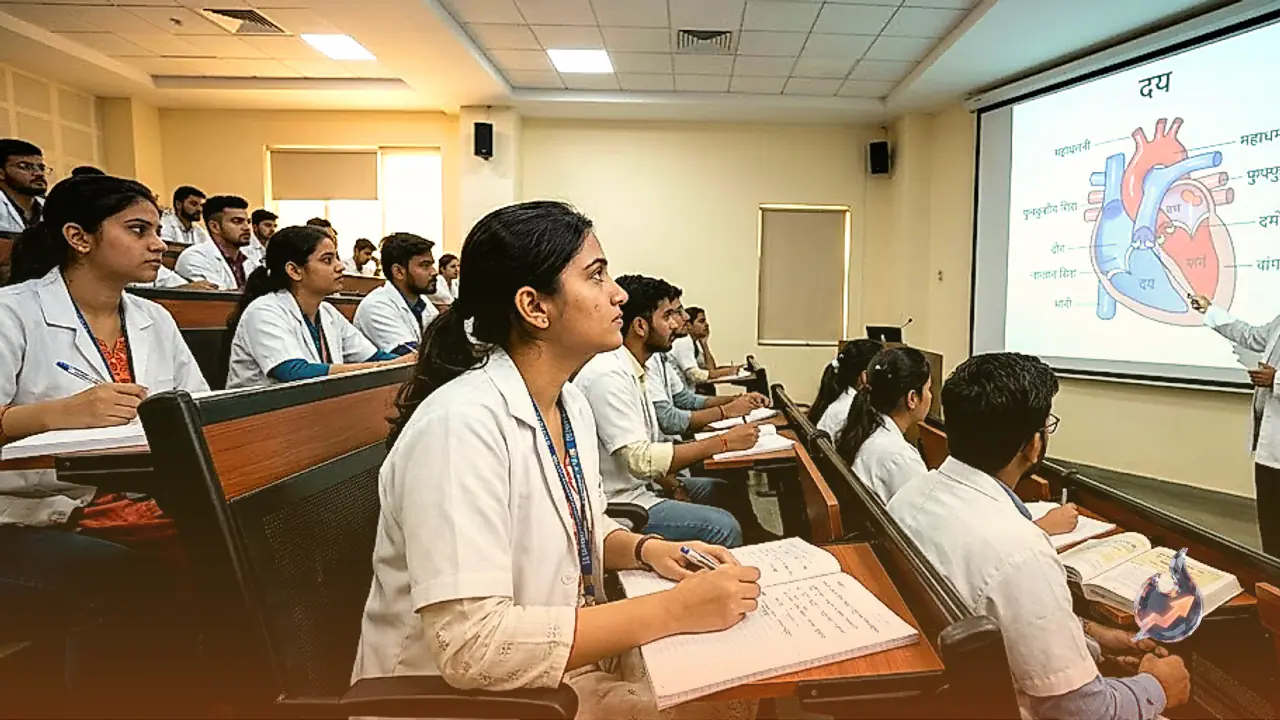

























Walk into any hospital or clinic and two white-coated figures stand out — the doctor and the nurse. Treating a patient depends on the two working in tandem, much like a vehicle that cannot move without both its wheels. Yet many people view their roles through the same lens and miss the basic difference between them. If you are thinking of a career in healthcare, understanding that difference upfront is essential.
The simplest distinction lies in the purpose of the work. A doctor's entire focus is on identifying the illness — diagnosing it — and deciding the right medicine or surgery. A nurse, on the other hand, puts that prescribed treatment into practice and looks after the patient around the clock.
Two Different Study Paths
The road to becoming a doctor begins by cracking NEET, one of the toughest exams in the country. That is followed by a 5.5-year MBBS course. To become a specialist in a particular field, a further 3 years of MD or MS study is required. In all, becoming a fully qualified doctor takes roughly 8-9 years.
Nursing follows a different track. It involves a 4-year BSc Nursing degree course or a 3-year GNM (General Nursing and Midwifery) diploma. There is also the option of a 2-year MSc Nursing later on. Here the emphasis falls less on classroom theory and more on hands-on, practical training in caring for patients.
Who Does What in the Hospital
Inside a patient's room, the two roles are clearly divided.
The doctor: reviewing the patient's medical history, ordering necessary tests (such as blood tests and X-rays), pinpointing the illness, prescribing medicines and performing surgery when needed. Doctors usually see the patient only once or twice a day, during their rounds.
The nurse: giving the medicines and injections prescribed by the doctor at the correct time, constantly monitoring the patient's vitals (such as BP, pulse and oxygen level), dressing wounds and attending to every need, big or small.
The Patient Connection: Science vs Empathy
A doctor's bond with the patient is mainly 'clinical' — the focus stays on curing the disease through a scientific approach. A nurse, by contrast, stays closest to the patient. She offers emotional support to the patient and their family, lifts their spirits and feels their pain up close. That is why nursing is regarded as a deeply sensitive, service-oriented profession.
Working Hours and Shifts
A doctor's work is often on-call. If an emergency strikes, a surgeon or specialist may have to rush to the hospital even in the middle of the night. That said, once they become senior, they can set their own OPD timings. Nurses, meanwhile, work in strict rotational shifts — morning, afternoon and night. Throughout their shift they must stay continuously active in the ward or ICU, which makes the physical strain considerable.
Salary and Career Growth
Becoming a doctor demands years of time and a great deal of money, which is why both their salary and social standing run high. Even a fresher doctor can earn in lakhs, and with experience there is no fixed ceiling on the income. In nursing, the starting salary is lower than a doctor's — but the picture is changing. With the rise of corporate hospitals and strong demand abroad in places like the Gulf countries, the UK and Canada, nurses too are now landing excellent salary packages and rapid career growth.