


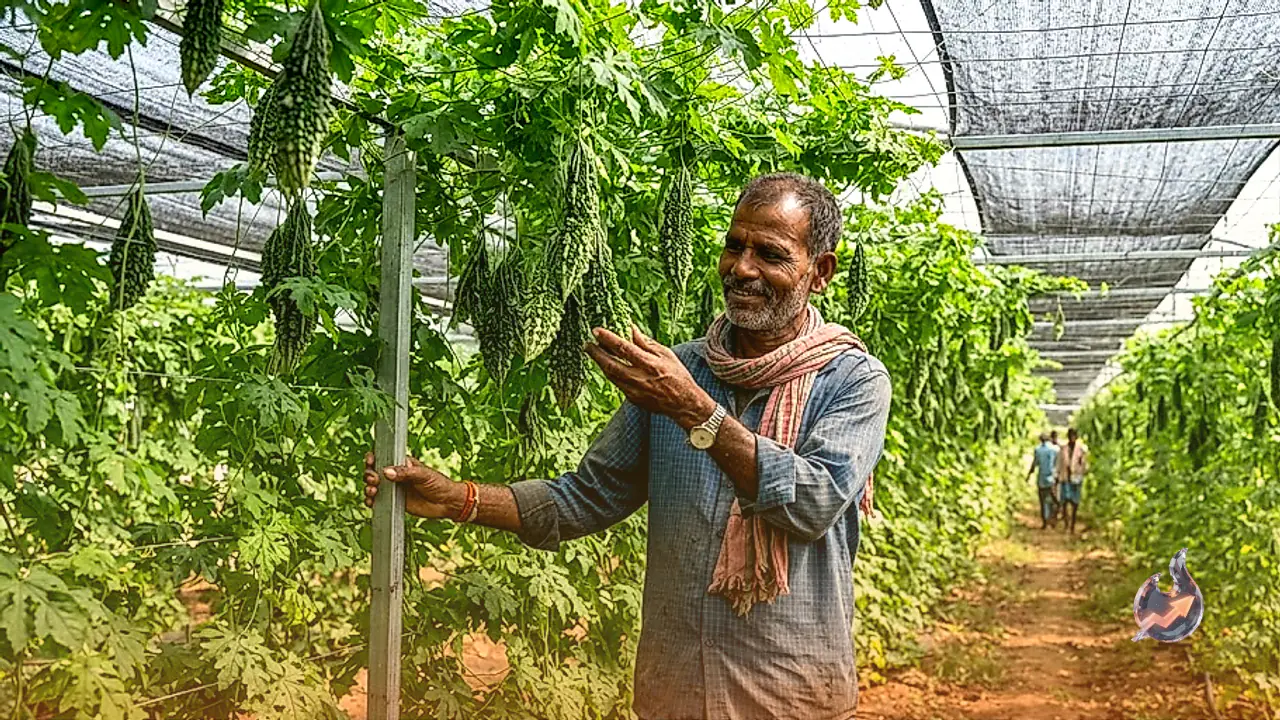


















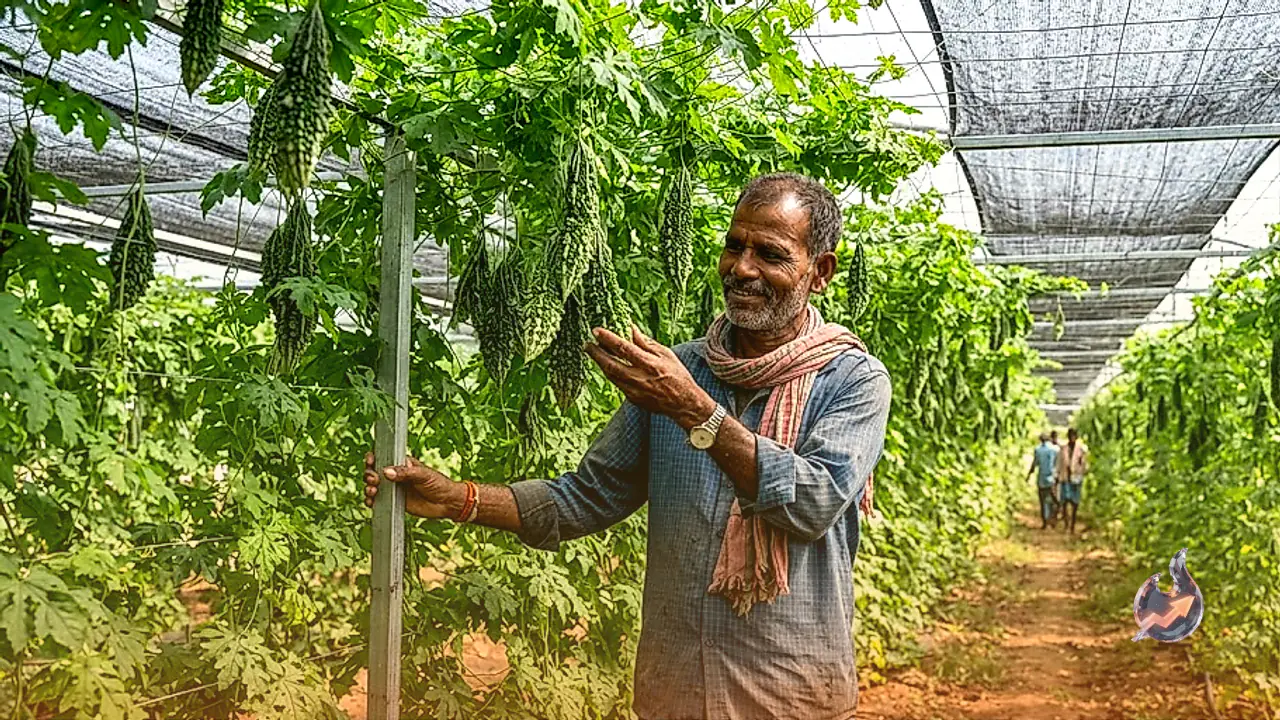

An agricultural shift is underway in Bastar, where a local farmer has chosen to cultivate bitter gourd seeds rather than growing the vegetable for standard markets. Samlu Kashyap utilized government subsidies to install a shade net structure, creating a controlled environment specifically for bitter gourd seed production. While conventional farmers typically harvest bitter gourd to sell as a fresh vegetable, this cultivator has set his sights entirely on the lucrative seed market. Success in this specialized agricultural venture demands strict adherence to proper techniques, meticulous crop maintenance, and rigorous quality control.
Land Preparation and Nutrient Management
The cultivation process spans approximately half an acre of land. Preparing the field requires four to five rounds of plowing, followed by rotavator usage to build raised beds. The distance between each bed is maintained at 5 feet, while individual plants are spaced 4 feet apart from one another. Soil enrichment involves a combination of organic farmyard manure, DAP, and single super phosphate. Furthermore, growers apply water-soluble fertilizers such as 12:61, 19:19, and 13:0:45 during subsequent growth stages to support optimal plant health.
Production Timeline and Market Valuation
This crop follows a short three-month growth cycle from planting to harvest. Industry guidelines indicate that a yield of up to three quintals is achievable under optimal conditions. Cultivating the crop on half an acre brings the potential harvest to three quintals. Current market rates for these specialized seeds range between 2100 and 2200 rupees per kilogram. At this pricing structure, a single quintal commands a value of 210,000 rupees. In the previous season, the same half-acre plot generated a total output of two quintals.
Input Costs, Profit Margins, and Direct Sales
Total operational expenditures for this specialized farming venture range between 60,000 and 70,000 rupees. Even if the harvest drops to one and a half quintals on the half-acre plot, revenues can still reach up to 300,000 rupees. One of the greatest advantages of this agricultural model is the elimination of marketing hurdles, as farmers do not need to search for buyers. Representatives from the contracting company visit the farm directly to purchase and collect the entire seed yield, ensuring a streamlined and reliable income stream.