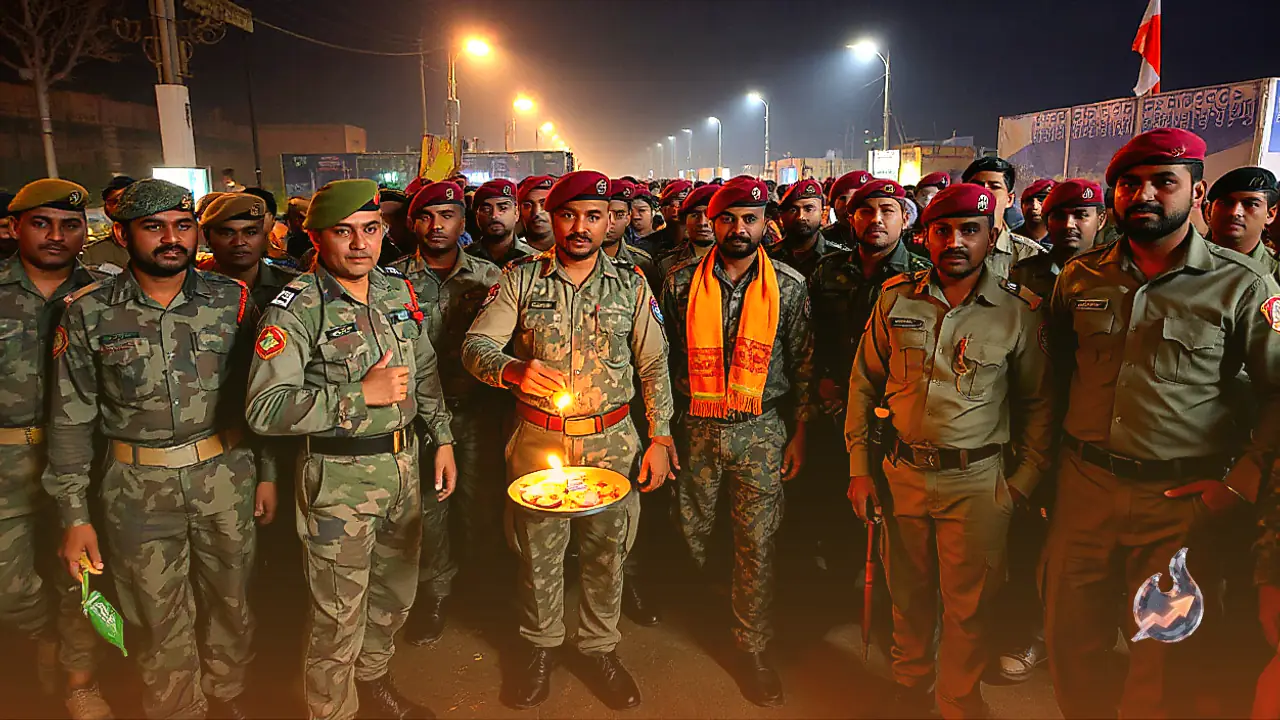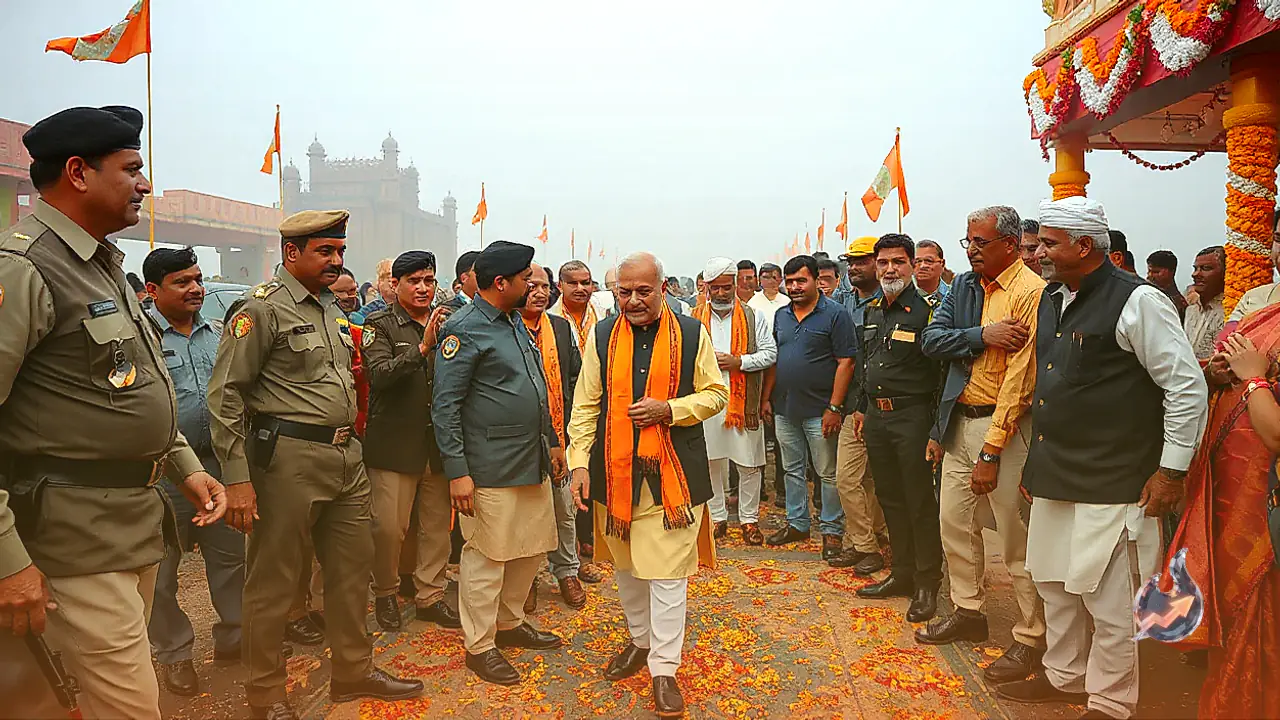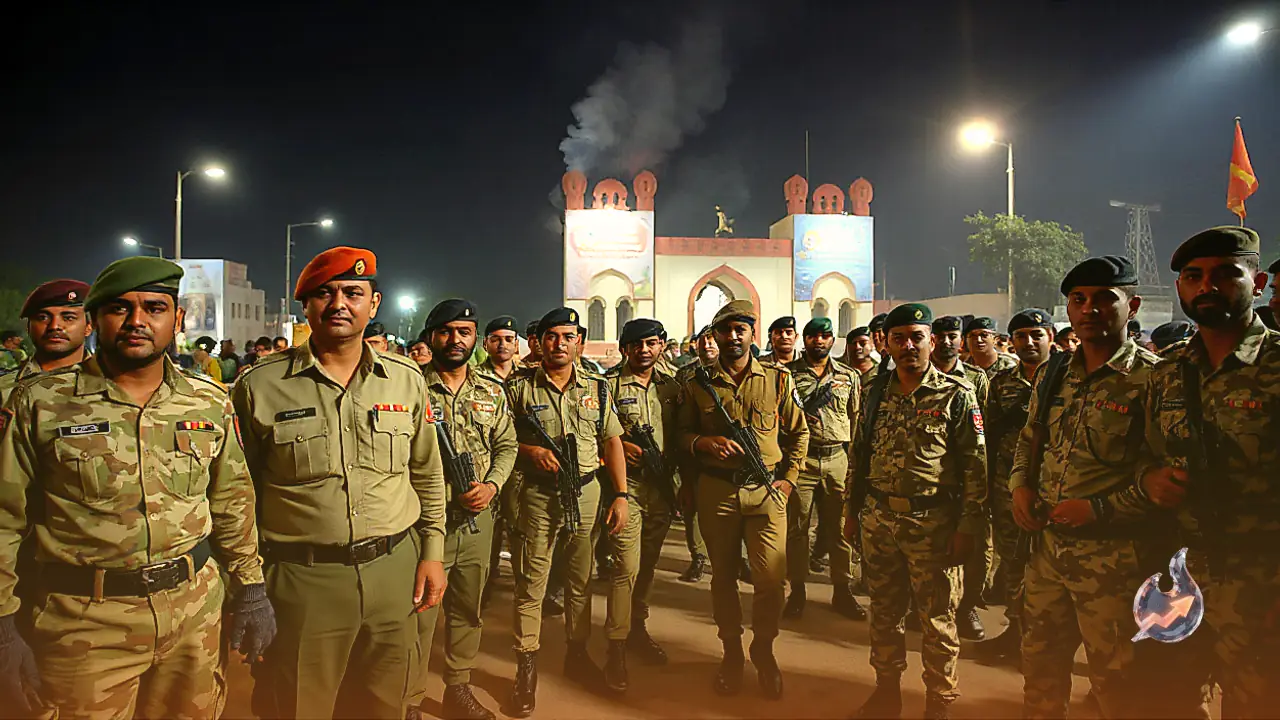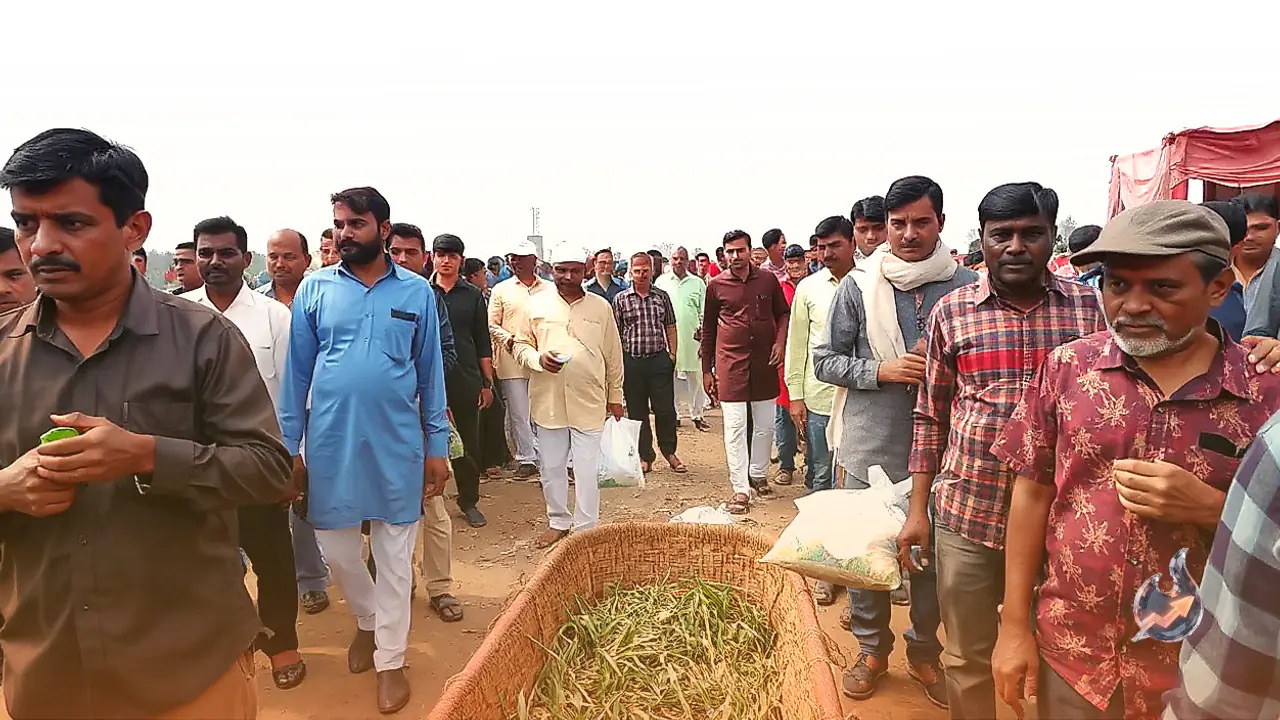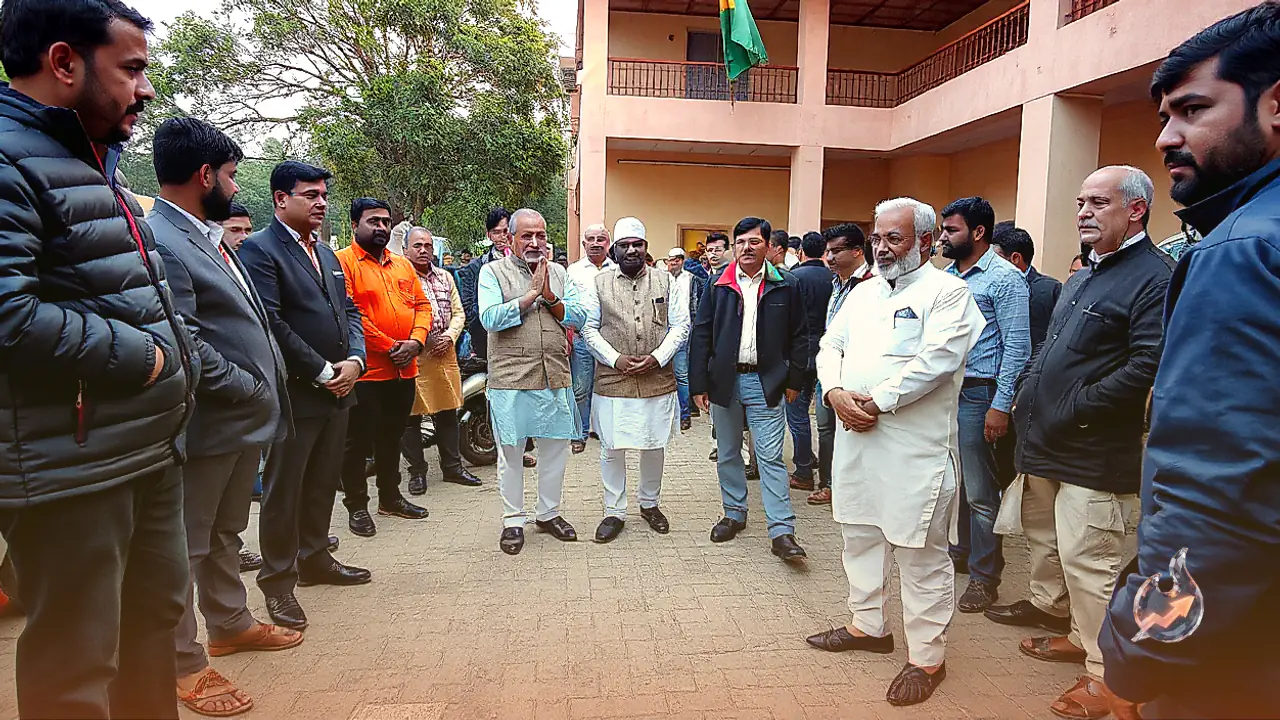


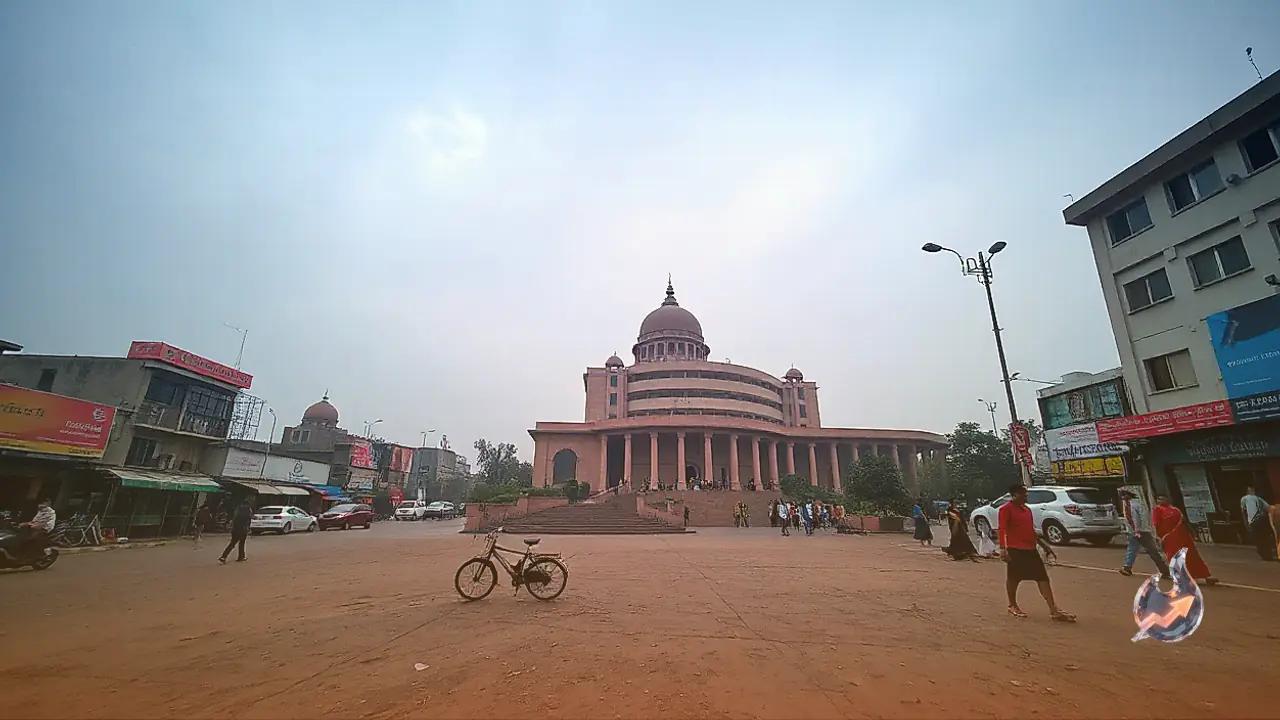


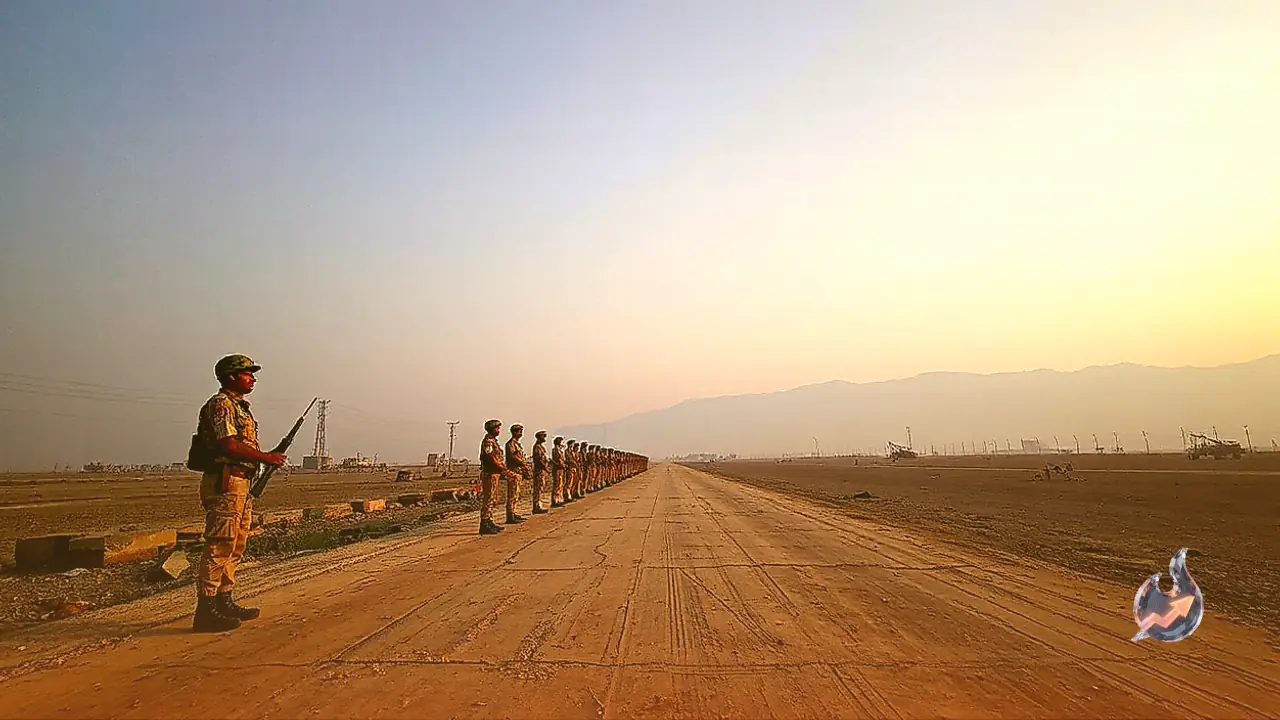

















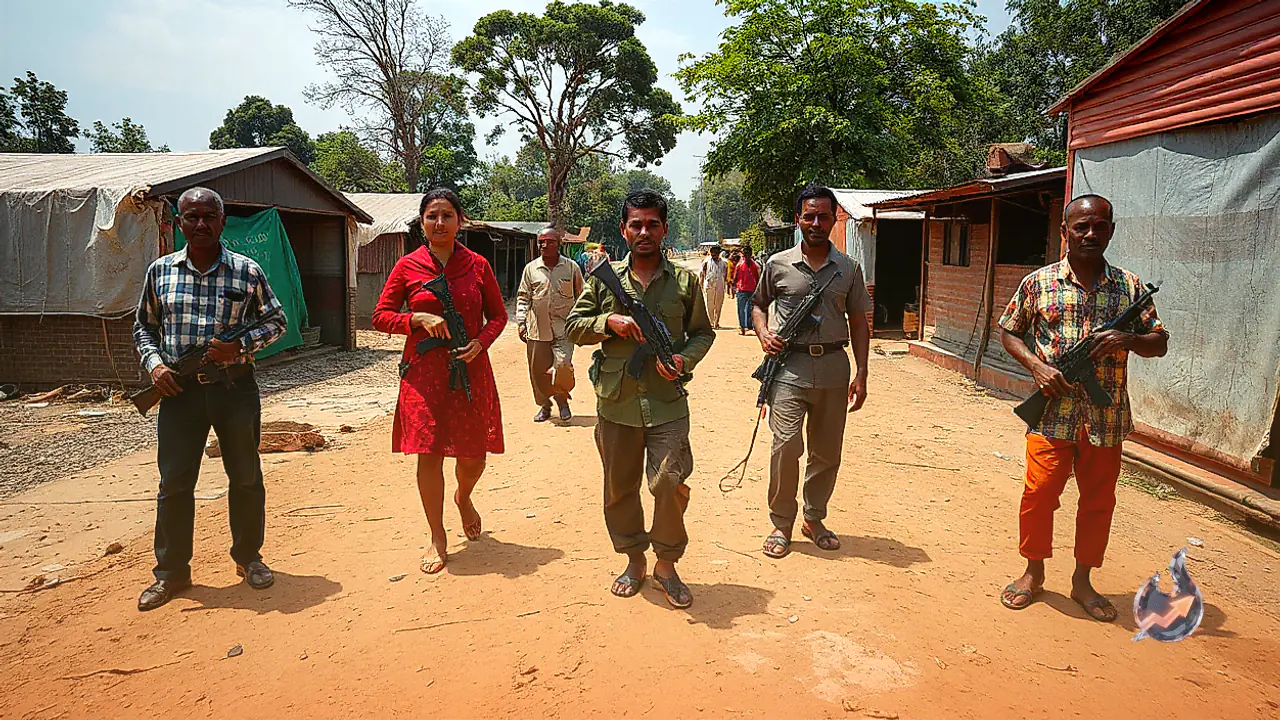

For decades, Chhattisgarh's Bastar division remained trapped beneath the grim shadow of landmines, ambush attacks, and violent extremism. Once categorized as the most severe vulnerability in India's internal security landscape, the expansive forest belt has undergone a fundamental transformation toward lasting stability and civilian administration. Following sustained, synchronized operations across remote terrains, the entire region was officially declared free of Naxal presence on March 31, 2026. Underlining this historic shift, Prime Minister Narendra Modi traveled to Bastar during the Diwali celebrations, breaking conventional routines to stand beside troops and local communities in an area that was previously deemed inaccessible.
The prime minister's presence was preceded by Home Minister Amit Shah's strategic review in the territory, conducted immediately after the completion of the decisive tactical campaign titled Operation Black Forest. The political leadership's direct engagement demonstrated that state authority had been firmly re-established across every pocket of the former Red Corridor. Executed on a dedicated mission mode between August 24, 2024, and March 31, 2026, the comprehensive offensive systematically located, neutralized, and dislodged armed insurgent cadres who had long held tribal hamlets hostage to fear.
The Legacy of Violent Conflict and Human Casualties
The scale of disruption that historically plagued Bastar is underscored by empirical records from the peak years of unrest. In 2010 alone, security registries documented approximately 1936 major criminal cases involving severe violent clashes, targeted executions, and mine blasts orchestrated by insurgent formations. That single calendar year witnessed the tragic deaths of 720 civilians. Expanding the historical timeline up to 2014, law enforcement records logged a total of 17542 aggressive, high-intensity incidents. These encounters resulted in the supreme sacrifice of 1913 security personnel in the line of duty, alongside the loss of nearly 5000 civilian lives.
The armed capability of the extremist factions was largely sustained through deliberate raids against public arsenals. Forensic analyses established that roughly 92 percent of weapons in insurgent hands were looted directly from state police units and Central Armed Police Forces outposts during surprise ambushes, supplemented by covert smuggling conduits. Armed with these weapons, extremist commanders systematically destroyed public infrastructure, frequently demolishing bridges, schools, and telephone towers to ensure tribal populations remained completely isolated from governance and mainstream economic opportunities.
Strategic Overhaul and Expanded Budgetary Backing
A turning point emerged in 2015 when federal security planners orchestrated a total doctrine shift. The national policy discarded passive containment in favor of an assertive, twin-track methodology: an uncompromising security drive paired with rapid, saturation-level economic development. Recognizing that underfunded operations yielded fragmented results, the administration deployed massive financial resources directly into the anti-insurgency framework.
Under the Special Central Assistance initiative, an allocation of 4289 crore rupees was directed toward local welfare and administrative outreach. A separate outlay of 1761 crore rupees was sanctioned exclusively for high-priority infrastructure development across dense interior sectors. Simultaneously, to modernize weaponry, logistical capacity, and frontline protective equipment, authorities released approximately 3805 crore rupees in dedicated security funding during the 2014-15 financial period. This capital backing fundamentally restructured frontline combat readiness across the state.
Upgraded Security Grid and Modern Intelligence Technologies
On the ground, security planners established a dense, interlocking grid designed to choke off extremist transit routes. While fewer than 66 police stations functioned across the terrain prior to 2014, the operational footprint expanded to incorporate 663 newly commissioned police stations. In parallel, 408 modern operational camps of the Central Armed Police Forces were erected inside deep jungle pockets that had previously functioned as insurgent sanctuaries. To facilitate night-time medical evacuations, surveillance sorties, and rapid troop reinforcement, engineers built 68 advanced helipads equipped with night-landing capabilities.
Protecting frontline personnel against landmine ambushes remained an urgent priority, prompting the induction of more than 400 specialized bulletproof and blast-resistant vehicles. In tandem with military infrastructure, major medical centers were established to treat injured personnel and provide advanced medical attention to neglected local villagers. Technology served as a core force multiplier. Security formations relied on unmanned aerial vehicles, tactical drones, satellite reconnaissance, and artificial intelligence-driven data analysis. Investigators cross-referenced scientific call log records, location tracking systems, and social media footprints to pre-empt ambushes before cadres could assemble.
Series of Operations Culminating in Operation Black Forest
Coordinated tactical initiatives steadily degraded the organizational cohesion of the underground network. The initial offensive, Operation Chakrabandha, was succeeded by Operation Bhimbarg, systematically pushing armed groups out of long-held hillocks. Security formations subsequently escalated their operational tempo through Operation Thunderstorm, Operation Double Bull, and Operation Octopus, dismantling logistical hideouts across interstate forest boundaries.
The decisive breakthrough materialized under Operation Black Forest, an intensive tactical intervention designed to disrupt the core command network of the extremist faction. In addition to neutralizing 30 high-ranking insurgents in direct tactical engagements, Operation Black Forest precipitated the mass surrender of nearly 3000 fighters across several weeks. By dislodging entrenched rebel leadership from natural forest fortresses, the operation effectively broke the back of the underground movement and triggered an unprecedented collapse of discipline within lingering insurgent units.
Targeting Illicit Finances and Legal Prosecution
Sustained combat in the jungles was reinforced by aggressive financial interdiction targeting the extortion networks that funded extremist activities. The National Investigation Agency focused on tracing levy extraction, illegal transport taxation, and covert money transfer conduits. By December 2025, the National Investigation Agency had seized insurgent assets valued at approximately 40 crore rupees. Concurrently, the Enforcement Directorate impounded properties worth nearly 12 crore rupees tied to unlawful money laundering operations.
State police authorities and specialized state investigation wings coordinated their actions, freezing further illicit properties valued at approximately 40 crore rupees across multiple jurisdictions. These coordinated financial crackdowns unfolded alongside the rigorous investigation of 111 Left-Wing Extremism cases. The National Investigation Agency independently managed 112 cases, formalizing strong chargesheets in 100 of them before designated courts. Choking off access to liquid capital deprived the underground apparatus of the resources required to purchase armaments, sustain rations, or pay stipends to lower cadres.
Humane Surrender Framework and Social Integration
The administrative playbook recognized that long-term peace depended on offering an honorable exit to individuals trapped inside extremist structures. The Ministry of Home Affairs introduced a structured rehabilitation framework offering immediate financial relief. Under this package, higher-ranking cadres who laid down arms received an upfront grant of 5 lakh rupees. Combatants in other operational tiers received 2.5 lakh rupees in financial assistance, alongside a monthly subsistence stipend of 10000 rupees spanning 26 months. An additional incentive of 50000 rupees was awarded to those who surrendered functional firearms.
Beyond immediate fiscal packages, returning cadres were integrated into vocational skill development programs, educational schooling, housing initiatives, and livelihood schemes. Official data reflects that 3977 insurgent cadres formally laid down arms during 2024. This momentum continued into 2025, during which an additional 2337 fighters renounced violent activities. Over the course of the intensive campaign running up to March 31, 2026, more than 3000 surrendered individuals were fully rehabilitated within the Bastar administrative division alone. High-profile surrenders highlighted the collapse of morale: on July 28, 2026, a group of 16 insurgents surrendered in Ranchi, while on July 39, 2026, eight major extremists carrying substantial bounties surrendered at the Bijapur police station.
Highway Networks, Digital Access, and Tribal Inclusion
Throughout the years of militancy, road building faced grave risks from hidden improvised explosive devices, with insurgent cells routinely planting 100-kilogram explosive payloads beneath dirt tracks to strike construction escorts. Overcoming these hazards through rigorous mine-clearing protocols, authorities designed a master plan covering 15189 kilometers of road infrastructure. Within Bastar itself, over 3240 kilometers of all-weather paved roads were constructed, unlocking access to schools, primary healthcare centers, markets, and regional administrative hubs.
Hundreds of telecommunication towers were erected, blanketing deep forested valleys with mobile and data connectivity. Digital classrooms brought modern learning to remote tribal hamlets, while micro-ATMs and local branch banking services brought formal credit to village doorsteps. Crucially, the security apparatus drew strength from indigenous youth. Units like the District Reserve Guard utilized deep local geographic knowledge, while the Bastariya Battalion, established in 2017 with 1143 personnel, provided a formidable indigenous counter-insurgency force. The recruitment of 400 local youths from Bijapur, Sukma, and Dantewada sealed operational gaps, permanently depriving extremists of hiding spaces.
From Red Corridor to Development Corridor
The comprehensive retreat of extremism in Bastar marks the close of an agonizing era for central India. A conflict zone that once encompassed 136 heavily affected districts nationwide has now seen that metric drop to zero. The gun culture that dominated the landscape for six decades has been replaced by peaceful commerce, sports, infrastructure, and civic life. Bastar stands today as proof that unwavering security resolve, when paired with inclusive development, can transform former conflict zones into beacons of progress.