




















During peak agricultural cycles, securing essential plant nutrients often turns into an exhausting ordeal for cultivators. Farmers routinely encounter serpentine queues outside cooperative societies and retail stores, artificial shortages, arbitrary price gouging, and illicit hoarding. Missing optimal application windows for urea or di-ammonium phosphate due to distribution delays directly damages crop productivity. In response to these persistent challenges, the agriculture department has initiated an end-to-end digital mechanism for fertilizer allocation. By generating mobile app-based QR codes and digital tokens, the administration aims to ensure growers receive agricultural inputs strictly according to approved government rates without unnecessary administrative runarounds.
Pilot Rollout Begins in Sendri Village of Bilha Block
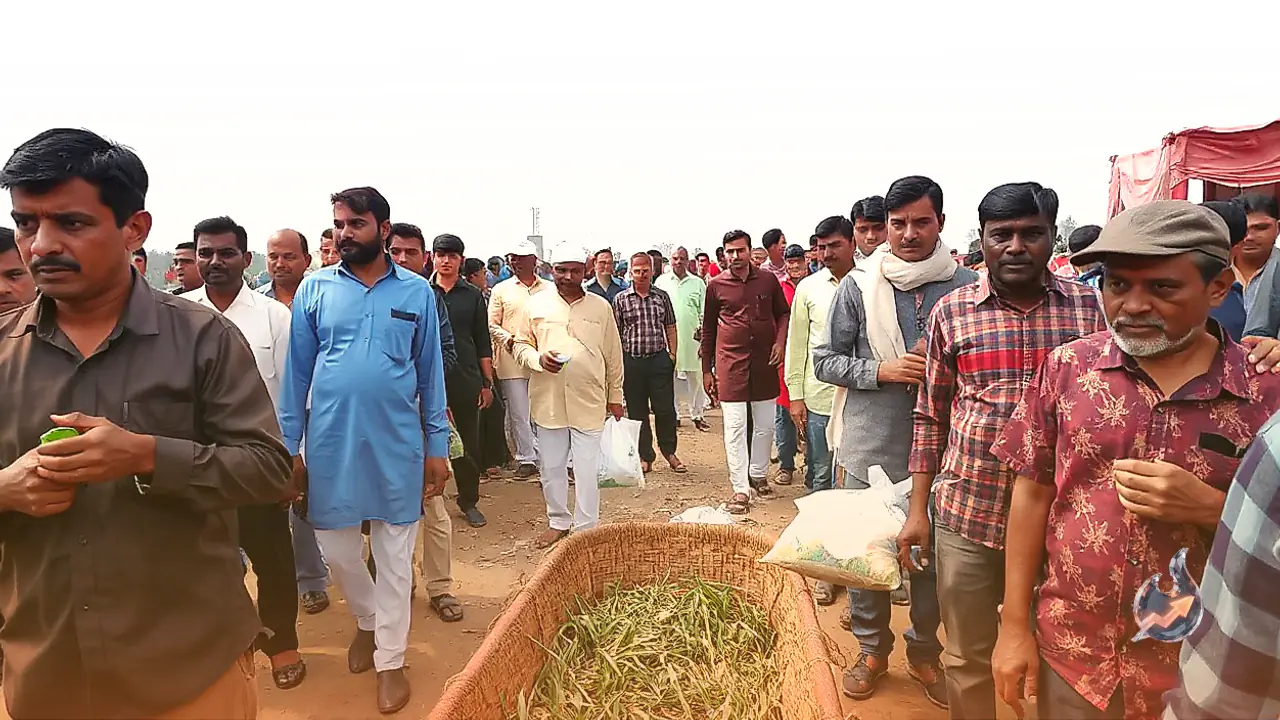
The ground validation of this tech-enabled distribution framework was set in motion in Sendri village, located within Bilha development block of Bilaspur district. The testing was carried out simultaneously at a primary agriculture credit cooperative society and an authorized private fertilizer retail outlet situated in the village. On the inaugural day, registered agriculturalists presented unique QR codes on their mobile phones, which store operators scanned to release fertilizer bags at stipulated statutory prices. Under this framework, cultivators retain the freedom to select either a primary cooperative society or a registered private vendor depending on personal convenience. This flexibility reduces the need to visit multiple outlets across towns to locate inventory.
Rationing Calculated by Farm Area and Crop Profile
A chronic drawback of traditional open sales has been uneven procurement, where resourceful buyers corner stocks while smallholders face severe deficits. The digital platform curbs this imbalance by standardizing allocations through scientific guidelines. While applying through the mobile application, cultivators must enter their verified land holding area along with the specific crops sown. The system then automatically evaluates the precise nutrient requirement in line with agronomical recommendations formulated by agricultural scientists. This prevents excessive purchases, deters speculative hoarding on farms, and guarantees that every cultivator receives inputs proportionate to their actual acreage requirements.
Curbing Hoarding, Price Inflation, and Industrial Diversion
Subsidized agricultural nutrients frequently face diversion into unintended industrial channels or end up stored in unauthorized warehouses to manufacture scarcity. With digital token integration, every single transaction creates an indelible audit trail on the central database. Authorities can track in real time how much fertilizer an individual acquired, which retailer completed the transaction, and what physical inventory remains at any licensed retail point. This electronic oversight eliminates unauthorized surcharges above the maximum retail price and makes clandestine stockpiling difficult to conceal. Crucially, the system checks the illicit diversion of highly subsidized farm inputs toward commercial, non-farming industrial activities.
Step-by-Step Mobile Token Generation for Cultivators
The workflow for obtaining supplies has been tailored for simple navigation on handheld devices. A farmer accesses the designated mobile application and inputs basic landholding measurements alongside crop cultivation details. Next, the user selects the category of fertilizer required, the needed quantity within permissible ceilings, and the preferred distribution counter. Once submitted, the application immediately displays an authenticated token accompanied by a scannable QR code. The grower simply presents this screen to the selected vendor, who scans the graphic, confirms inventory deduction on the server, and dispenses the supplies at legal tariff rates.
Agricultural Directorate Explains Benefits of the Scheme
Explaining the rationale behind shifting to an electronic delivery platform, M.R. Tigga, Deputy Director of Agriculture for Bilaspur district, pointed out that the overriding priority is making distribution fully transparent and systematic. Tigga emphasized that this digital framework directly targets authentic cultivators who genuinely need crop inputs for their fields. He noted that automated tracking will deliver an effective deterrent against unlawful stockpiling, black marketing, and unauthorized diversion, ultimately protecting agricultural output across the district.