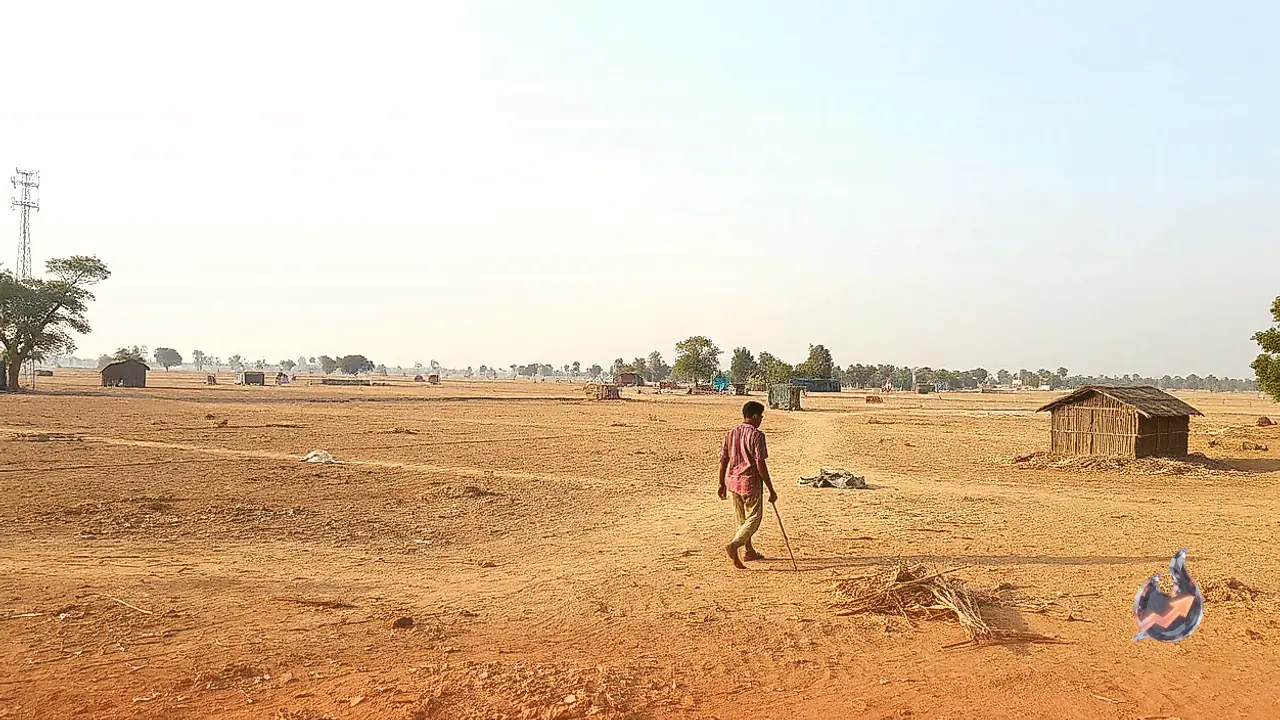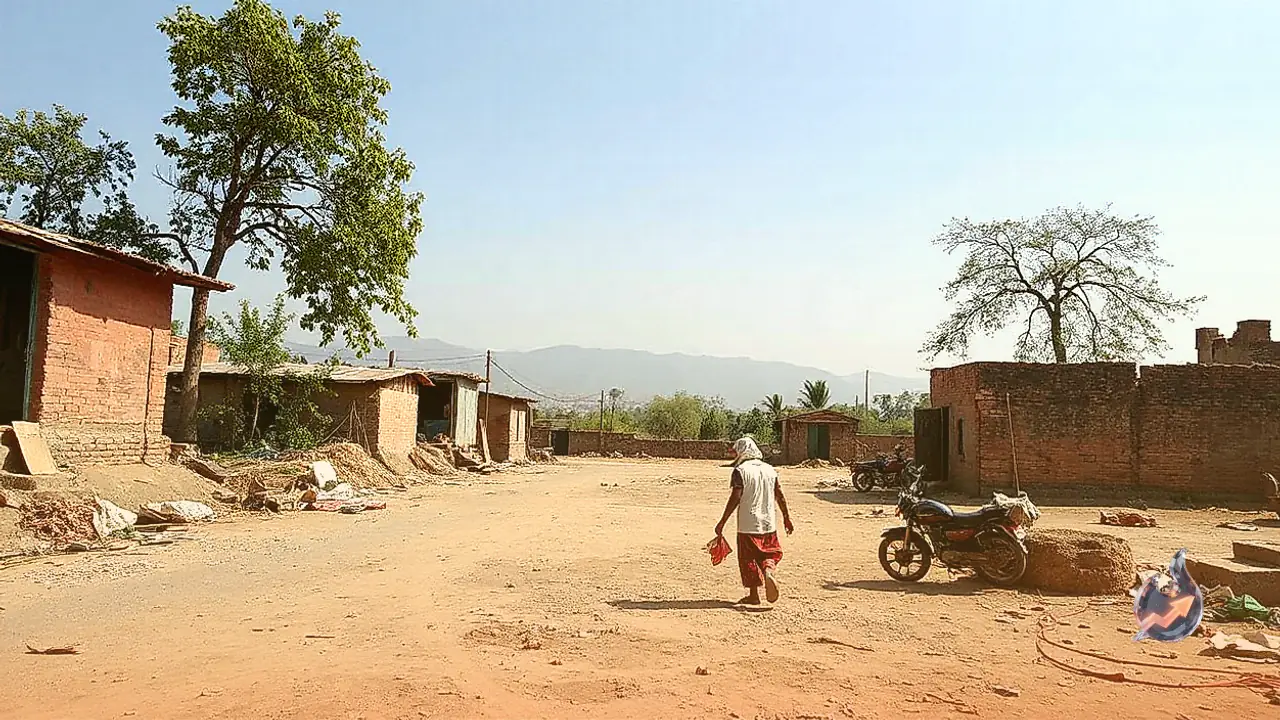


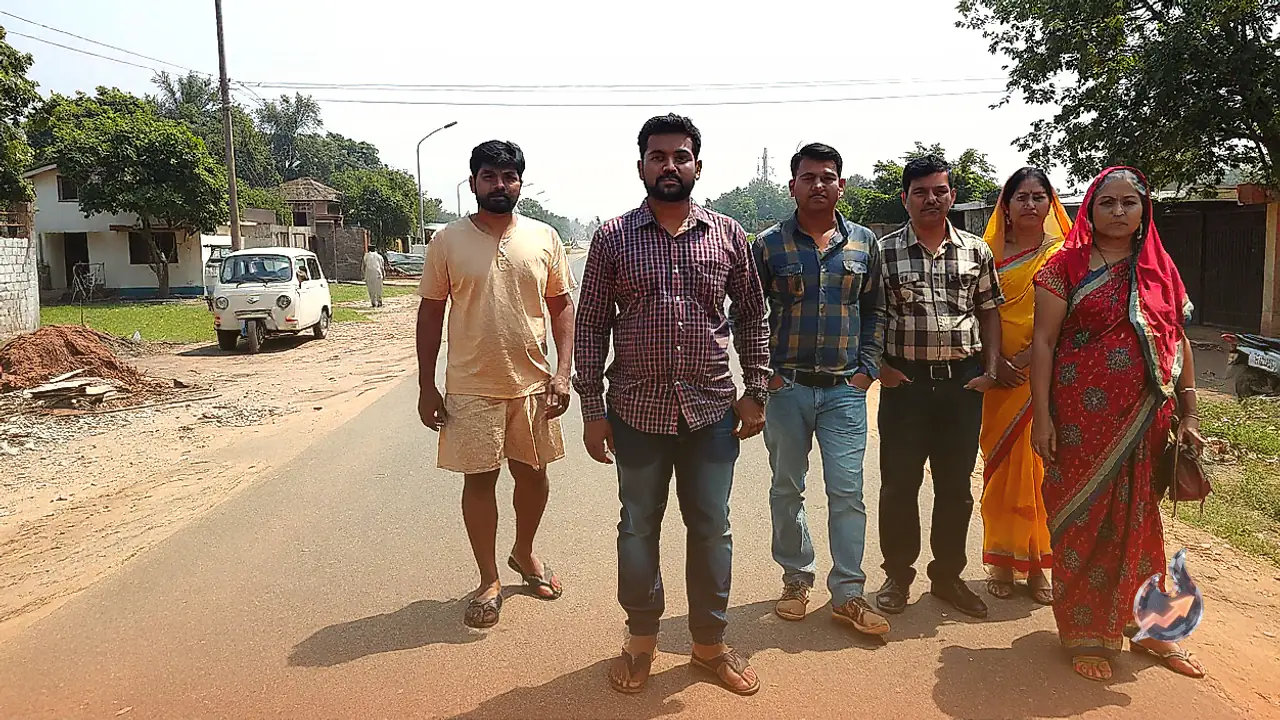
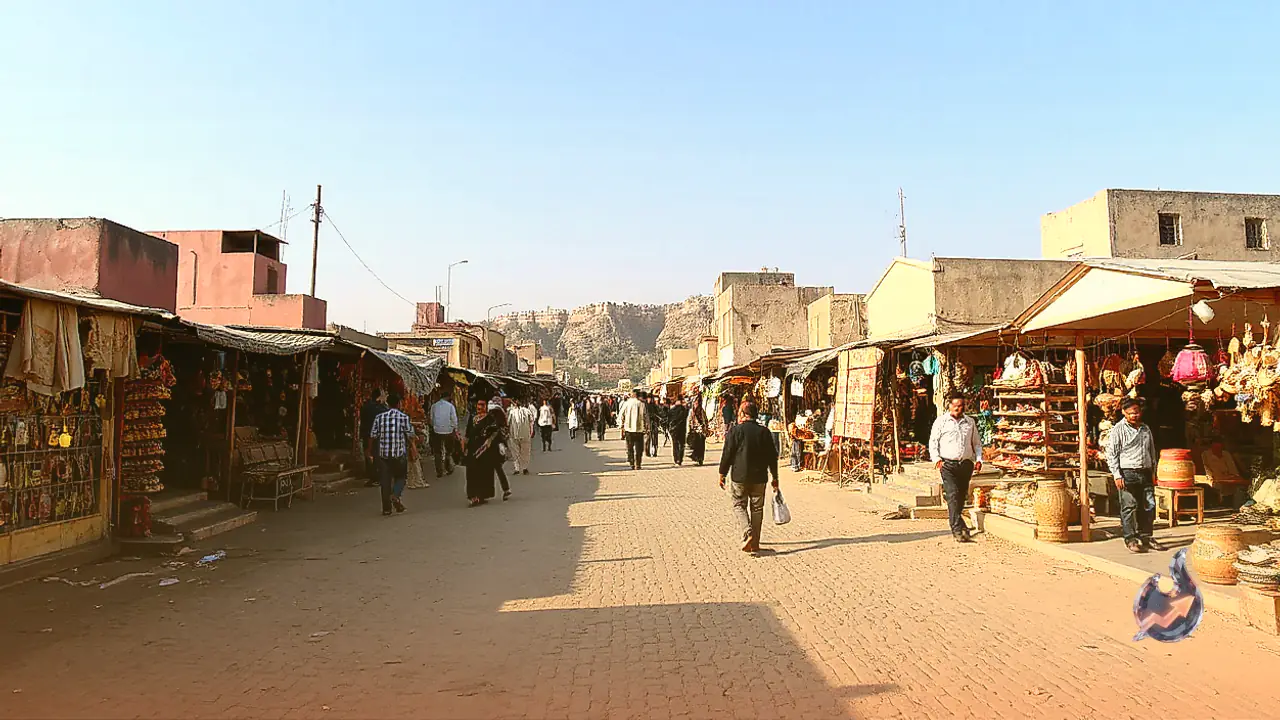















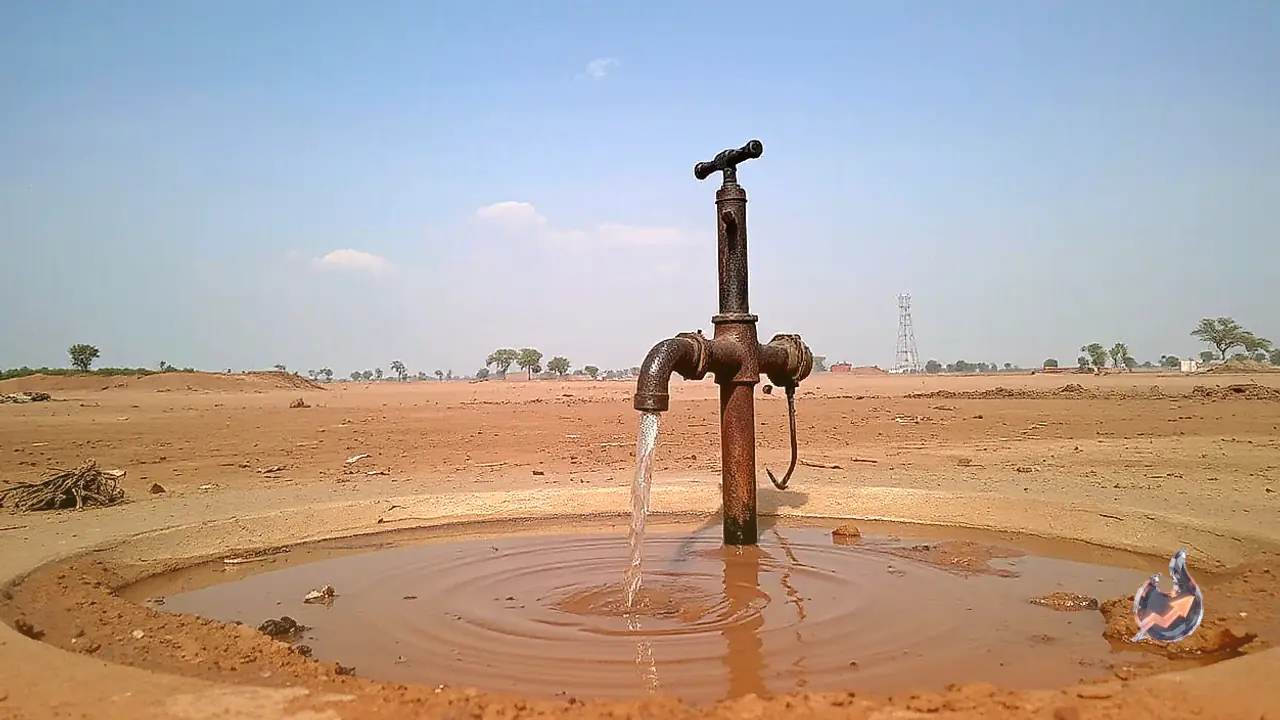

Severe drinking water scarcity continues to plague Karmaha, a village nestled in the hilly terrain near Darima in Chhattisgarh's Surguja district. While the government has launched ambitious schemes to supply safe drinking water to every household, the ground reality tells a starkly contrasting story. In the Patel Para locality of Karmaha, home to over 20 households, water storage tanks have been constructed right in the courtyards under the Jal Jeevan Mission, but the taps remain bone dry due to a complete lack of water supply. Ordinary citizens are bearing the heavy brunt of this administrative failure, struggling daily just to secure basic drinking water. Frustrated by the absence of clean supply, villagers are now earnestly demanding a fresh borewell and handpump in their village to permanently escape this acute crisis.
Building a Makeshift Puddle for Survival, Relying on Paddy Fields
Sarita Majhwar, a resident of Patel Para in Karmaha village, told local media that the water crisis in her neighborhood has persisted for a long time. Previously, villagers had to depend entirely on a well located roughly a kilometer away to meet their daily water needs. Exhausted by this exhausting daily trek, the villagers took matters into their own hands and created a small makeshift water hole near a paddy field after spotting a natural seepage point in the soil. For more than a year, families across the locality have been depending entirely on this self-made water source, even though the water is far from clean or safe for human consumption.
Insect-Infested Water Boiled for Survival, Health Risks Loom Large
Sarita Majhwar explained that the water collected in this makeshift puddle is extremely murky and often contains tiny visible insects. Left with no alternative choices for clean water, villagers are forced to filter the muddy liquid through cloth and then boil it before drinking. The situation deteriorates even further during the monsoon season, elevating the constant threat of waterborne illnesses such as dysentery, cholera, and gastrointestinal infections. Because no alternative clean water supply exists, families remain trapped in a cycle of depending on this contaminated source, keeping local anxiety levels elevated.
Jal Jeevan Mission Tanks Stand Dry as Schemes Fall Short
Although water storage tanks were erected in the village under the central Jal Jeevan Mission, locals report that they have never received a single drop of water from this infrastructure. Despite having state-funded water facilities built right outside their doorsteps, residents are compelled to make their own private arrangements for drinking water. The community's primary demand is for authorities to install functional boring and pipeline systems so that local families can finally access clean and reliable drinking water without having to resort to hazardous sources.
Monsoon Flooding Isolates the Village, Halting Education
The challenges faced by the residents of Patel Para extend far beyond the water shortage. According to Sarita Majhwar, heavy rains during the monsoon season cause local streams and culverts to overflow, severely disrupting transportation and cutting off regular movement. This isolation impacts school children the most, creating immense hazards for them as they attempt to commute to their educational institutions. Villagers report that this perilous situation persists continuously for three to four grueling months every single year.
Healthcare Inaccessible Due to Poor Infrastructure and Flooded Routes
The villagers also voiced deep concerns over the severe lack of accessible healthcare facilities in the area. Sarita Majhwar noted that raising small children amidst ongoing water shortages and infrastructural neglect is a monumental struggle. In the event of a medical emergency or severe illness, residents are forced to travel toward Kamleshwarpur, Darima, or Ambikapur for treatment. However, the dilapidated condition of local roads combined with flooded river routes during the monsoon makes reaching a hospital a perilous and often delayed ordeal.