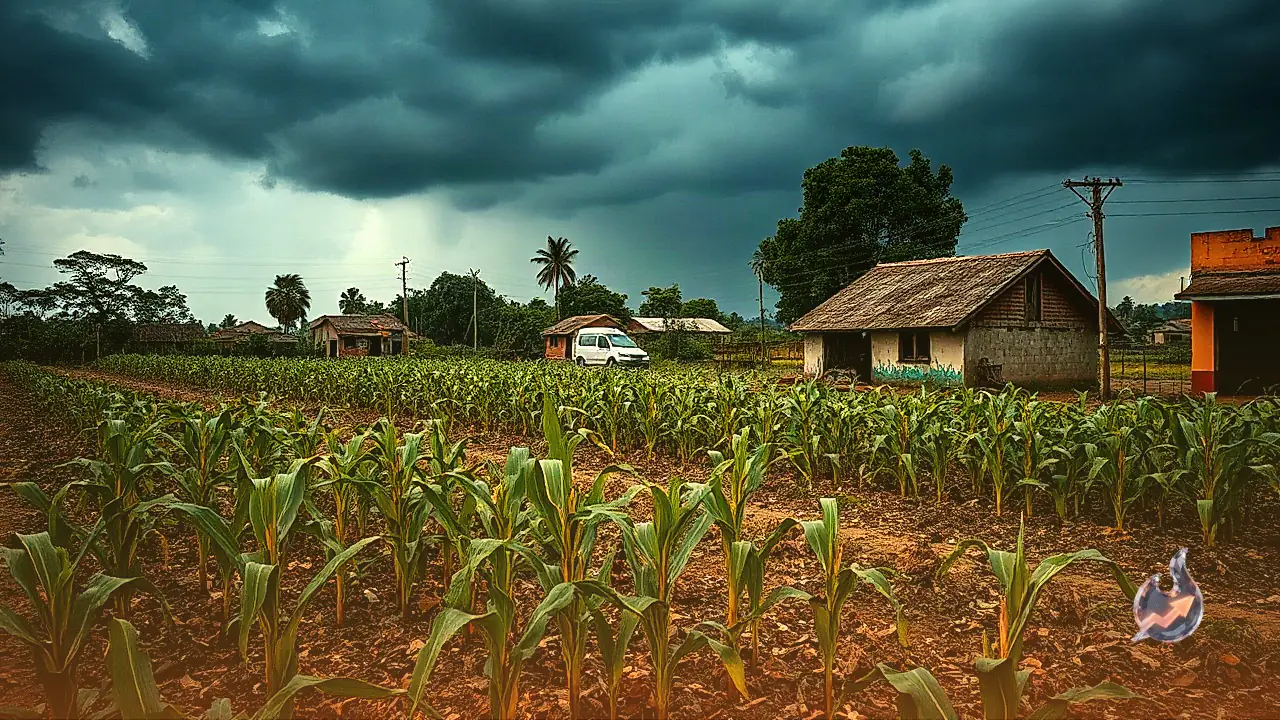






















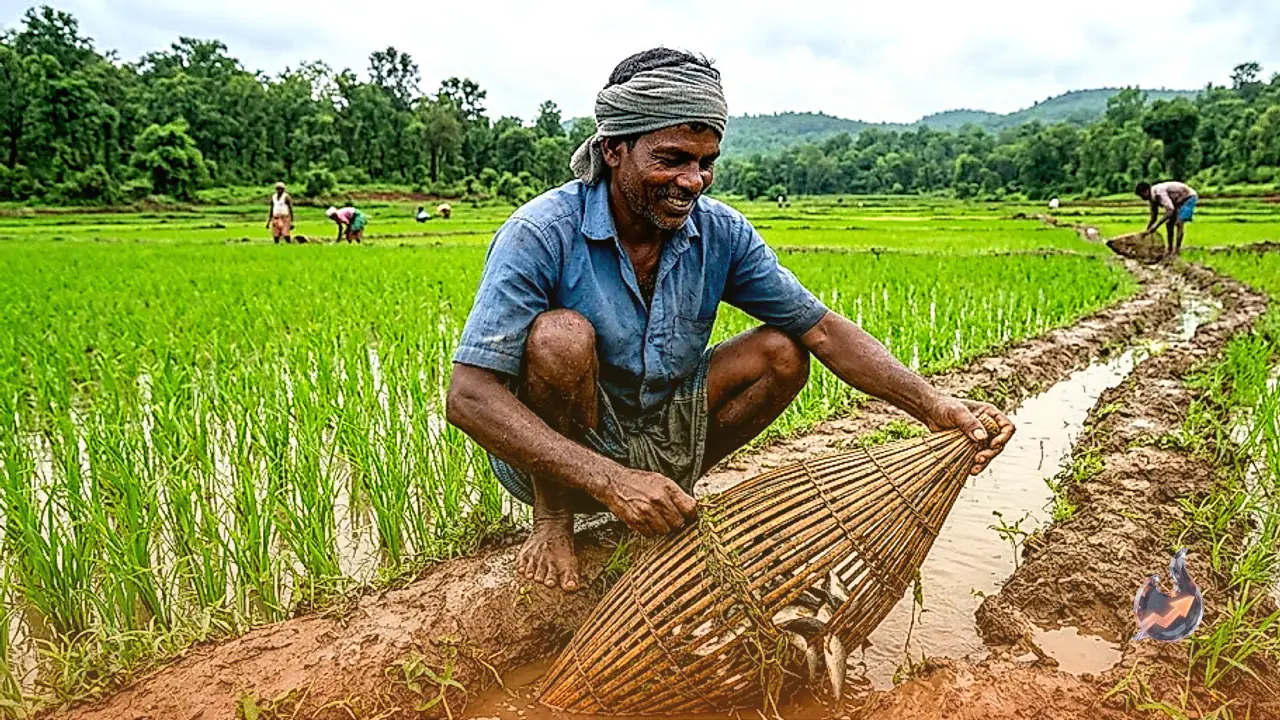

During the monsoon season across the rural landscape of Bastar in Chhattisgarh, agricultural fields double as productive fishing grounds through an ingenious rural tradition. Local farmers position a specialized indigenous gear known as 'dandar' directly along field ridges to capture freshwater fish swimming through agricultural run-off. Handcrafted entirely from dried bamboo, the trap is installed at drainage gaps along paddy embankments. As surging rainwater spills from higher terraces down to adjoining lower plots, fish moving with the water column find themselves trapped inside the wooden enclosure. Through this simple passive mechanism, rural residents regularly gather anywhere between half a kilogram to one kilogram of fresh catch daily without investing in commercial equipment.
Design and Crafting of the Cylindrical Structure
Preparations to weave these functional bamboo traps begin across Bastar villages the moment seasonal rains set in. Community members have depended on this sustainable fishing method for generations rather than turning to commercial market alternatives. The gear features an elongated, rounded cylindrical profile meticulously woven to let surging currents pass through unobstructed while arresting the movement of any aquatic life inside. Because water drains out completely through the narrow slits, the trap withstands strong currents without washing away. Rural families deliberately avoid buying factory-made nylon nets or synthetic traps, choosing instead to utilize native materials readily available in their immediate environment.
Craftsman Sonsay Details Construction and Durability
Sonsay, a rural artisan engaged in weaving the gear, explained the specific techniques and economics behind creating a functional dandar. According to Sonsay, seasoned dry bamboo serves as the primary raw material, ensuring both flexibility and structural integrity. Building the trap requires minimal financial investment, as the process involves splitting bamboo stems into slender, manageable strips and binding them together. Working intermittently during spare moments between routine farming duties, it typically takes four to five days to complete a single unit. Sonsay noted that a properly cured bamboo trap boasts remarkable longevity, remaining functional and sturdy for up to five years of seasonal use.
Ancestral Knowledge and Strategic Placement
Sonsay learned the craftsmanship and deployment techniques directly from older household members who passed down the tradition across family lines. The device is deployed strictly during the monsoon months when water levels in the rice paddies remain elevated and continuous flow is guaranteed. Farmers carefully anchor the structure at upper drainage points along the plot boundaries so that escaping surface water channels directly through its hollow core. As overflowing water journeys onward to flood neighboring agricultural plots, fish attempting to navigate the spillway become securely enclosed within the dandar.