


















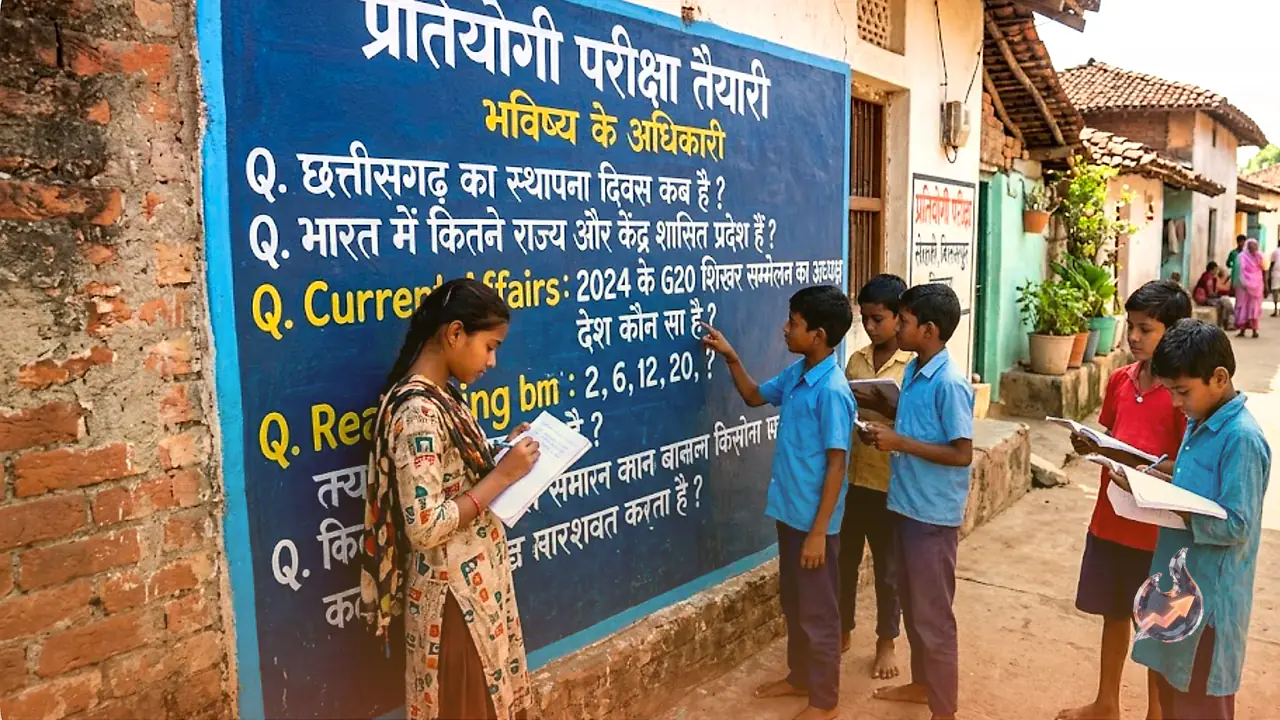

In a remarkable bid to foster academic excellence, Selar village in the Beltara region of Bilaspur has converted its public spaces into a giant open-air classroom. The streets themselves have become educational pathways, where house walls are painted with key educational topics and general knowledge questions to help local children prepare for competitive examinations from an early age. This innovative effort is helping rural children build the confidence to dream of joining prestigious administrative services in the future.
A Village-Wide Classroom Beyond School Walls
The initiative, driven by the Selar Gram Panchayat, aims to break the traditional boundaries of classrooms. Instead of confining study materials to notebooks, children now interact with learning materials during their daily commutes. As they walk to and from school, students can be seen reading, discussing, and memorizing these academic questions painted across the village walls. This approach removes the monotony of traditional studying, replacing it with a community-wide habit of natural learning.
The Three-Month Refresh Cycle and Evaluation
To ensure continuous learning, the painted questions are scheduled for a complete update every three months. This system ensures that children are exposed to 180 fresh, diverse competitive exam questions over the course of a single year. To keep motivation high and assess progress, the village coordinates an academic contest every three months based entirely on these wall-written questions. Students who secure top marks in these evaluations are publicly honored and rewarded, which fosters healthy academic competition.
Boosting Confidence and Overcoming Resource Limits
This creative initiative has received widespread acclaim and active support from local parents as well as community representatives. They believe that early exposure to competitive exam patterns will significantly boost the confidence of rural children, paving the way for successful careers in civil services and other professional sectors. By utilizing simple village walls, Selar has demonstrated that profound educational transformations do not always require massive financial investments or state-of-the-art facilities, but rather a visionary approach to community-based learning.