


















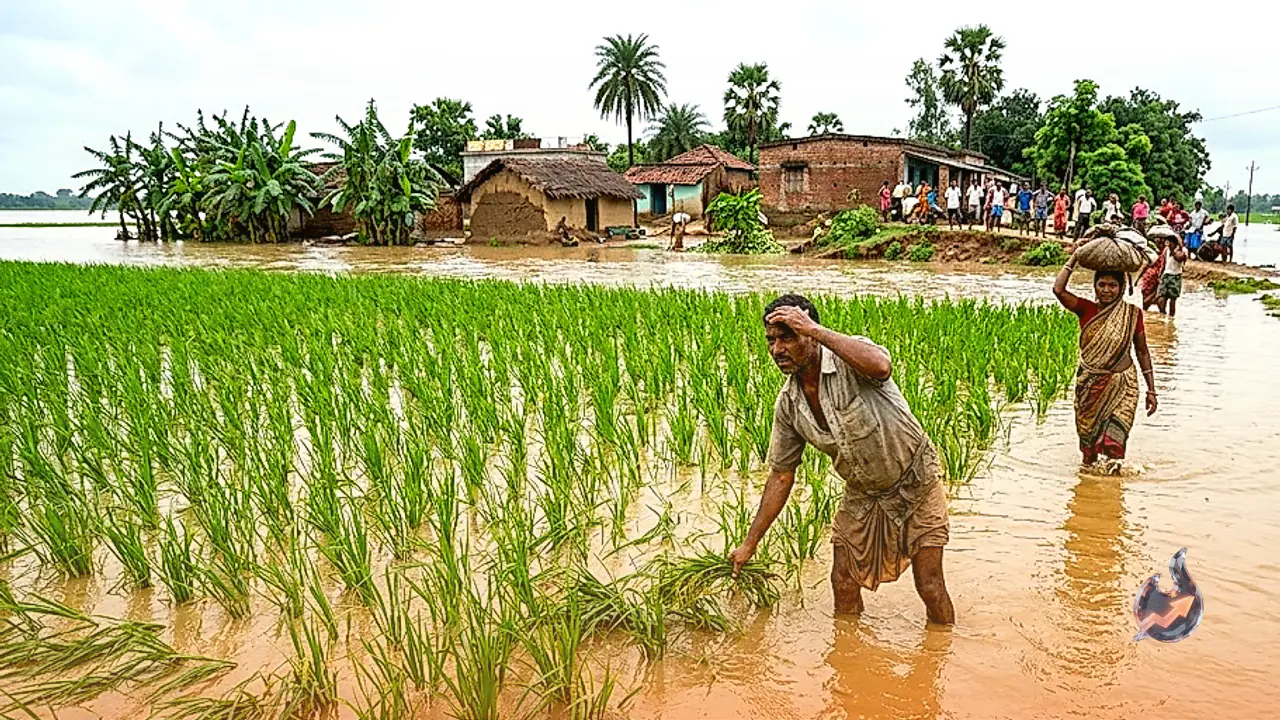

Vast stretches of standing paddy crops have been submerged after the Indravati river swelled sharply following the opening of sluice gates at a dam in Odisha's Kalahandi district. Even though local rainfall had subsided, the upstream discharge sent heavy volumes of water rushing into agricultural fields along the riverbank. Stagnant floodwater has now inundated farmlands for two to three consecutive days, raising immediate fears of total crop rot.
Mounting Debt Strains Growers as Stagnant Water Threatens Total Ruin
The inundation has triggered acute distress among local cultivators, many of whom financed their sowing operations through formal institutional credit. Farmers warn that if the deluge remains standing in the fields for another day or two, the entire harvest will be wiped out, while several growers report that their crop has already been completely lost. The looming destruction has left them grappling with serious anxiety over repaying loans taken from commercial banks and Primary Agricultural Credit Societies, known locally as LAMPS.
Voices from the Inundated Fields
Farmer Chait Singh Kashyap explained that he had planted transplanted paddy across roughly five acres, all of which is now submerged beneath the overflowing Indravati river. To fund the cultivation, he had secured a bank loan of approximately one lakh rupees. In Ghatkawali, grower Jairam saw around three and a half acres of his paddy crop go underwater. Jairam had invested nearly one lakh rupees into farming operations, which included borrowing roughly 45,000 rupees from LAMPS. Another cultivator, Sunil Kumar Nag, shared that he had raised a loan of nearly two lakh rupees to arrange for crop inputs and fertilisers, only to see half of his agricultural land disappear under floodwaters.
Severed Roads Isolate Villages from District Headquarters
Beyond agricultural devastation, the continuous water accumulation and overflow have severely hit rural transport arteries. Multiple roads and thoroughfares have been disrupted or rendered impassable, completely snapping communication between several villages and the district headquarters. The resulting transport cutoff has left rural residents facing immense hardship in commuting, accessing essential supplies, and handling emergency travel.