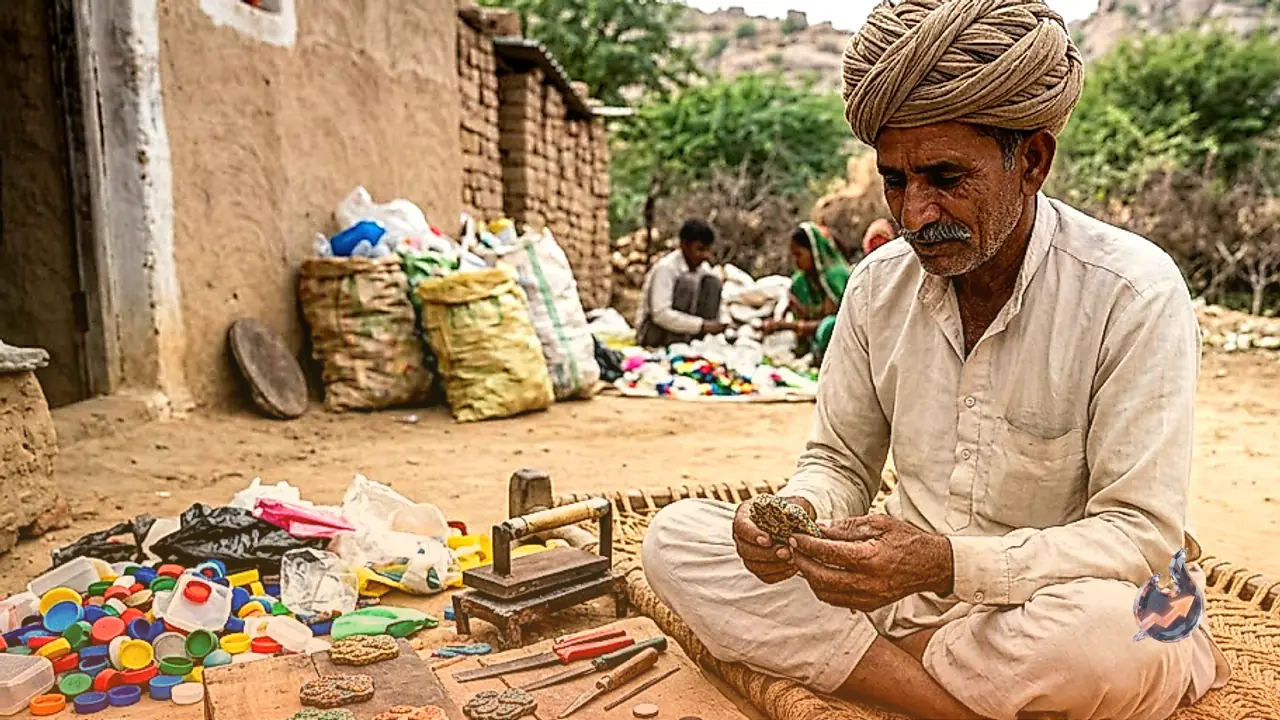



















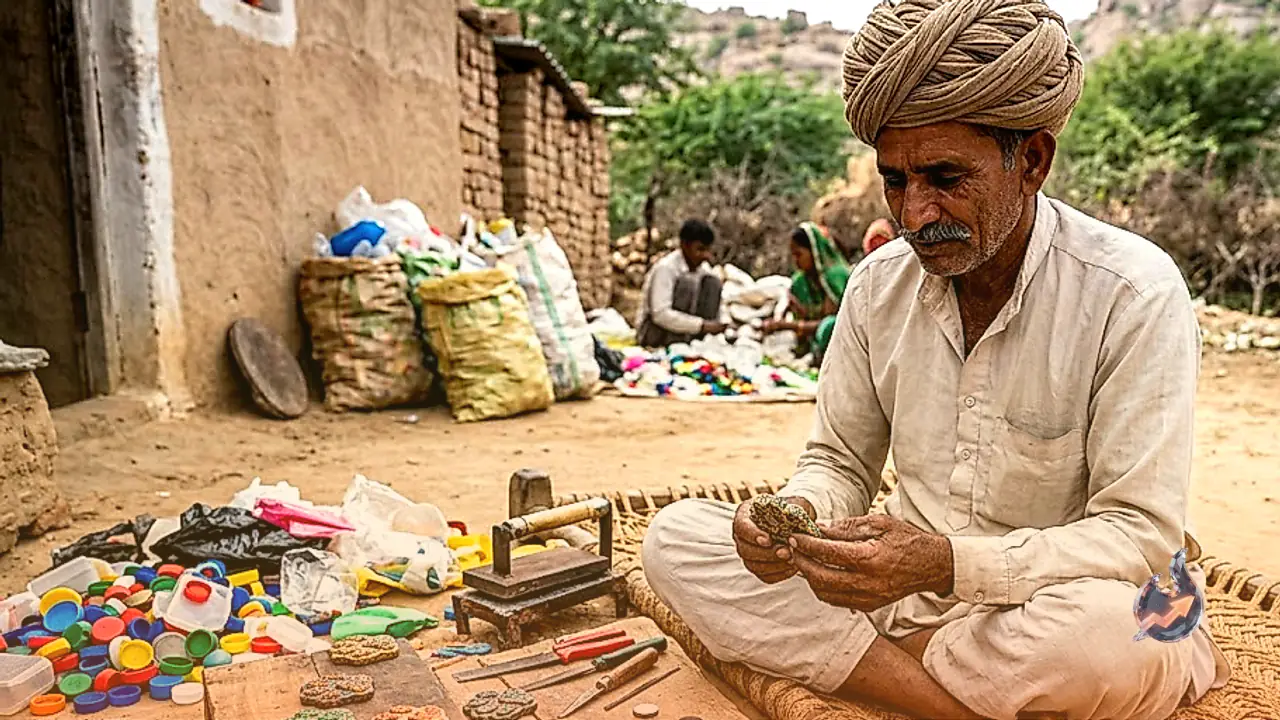

A remarkable blend of environmental care and wildlife tourism has emerged from the Pali district of Rajasthan. Kanaram Mewada, a resident of Bisalpur village who is widely known in the area as Kaanji Chaiwala, has given discarded single-use plastic trash a creative second life. By gathering discarded plastic bottles and bags from public streets and tourist spots, he processes the material through recycling to craft magnetic keepsakes shaped like leopard footprints. This grassroots endeavor not only curbs the scourge of plastic waste in a fragile habitat but also provides wildlife enthusiasts with a meaningful emblem of their wilderness journey.
From a Tea Vendor to a Celebrated Eco-Innovator
Kanaram Mewada is far more than a conventional tea seller or local merchant; he is an ardent conservationist determined to tackle local pollution. Earlier, he earned widespread national attention for an inventive project that converted discarded plastic into durable, sturdy furniture. That pioneering initiative was publicly lauded by Ramon Magsaysay Award recipient Sonam Wangchuk. Building directly on the insights gained from that experiment, Mewada decided to launch a fresh initiative tailored specifically for the Jawai Conservation Reserve and the crowds of travelers who frequent the landscape.
Linking Wildlife Heritage with Waste Reduction
The Jawai sanctuary is globally acclaimed for its rugged granite landscape and thrilling leopard safari experiences. As tourists gather to catch a glimpse of the big cats, single-use plastic waste frequently accumulates across transit routes and scenic viewpoints. Mewada chose to confront the issue at the source by collecting these discarded bags and containers. Using this recycled raw material, he designed decorative magnetic showpieces that highlight the distinctive paw impressions left behind by the leopards roaming the region.
Souvenirs with a Conservation Message and Nationwide Orders
These leopard footprint magnets are presented to tourists and visitors stopping by Jawai as distinctive souvenirs. Designed to adhere smoothly to refrigerators, metal surfaces, or household fans, the keepsakes serve as an everyday reminder of sustainable living and wildlife protection. The intention is to let visitors take home not just photographs of the reserve, but a tangible symbol of ecological stewardship that keeps the memory of Jawai alive long after their travels end.
What began as a modest regional offering has swiftly expanded far beyond Rajasthan. Substantial bulk orders for these recycled plastic magnets are now flowing in from major metropolitan centers such as Bangalore and Mumbai, along with multiple other states across India. Mewada's waste-to-wealth blueprint demonstrates how modest grassroots concepts can deliver meaningful environmental solutions while bestowing an eco-friendly signature upon rural tourism.