






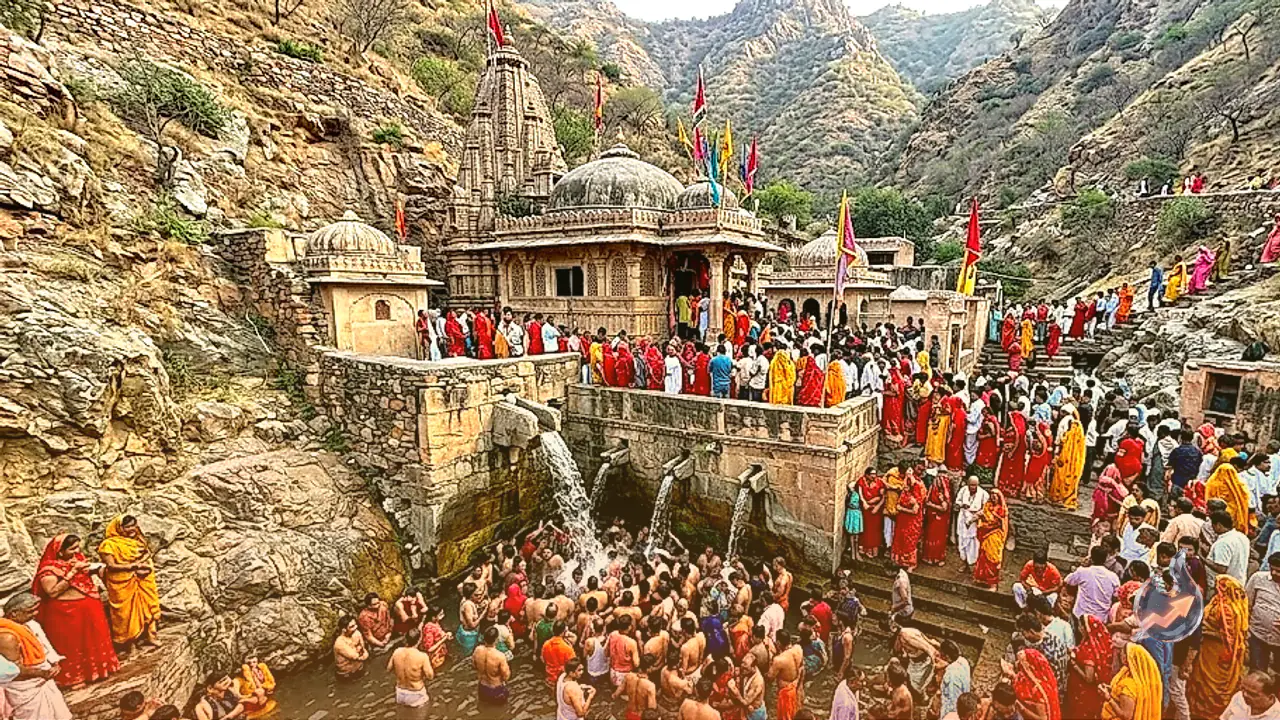















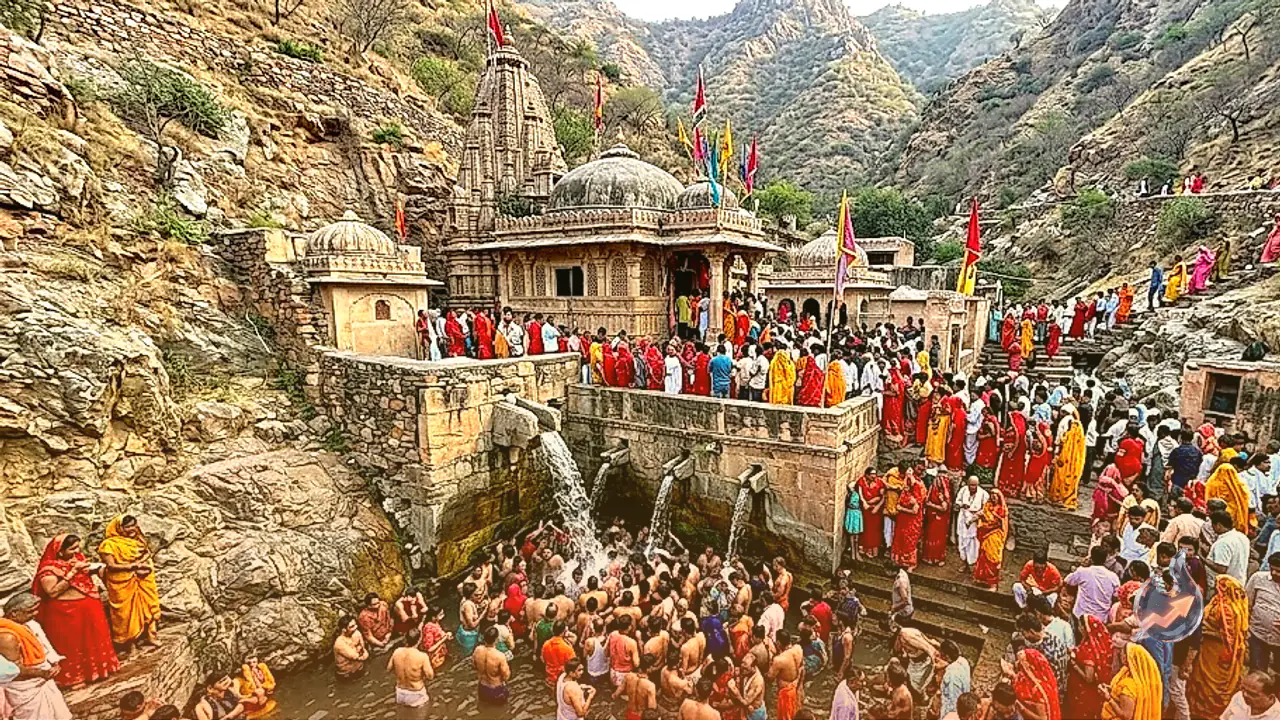

Nestled amid the lush valleys of the Aravalli hills in the Bali subdivision of Pali district, the sacred Bijapur pilgrimage site has become a vibrant focal point for spiritual seekers and nature enthusiasts alike. Situated nearly 100 kilometers away from the Pali district headquarters, the Har Har Gange shrine, celebrated regionally as a mini Haridwar, is experiencing a remarkable influx of visitors during the auspicious festival of Navratri. The five-century-old shrine brings together raw natural splendor, rugged mountain hiking, and deep-seated religious rituals, making it one of the most prominent spiritual destinations in the region.
The Perennial Gaumukh and Sacred Water Stream
With a documented heritage spanning roughly 500 years, the shrine holds significant reverence for its continuous water flow. Right below the Maa Gange temple sits an ancient Gaumukh stone carving, through which crystalline water streams naturally all 24 hours of the day across all 12 months of the year. According to temple priest Babulal Garg, his family has been serving and conducting rituals at this site across five successive generations. Devotees hold the water in the same high regard as the sacred Ganges at Haridwar, noting that the stored water remains exceptionally fresh without spoiling or breeding insects over time. Visitors routinely collect this water in containers to take home for domestic religious ceremonies.
Ancestral Rites and Immersion of Ashes
Mirroring the traditions observed at Haridwar on the banks of the Ganges, this site carries major significance for last rites and ancestor worship. Members of various regional groups, including the Dewasi community, travel to the Har Har Gange Kund specifically to immerse the mortal remains and ashes of their departed elders. The convergence of ritual immersion and prayer highlights the deep emotional and cultural importance this foothill sanctuary commands across generations of local residents and pilgrims from across the region.
A Mountain Trail Connecting Three Holy Shrines
The journey to the shrine offers an adventurous trekking experience where spiritual devotion meets rugged terrain. Setting out on foot from the primary vehicle parking area, travelers encounter three distinct religious destinations along the winding ascent
- Nageshwar Mahadev Temple: This marks the opening sanctuary of the trek, where pilgrims offer prayers to Lord Shiva before commencing the uphill journey.
- Har Har Gange Maa Temple: Reached after an uphill walk of approximately 40 minutes, this serves as the central focal point of the pilgrimage. Just outside the temple structure are two large open reservoirs filled with naturally cold water originating from the surrounding Aravalli hills, where a dip instantly relieves travellers of their physical fatigue.
- Ancient Hinglaj Mata Temple: After bathing in the natural pools, devotees undertake a strenuous and steep climb of around 1.5 kilometers to reach the summit of the hill, where the historic shrine of Maa Hinglaj stands overlooking the mountain landscape.
A Blend of Spiritual Devotion, Trekking, and Nature
Throughout the festive period of Navratri, the entire mountainous terrain transforms into an enchanting spiritual retreat. Flowing streams, crisp mountain breezes, playful monkeys along the rocky paths, and hills cloaked in dense greenery create a refreshing setting for tourists and worshipers alike. For countless families looking for spiritual renewal without traveling to distant Himalayan pilgrimage hubs, the mini Haridwar in Bijapur provides an accessible and revered sanctuary.