

















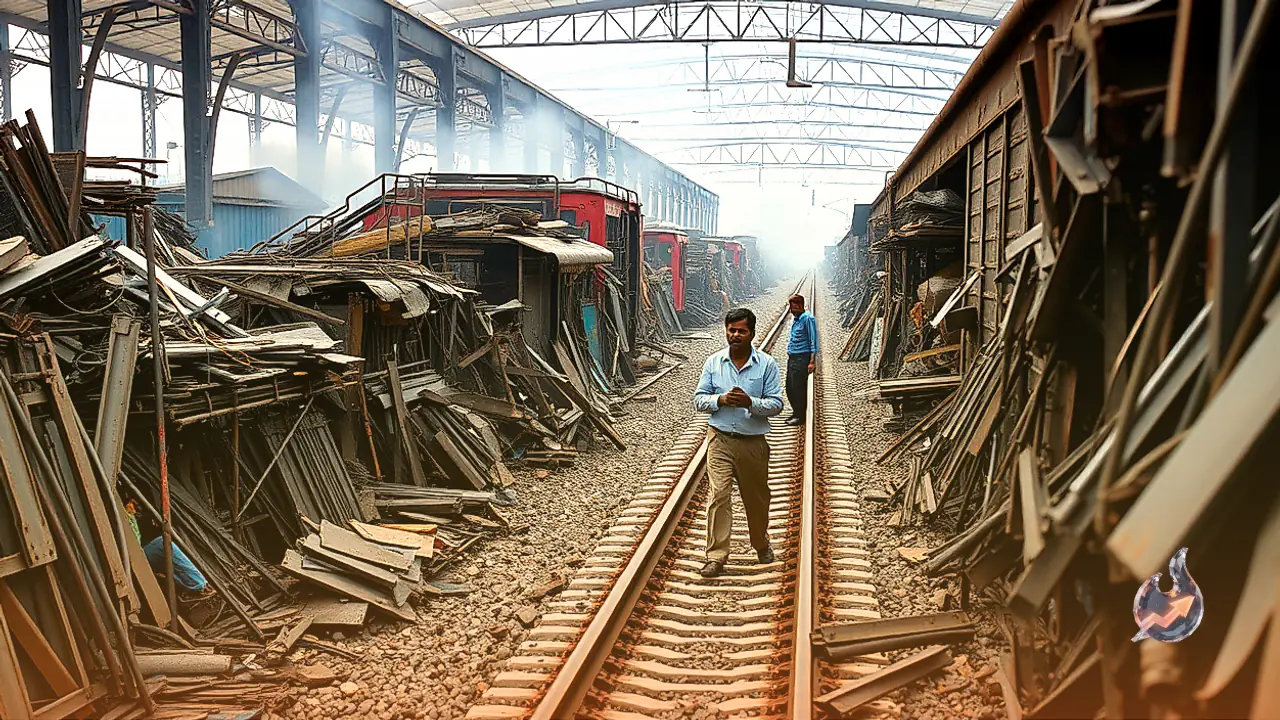

Piles of discarded iron, decommissioned goods train components, and old sleepers resting in railway yards are conventionally treated as obsolete scrap with zero operational utility. In Bilaspur, Chhattisgarh, however, railway personnel have completely re-imagined the fate of this industrial waste by launching an inventive creative recycling project. Under an innovative approach that extracts utility from refuse, workers are cutting, shaping, and fusing rusted metal fragments into eye-catching artistic sculptures. Rather than letting discarded materials sit idle, the technical workforce is deploying its hands-on craft to turn retired gear into remarkable ornamental installations. A standout aspect of this initiative is that no new raw materials are purchased, relying entirely on metal discards already collected across local facilities.
Crafting Decorative Sculptures from Yard Waste
A transport network of this scale generates an immense volume of discarded machinery and parts every single day. Heavily worn carriage fittings, broken machinery, retired track components, and dismantled goods train fittings routinely accumulate as obsolete inventory. Historically, storing such surplus until official scrap auctions take place was the only routine procedure. Yet in the Bilaspur workshops, personnel recognized that many of these metal segments retained structural integrity that could be deployed for artistic purposes. Staff examine the shape of available metal sections and envision how they might fit into larger figurative or aesthetic designs, turning cold industrial steel into expressive art.
The Assembly Process and Creative Engineering
The transformation of heavy industrial scrap into delicate ornamental pieces involves detailed planning and manual skill. Discarded iron components are measured, sliced into required profiles, and assembled using welding and fitting tools. Through this step-by-step assembly, retired mechanical fittings, pipes, bolts, and chassis brackets are integrated into sculpted forms. The vast majority of the items integrated into these figures are pieces that had previously been written off as unusable, demonstrating how technical ingenuity can grant a second life to items that had reached the end of their operational roadmap.
Inspiration from Raipur Wagon Repair Shop
This initiative builds upon a compelling precedent set at the Wagon Repair Shop in Raipur. Last year, technicians at the Raipur facility used retired iron parts and unserviceable railway hardware to build a massive statue of Lord Ganesha. The monumental sculpture gained widespread public admiration and proved that railway scrap could be converted into sophisticated public art. Encouraged by that response, railway teams expanded the practice, inspiring the creation of diverse sculptures across workshop facilities in Bilaspur.
Dual Management Strategy for Railway Salvage
Many of the resulting metal sculptures serve as aesthetic displays for public grounds, station gardens, and administrative complexes, demonstrating environmental responsibility. Explaining the broader policy governing this activity, Senior PRO Santosh Kumar noted that obsolete railway inventory is handled through a structured two-pronged strategy. Material that is completely degraded and holds no artistic or practical potential is systematically auctioned under standard official procedures. Conversely, scrap pieces that can be remodeled into functional structures or visually appealing sculptures are retained for internal upcycling. This balanced strategy ensures that railway assets are either monetized transparently or transformed into durable public art through workforce craftsmanship.