























Public parks across the Chinese capital of Beijing are witnessing a futuristic transformation this summer as human staff are joined by a fleet of 72 advanced robots. Operating across several iconic green spaces, these robotic workers perform a wide variety of daily operational tasks, ranging from groundskeeping and surveillance to guiding visitors, enforcing public rules, and trapping mosquitoes.
Automated Groundskeeping and Rapid Cleaning
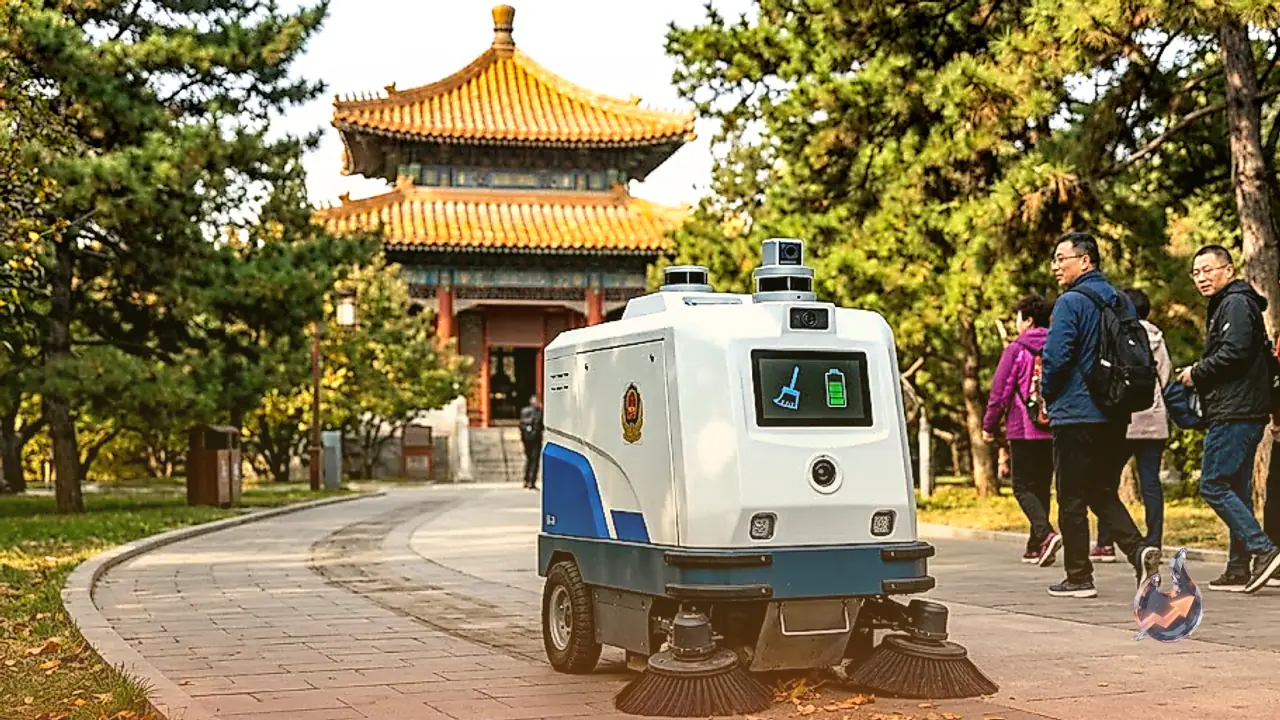
At Beijing's famous Summer Palace, sanitation robots demonstrate remarkable efficiency by initiating operations within just 30 seconds of receiving instructions. Park workers use a mobile application to select the specific cleaning zone and operational mode, after which the machines autonomously manage the area.
Equipped with sophisticated environment-sensing technology, these robots identify litter, sweep pathway edges, and spray water when required. Designed to navigate busy public spaces safely, the automated sweepers automatically adjust their paths whenever pedestrians or vehicles cross their trajectory.
AI Tour Guides and Automated Rule Enforcement
To assist visitors, park authorities have deployed guide robots integrated with artificial intelligence. Navigating along predetermined routes, these units provide tourists with detailed park information, respond to visitor queries, and offer advice on park etiquette and guidelines.
High-definition cameras, radar sensors, and onboard AI systems enable continuous monitoring of park grounds. If a robot detects a visitor smoking in restricted areas, it immediately issues a pre-recorded verbal warning advising the person to cease the activity.
Smart Breathing Technology for Pest Control
At Zizhuyuan Park in Beijing, management has introduced specialized smart breathing robots to address insect control. These machines emit carbon dioxide to simulate human respiration, luring mosquitoes into integrated trapping mechanisms.
Park administrators implemented this technology following an increase in visitor complaints regarding mosquitoes in grassy zones during evening hours. The automated solution has significantly reduced manual labor for maintenance staff while creating a safer and more comfortable outdoor environment for visitors, especially children.
China's 'Robot Plus' Strategy and Future Services
The deployment of robotic workers in public parks aligns with China's broader national 'Robot Plus' strategy. This initiative is driven by shifting demographic trends, including an aging population and labor shortages, combined with rapid advancements in artificial intelligence.
Robotic automation is expanding rapidly across multiple sectors in China, including healthcare, hospitality, sanitation, and logistics. Government officials anticipate that AI-powered robotic systems will become a core pillar of public service infrastructure in the coming years.