























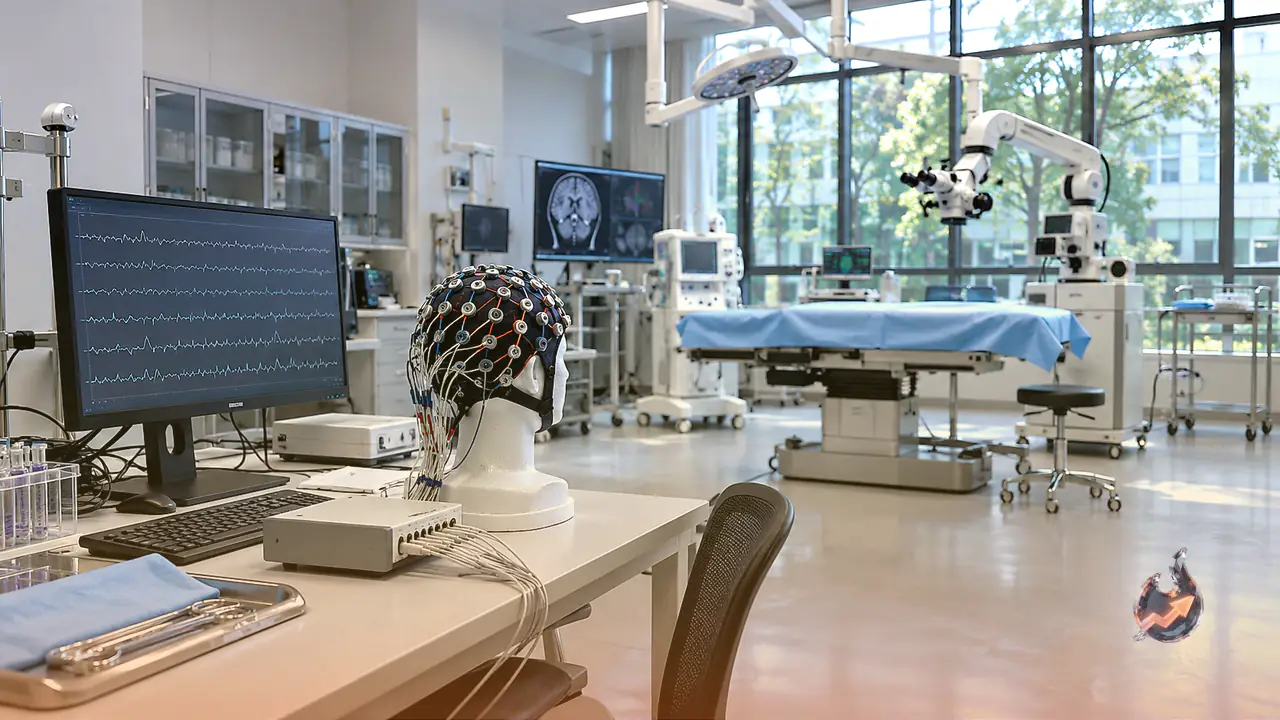

The long-standing notion of being able to read other people's thoughts is no longer confined solely to science fiction films or superhero stories, as it is rapidly transforming into an everyday reality. The scientific community has successfully developed an advanced technology that allows an individual's internal thoughts to be converted into audible or visible outputs. This innovative method requires neither invasive surgical procedures nor exorbitant expenses, opening up remarkable possibilities to assist paralysis patients and individuals with physical disabilities through brain-reading capabilities.
Decoding the Mind with 94 Percent Accuracy
This groundbreaking mind-reading device has been collaboratively engineered by researchers from Tsinghua University, Guangxi University, and Guangxi Medical University in China. The primary strength of this system lies in its remarkable precision, marking a major milestone in the fields of medicine and consumer technology.
When an individual wears this specialized device and looks toward specific letters or numbers on a virtual keyboard, typing occurs on the screen based solely on their internal thoughts. During rigorous visual mind-typing tests, this technology achieved an impressive accuracy rate exceeding 94 percent.
A major advantage of this setup is that it completely eliminates the need for any surgical operations inside the human head. There is no requirement to implant microchips, wires, or electrodes into the brain tissue, as the entire unit is worn externally just like a standard EEG cap.
Overcoming Traditional Brain-Computer Interface Limitations
Work on brain-computer interfaces has been ongoing for many years, but prior technologies faced two significant operational bottlenecks.
Advanced methodologies backed by figures like Elon Musk require microchips to be surgically embedded inside the skull, necessitating invasive procedures that many individuals are simply unwilling to undergo.
Furthermore, external head-mounted devices relied on traditional gels that typically dried out within two to four hours of application. Even minor head movements or routine physical activities would frequently dislodge the sensors from their designated positions, causing them to stop capturing neural signals entirely.
To solve this persistent engineering hurdle, the Chinese research team designed specialized gradient hydrogel electrodes. These innovative electrodes are engineered to be extremely soft and spongy at the lower surface where they contact the scalp, while remaining exceptionally durable and firm at the upper region where circuits connect. Thanks to this inherent flexibility, whether a person walks, moves, eats, or reads, the device remains firmly anchored in place across the scalp.
Fourteen-Hour Success and Continuous Daily Testing
To evaluate this new mind-reading device under realistic conditions, scientists conducted extensive trials involving human participants and test subjects.
In an eight-hour daily routine assessment, a participant wore the device continuously while performing everyday activities such as walking, eating, reading, and even sleeping. Throughout this entire duration, the system recorded neural signals continuously without experiencing any interruptions.
During a separate fourteen-hour mind-typing test, when a participant mentally selected numbers ranging from 1 to 9, the operational accuracy remained consistently above 94 percent.
The research team has also highlighted the feasibility of mass production for this technology, noting that more than 300 electrodes for commercial EEG caps can be fabricated efficiently in a single production cycle.
A Transformative Boon for Medicine and Everyday Users
This mind-reading advancement is much more than a novelty gadget or entertainment tool, holding the profound potential to improve millions of lives in the foreseeable future.
Patients suffering from severe paralysis, individuals who have lost the ability to speak, or those with restricted bodily movements such as ALS sufferers will be empowered to communicate their thoughts and needs to loved ones effortlessly. For medical conditions like epilepsy, the device can monitor neural signals around the clock, potentially issuing early warnings to patients or doctors before a seizure manifests.
Additionally, the hardware enables straightforward applications in sleep tracking and routine brain health monitoring. In the future, operating smartphones, computers, or smart home appliances will no longer require physical touch, as users will simply be able to control lights, fans, and televisions using thought alone.
Addressing Privacy Concerns Regarding Mental Security
While the success of this innovation has generated immense excitement across medical and technology sectors, it has naturally prompted questions among the general public regarding personal mental privacy. However, scientists emphasize that the current iteration of the technology operates specifically on targeted visual tasks and established neural patterns, ensuring that individual thoughts cannot be arbitrarily accessed or hacked without explicit user engagement.