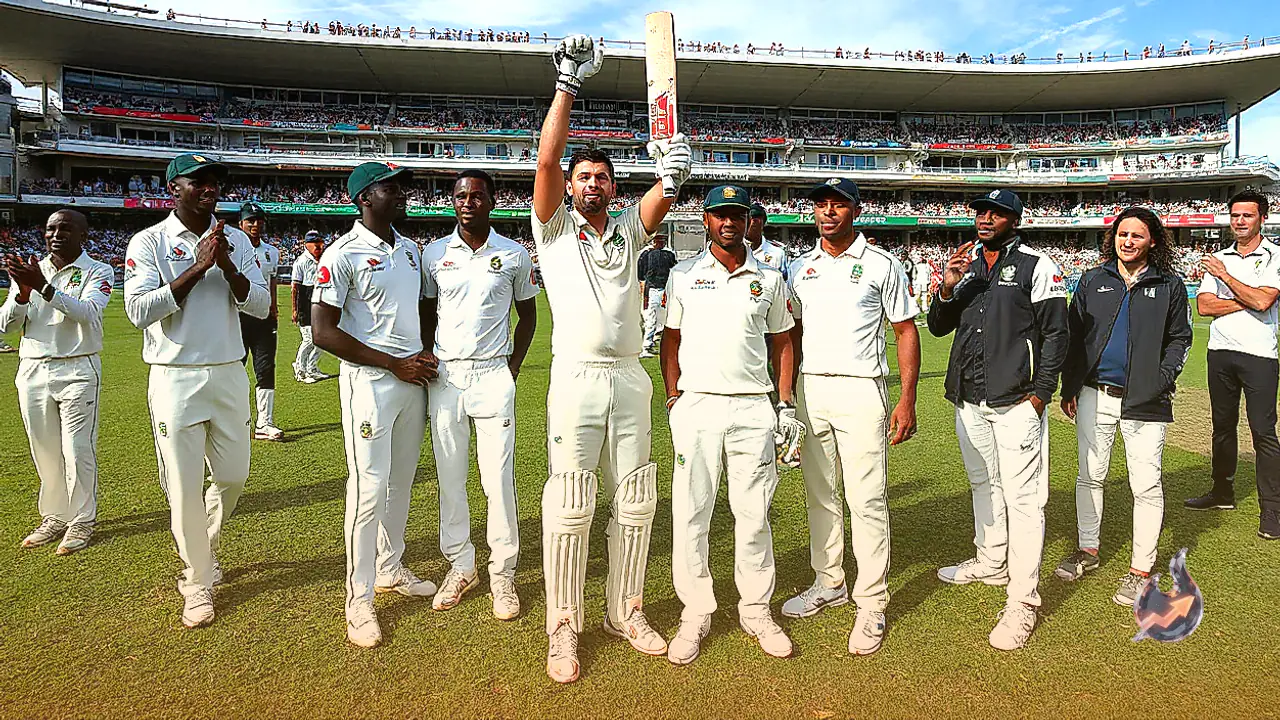

























A dramatic reshuffle has struck the World Test Championship standings for the 2025-27 cycle following an intense encounter at Newlands. The recent clash in Cape Town produced a decisive result that altered the balance among the top contenders, creating an uphill task for the Indian cricket team. Operating under the captaincy of Shubman Gill, the squad finds itself in a position where mistakes cannot be afforded over their remaining schedule. Currently stationed in fourth place, India hold 68 points from 11 completed fixtures, translating to a points percentage of 51.52.
South Africa Surge as Australia Slide Down the Ranks
The decisive third Test in Cape Town concluded with the hosts securing a commanding 176-run victory over the touring Australian lineup, wrapping up the series 2-1. This success propelled Temba Bavuma's unit straight to the second position on the ladder, boasting an impressive 71.42 percent. Conversely, the defeat proved costly for Australia, whose percentage dropped from 75 down to 69.23, knocking them off the summit and placing them third. Benefiting from the turbulence, New Zealand assumed the top spot with 52 points from 6 games, giving them a leading mark of 72.22 percent.
Mirpur Outcome Provides Breathing Room for India
India's journey throughout this cycle has featured a mix of outcomes, encompassing 5 victories, 4 defeats, and 2 drawn fixtures across their 11 outings. They received an indirect boost when West Indies defeated Bangladesh in Mirpur. That result prevented Bangladesh from overtaking India in the standings, keeping Gill's men from sliding into fifth position. Even so, remaining behind New Zealand, South Africa, and Australia leaves the squad navigating a narrow corridor toward qualification for the title clash at Lord's.
A Challenging Two-Test Assignment in New Zealand
The immediate objective for Gill and his teammates lies across the Pacific, where they face a demanding two-match overseas series in New Zealand. The tour opens at Wellington's Basin Reserve from November 19 to November 23, 2026. The action then shifts to Christchurch for the second and concluding contest between November 27 and December 1, 2026. The results on these lively surfaces will set the tone for the remainder of India's campaign.
Should the touring side produce a clean sweep by winning both fixtures in New Zealand, their standing would jump to 58.97 percent. Such an outcome would inject vital momentum into the dressing room while keeping their qualifying hopes bright. On the flip side, suffering two defeats would see their percentage tumble to 43.59, reducing their chances of making the championship decider to an extreme long shot.
Five-Test Marathon on Home Soil Against Australia
Upon concluding their travels in New Zealand, the Indian team will head back home to stage a five-Test home series against Australia. The battle begins in Nagpur, with the opening Test scheduled from January 21 to January 25, 2027. Both setups will then travel south to Chennai for the second game, slated between January 29 and February 2, 2027.
The midway mark of the series takes place in Guwahati from February 11 to February 15, 2027, followed immediately by the fourth encounter in Ranchi between February 19 and February 23, 2027. The extensive rubber will conclude at the Narendra Modi Stadium in Ahmedabad, with the fifth Test running from February 27 to March 3, 2027. Facing a motivated Australian side on varied Indian surfaces presents an intense tactical hurdle.
Examining the Mathematical Pathways to the Final
Statistical projections highlight the delicate balance India must strike. If the team drops both matches in New Zealand but recovers to achieve a clean sweep over Australia by winning all five home games, their maximum points percentage reaches 59.26. Under that scenario, qualification would rest entirely on how other nations perform in their respective fixtures, removing control from India's hands.
The cleanest path to the final requires an absolute clean run. Securing victories in all seven remaining games, taking both in New Zealand and all five against Australia, would lift the team's tally to 70.37 percent. Hitting that threshold would virtually guarantee a spot in the championship final without needing favorable outcomes elsewhere.
Achieving six victories alongside a single loss would yield a final percentage of 64.81. While this score maintains a credible bid for qualification, it would still leave the door open to external variables, requiring dropped points by one of the current top three sides. Suffering two or more losses across this final stretch would effectively end India's pursuit of the title.
Leadership Test for Shubman Gill in a Defining Era
This tournament cycle represents a transition period for Indian cricket, with leadership responsibilities entrusted to young batter Shubman Gill. Guiding the squad through consecutive high-pressure tests demands physical stamina and mental resolve, particularly when balancing foreign swing conditions against home spin requirements. Gill's tactical adjustments and the team's ability to maintain discipline across both series will determine whether India can overcome the standing disadvantage and claim a place in the decider.