

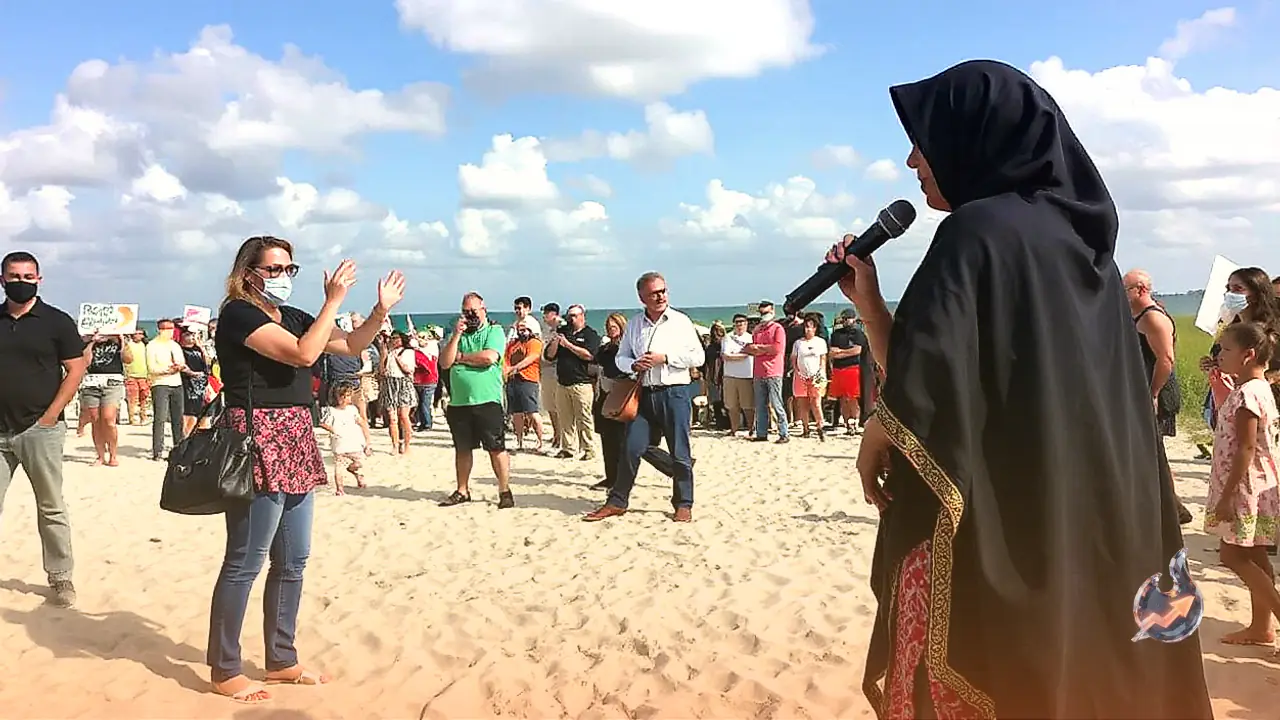


















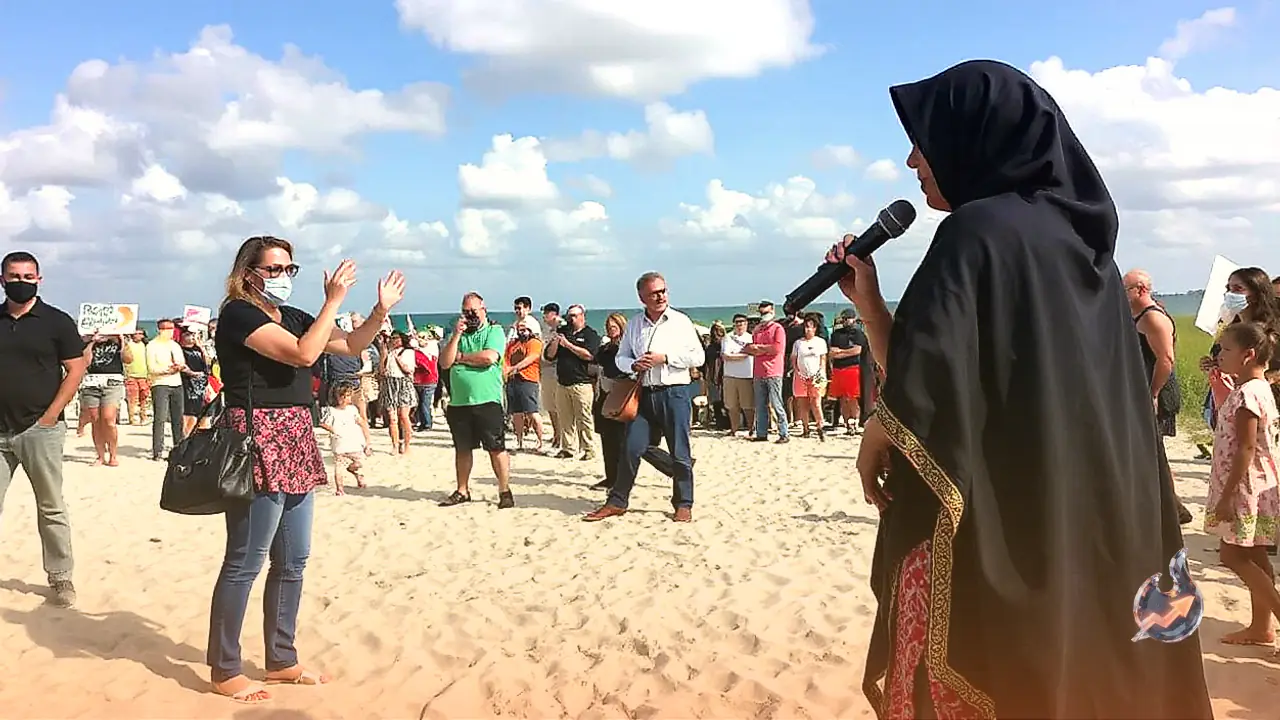

Political rhetoric has escalated sharply on the US presidential campaign trail, with speeches across competitive states becoming increasingly contentious. During a campaign appearance before supporters in Daytona Beach, Florida, former US President Donald Trump delivered remarks that caught national attention by abruptly bringing his own family into a heated political debate. While delivering a sustained critique of Democratic Representative Ilhan Omar, he turned the discussion toward his own sisters, telling the crowd that despite their beauty, he had never considered proposing to them or pursuing any romantic connection.
An Unusual Turn of Phrase at the Daytona Beach Gathering
Addressing a crowd of Republican loyalists on October 30 in Daytona Beach, Donald Trump dedicated a substantial portion of his platform time to targeting Representative Ilhan Omar. Pointing to past controversies surrounding her personal background, he unexpectedly introduced his own siblings into the narrative. He recounted to the audience that someone had once questioned him about whether he had married his sister, to which he swore an absolute denial.
Continuing the thread, he spoke specifically about his sisters, Maryanne and Elizabeth. He described both of them as lovely and attractive, yet insisted that he had never extended a marriage proposal to either one of them. He added that, despite their appearance, romantic thoughts had never crossed his mind. The unusual nature of the comparison quickly drew notice, marking one of the more unorthodox moments of the campaign stop.
The Background Surrounding Omar and Past Allegations
Donald Trump framed his family comparison around long-standing allegations frequently circulated by conservative opponents regarding the personal history of Representative Ilhan Omar. Born in Somalia and representing Minnesota in the House of Representatives, Omar has remained one of the most prominent and polarized figures within modern American legislative politics. Conservative factions have repeatedly claimed over several years that her past marriage to Ahmed Nur Said Elmi was arranged to circumvent immigration guidelines, asserting without confirmation that he was her brother.
The issue resurfaced following an interview conducted on October 21 by prominent journalist Chris Hedges. When directly questioned about whether her former spouse was related to her by blood or family ties, Omar responded by stating that to her knowledge, he was not. Trump seized upon that specific phrasing during his rally appearance, arguing that such an inquiry demanded a definitive negative or affirmative answer rather than an equivocal qualification. For her part, Omar has consistently dismissed the claims as groundless smears driven by partisan animus and Islamophobia. No verified public evidence has ever been established to validate the assertion that her former husband was related to her.
The Two Siblings Mentioned During the Address
The individuals named during the Daytona Beach speech led distinctly different professional lives outside of the political arena. Maryanne Trump Barry served the country for decades as a respected federal judge, establishing a lengthy career within the American judicial system before passing away on November 13, 2023, at the age of 86.
Her sibling, Elizabeth Trump Grau, spent her career in the financial sector, working in commercial banking while deliberately maintaining a low profile far removed from political campaigning and public scrutiny. Their mention from a major campaign podium underscored the unexpected directions taken during the candidate's remarks.
Citizenship Paperwork and Constitutional Qualifications
Beyond campaign podium sparring, the broader controversy involves ongoing administrative and legal discussions regarding the validity of immigration records. Federal agencies have been examining claims regarding whether any misrepresentation or irregularity occurred in the filing of parental paperwork or entry documents when Omar acquired American citizenship. Under the framework of the United States Constitution, an individual serving in the House of Representatives must be at least 25 years old, have maintained citizenship for at least 7 years, and reside within the state they represent.
Legal scholars emphasize that citizenship operates without intermediate categories; a person either holds legal status or does not. Should an official determination discover fraudulent documentation during the naturalization process, that legal status could theoretically face invalidation, directly impacting constitutional eligibility to hold congressional office.
The Powell v. McCormack Ruling and Congressional Removal
Certain Republican officials have considered various avenues to challenge Omar's standing in Congress, though any such effort intersects with key legal precedents, most notably the landmark 1967 Supreme Court case Powell v. McCormack. In that dispute, the House of Representatives had moved to bar Representative Adam Clayton Powell from his seat amid accusations of financial misconduct. The nation's highest court ultimately ruled that when an elected representative satisfies all standing constitutional requirements, the legislative body lacks the authority to introduce extra-constitutional restrictions to block their seating.
However, differing perspectives exist among constitutional scholars. Former Deputy Assistant Attorney General John Yoo and legal analyst Cully Stimson have argued that the Powell decision would offer little protection if the fundamental requirement of citizenship were undermined. Their position rests on the distinction that while Congress cannot fabricate new standards beyond the text of the Constitution, citizenship remains an explicit textual mandate. If an official finding were to show that a lawmaker lacked legitimate citizenship, the constitutional basis for holding the office would collapse, leaving the legislature positioned to act.