
























Reaching three figures in Test cricket is a proud moment for any batter, but stringing together a series of centuries over twelve months requires extraordinary skill and stamina. Dominating opposition bowlers across multiple series within a single calendar year demands supreme consistency. In the long history of Test cricket, only five legendary batsmen have accomplished the rare feat of scoring seven or more centuries in one calendar year, led by a two-decade-old world record that still stands untouched.
Mohammad Yousuf's Unbroken Record of 9 Centuries in 2006
In the year 2006, Pakistan middle-order batter Mohammad Yousuf compiled one of the most prolific calendar years ever seen in international cricket. His bat seemed almost magical as he consistently broke records throughout the twelve months. Playing in 11 Test matches across 19 innings, Yousuf remained unbeaten once and scored a staggering 1,788 runs at an incredible average of 99.33.
Yousuf faced 2,854 balls during his marathon runs in 2006, operating at a strike rate of 62.64. He hit 222 boundaries and cleared the rope 12 times with sixes, posting a highest score of 202. By scoring 9 Test centuries in 2006, Yousuf established an all-time record for the most Test hundreds in a single calendar year. Alongside his nine tons, he registered 3 half-centuries and was dismissed for a duck only once.
Ricky Ponting's Dominance with 7 Centuries in 2006
During the very same year that Yousuf set the world record, Australian captain Ricky Ponting was experiencing his own phenomenal run of form. Ponting displayed immense authority over opposition attacks throughout 2006, featuring in 10 Test matches and playing 18 innings. Remaining not out in 3 of those innings, he accumulated 1,333 runs at a brilliant average of 88.86.
Facing 2,193 balls with a strike rate of 60.78, Ponting smashed 139 fours and 7 sixes during the year. His top individual score reached 196 runs. Ponting ended 2006 with 7 centuries and 4 half-centuries to his credit, remarkably completing the entire calendar year without recording a single duck.
Sir Vivian Richards' Fearless Blitz in 1976
Long before the events of 2006, the benchmark for calendar-year dominance had been set in 1976 by West Indies legend Sir Vivian Richards. Walking out to bat without a helmet, Richards redefined aggressive play in Test cricket. In 1976, he played 11 Test matches and 19 innings, amassing 1,710 runs at a remarkable average of 90.00.
Richards scored his runs at a rapid strike rate of 72.85, facing at least 1,584 balls according to available statistical records. Anchored by a marathon highest score of 291, he struck over 179 fours and 7 sixes. Richards notched up 7 centuries and 5 half-centuries in 1976, creating a standard of dominant Test batting that endured for decades.
Aravinda de Silva's Masterclass of 7 Centuries in 1997
Sri Lankan master batsman Aravinda de Silva etched his name into this elite group in 1997. Possessing compact technique against both pace and spin, de Silva dictated terms throughout the year. Across 11 Test matches and 19 innings, he remained unbeaten 3 times and scored 1,220 runs at an average of 76.25.
De Silva faced 2,075 balls over the course of his 1997 Test campaign, striking 149 fours and 6 sixes. His highest score for the year was 168. Although he recorded 2 ducks during this period, his 7 centuries and 2 half-centuries were instrumental in elevating Sri Lankan cricket on the international stage.
Sachin Tendulkar's Superb 7-Century Streak in 2010
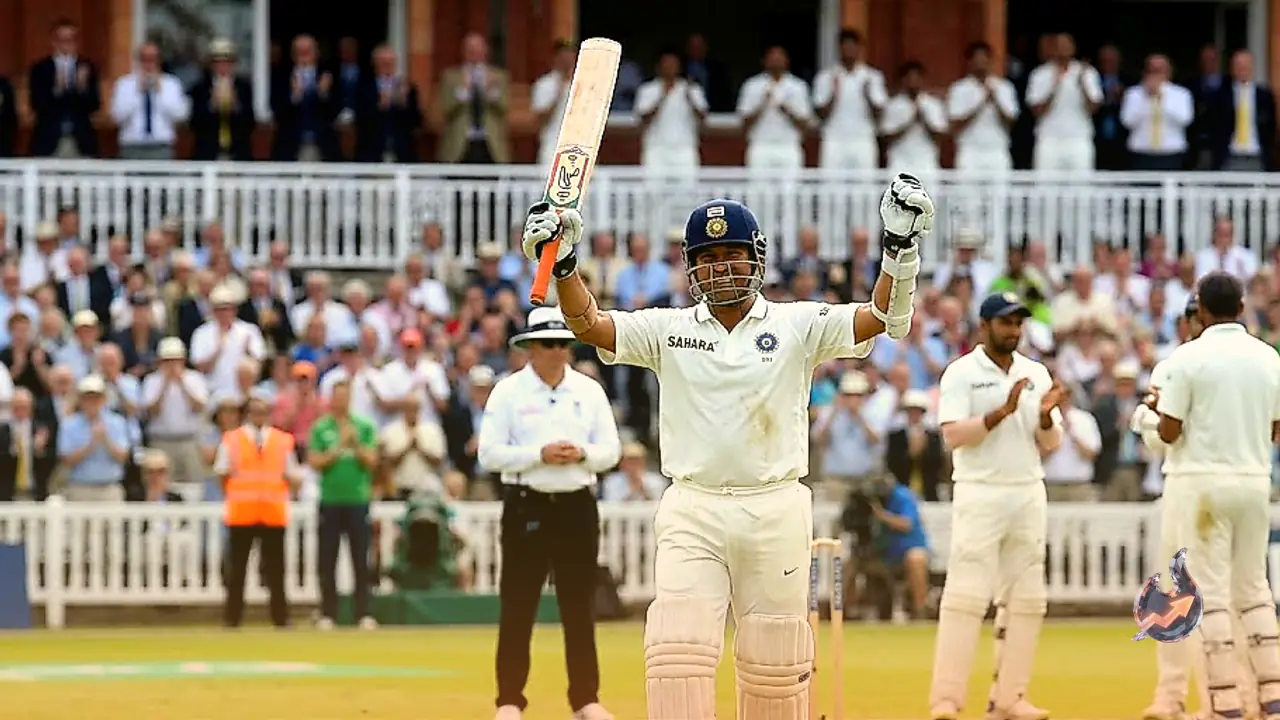
As the game entered a new decade, Indian icon Sachin Tendulkar demonstrated that genius remains permanent. In 2010, late in his international career, Tendulkar produced another masterclass year. He featured in 14 Test matches and 23 innings, remaining not out 3 times while accumulating 1,562 runs at an average of 78.10.
Tendulkar showed patient application, facing 2,794 balls at a strike rate of 55.90. He struck 181 boundaries and 10 sixes, with a top score of 214 runs. Without registering a single duck across the year, Tendulkar recorded 7 centuries and 5 half-centuries in 2010, reaffirming why he is widely regarded as one of the greatest ever to play the game.


