
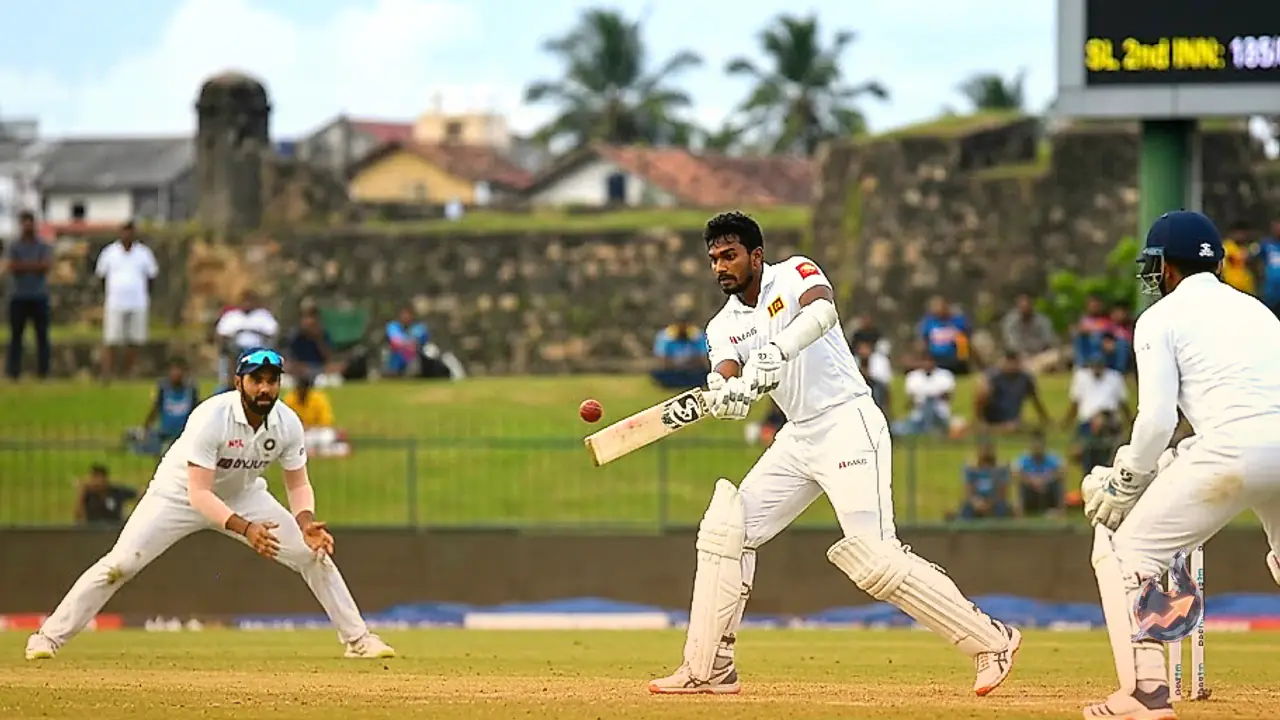




















Indian cricket history features several decisive turning points that fundamentally altered the trajectory of the sport. Prominent among these masterstrokes was the tactical shift that shifted Virender Sehwag from the middle order into an aggressive opening batter. Today, cricket enthusiasts and analysts across the globe regard Sehwag as one of the most destructive and entertaining openers in the history of the game. However, his international career actually began in the lower middle order. A chance suggestion not only transformed Sehwag's personal trajectory but also redefined top-order batting across both red-ball and white-ball formats.
Zaheer Khan's Suggestion and Sourav Ganguly's Trust
For years, a widespread belief among fans suggested that the decision to promote Sehwag to open the innings was conceived by captain Sourav Ganguly or head coach John Wright. Yet the behind-the-scenes reality is far more intriguing. The strategic brain behind this career-defining move was not a veteran batter, but frontline fast bowler Zaheer Khan, who spearheaded the Indian bowling attack at the time.
Sehwag recounted the origins of this move during a detailed conversation with former Pakistan fast bowler Shoaib Akhtar. Recalling a match from 1999, Shoaib asked why an explosive stroke-maker like Sehwag was batting as low as number seven. Sehwag explained that during that early phase of his career, he functioned purely as a middle-order player. When Shoaib pressed further on who first proposed the idea of making him an opener, Sehwag revealed that Zaheer Khan had brought the idea directly to captain Sourav Ganguly.
Ganguly placed complete faith in Zaheer's tactical vision and entrusted Sehwag with opening the batting. Recognizing the immense career risk of transitioning from the middle order to facing the brand-new ball, Sehwag asked Ganguly for a written guarantee that he would not be dropped from the squad if the experiment failed. Ganguly assured him that his spot in the team would remain completely secure regardless of initial hiccups.
Sachin Tendulkar's Injury and the Opening Breakthrough
Sehwag's first opportunity to open in One Day Internationals came under unexpected circumstances. In July 2001, during a triangular ODI series involving Sri Lanka and New Zealand, star batter Sachin Tendulkar suffered an injury. With Tendulkar sidelined, the team management decided to elevate Sehwag to partner Ganguly at the top of the order. Sehwag grasped the opportunity immediately, displaying the aggressive strokeplay that would soon become his trademark.
Building on his white-ball success, Sehwag received his first Test match assignment as an opener during India's tour of England in 2002. At a time when traditional red-ball cricket demanded extreme patience, flawless defensive technique, and cautious leave-taking, Sehwag rejected established conventions. By taking the attack to fast bowlers from the very first delivery, his fearless approach shifted pressure back onto opposition attacks and paved the way for memorable overseas victories.
Red-Ball Dominance and Historic Triple Centuries
Over the course of an illustrious Test career, Sehwag represented India in 104 Test matches, playing 180 innings. He accumulated 8,586 runs at an impressive average of 49.34 in the game's longest format. Treating Test matches with the tempo of limited-overs games, he registered 23 centuries and 32 half-centuries.
Sehwag established himself as the first Indian cricketer to score two triple centuries in Test matches. His sensational 309 against Pakistan in Multan earned him the iconic moniker Sultan of Multan. He followed that feat with a blistering 319 against South Africa in Chennai, a performance that remains one of the fastest and most dominant triple centuries ever recorded in international cricket.
White-Ball Mastery: ODI Double Century and T20 Impact
Sehwag's impact was equally pronounced in white-ball formats. Across 251 ODI matches, he accumulated 8,273 runs at an average of 35.05 and a strike rate exceeding 104. His ODI career features 15 centuries and 38 half-centuries. Among his most memorable ODI innings was a breathtaking 219 against the West Indies in Indore, which stands as one of the most aggressive double centuries in one-day history.
During the formative years of Twenty20 International cricket, Sehwag played a crucial role for India. He featured in 19 T20Is, scoring 394 runs with two half-centuries. His ability to capitalize on early powerplay overs gave India immediate momentum and established intimidating targets for opposition bowlers.
Pivotal Role in World Cup Victories (2007 and 2011)
Sehwag's legacy extends far beyond personal statistical milestones; he was an indispensable part of India's most celebrated global triumphs. He played a frontline role in South Africa when India claimed the inaugural T20 World Cup title in 2007.
Four years later, when India hosted and won the 2011 ODI World Cup after a 28-year gap, Sehwag set the tone for the entire campaign. Throughout that marquee tournament, he established a famous routine of hitting the very first ball of the match for a boundary, providing India with instant momentum from the opening delivery.