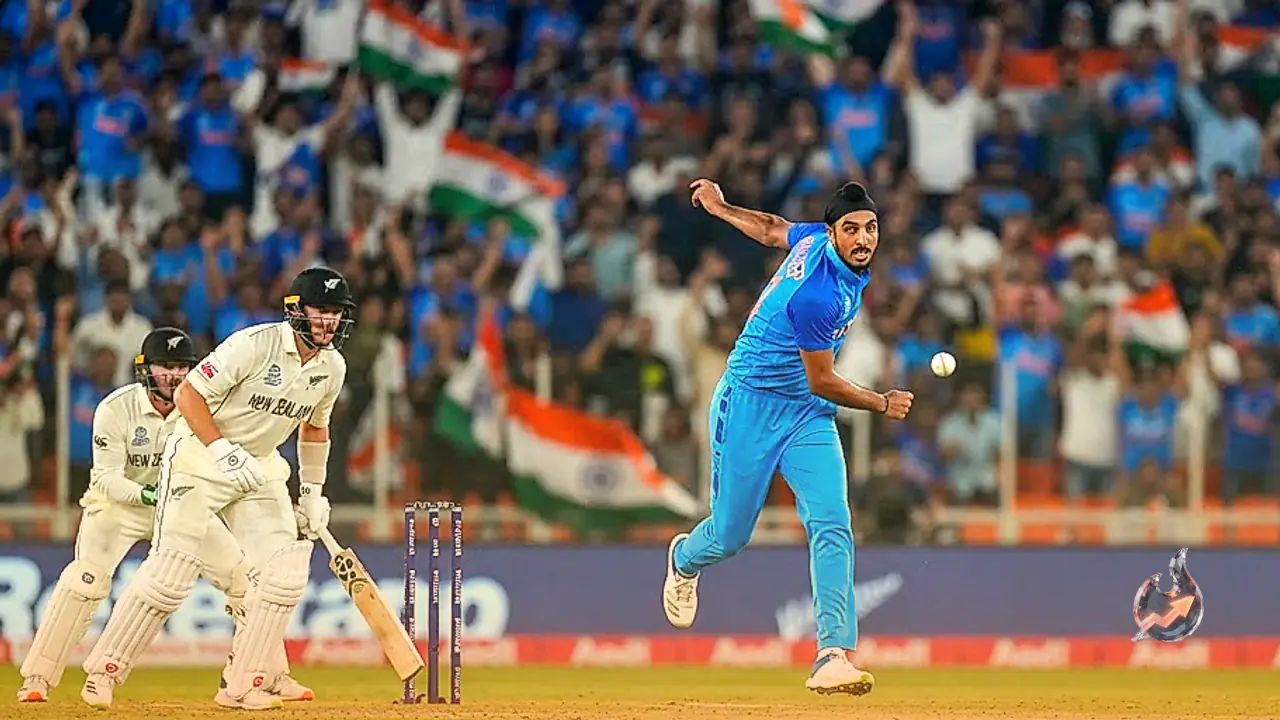

























In the standard conventions of cricket, the Man of the Match award is almost universally bestowed upon a player who produces a flashy statistical performance, such as scoring a dominant century, taking a five-wicket haul, or pulling off extraordinary catches in the field. However, on June 23, 2001, a match during the Coca-Cola Cup tournament at the Harare Sports Club witnessed one of the most unconventional decisions in the history of international cricket. West Indies fast bowler Cameron Cuffy was selected as the Man of the Match in an One Day International against Zimbabwe, despite recording a scorecard that featured zero runs, zero wickets, and zero catches. The historic encounter demonstrated that match-winning impact in cricket cannot always be captured by traditional headline figures, but rather by the relentless pressure created during critical phases of play.
First Innings: Solid Starts from Chris Gayle and Daren Ganga
The match commenced with Zimbabwe winning the toss and opting to field first on their home ground. The West Indian opening pair took full advantage of the conditions, laying a firm foundation for their team's innings. Opening batsman Chris Gayle batted with great authority, constructing a well-paced 53 runs to set the tone. His opening partner, Daren Ganga, provided stability at the other end by scoring a crucial 66 runs to anchor the middle overs. Their combined efforts allowed the West Indies to build a formidable total of 266 runs for the loss of 5 wickets in their allotted 50 overs. Because Cameron Cuffy was a lower-order tailend batsman and the West Indies lost only 5 wickets during their entire innings, he was not required to bat, leaving his batting score at zero runs.
Zimbabwe's Run Chase and the West Indian Bowling Effort
Faced with a target of 267 runs for victory, Zimbabwe launched their run chase with the intention of pacing their innings across the full 50 overs. To defend their total, the West Indies deployed a balanced bowling attack. Off-spinner Marlon Samuels bowled with great precision, capturing 3 wickets to break key partnerships in the middle order. Fast bowler Mervyn Dillon provided equal support from the other end, generating sharp pace and bounce to claim 3 wickets of his own. Despite these valuable wicket-taking spells from Marlon Samuels and Mervyn Dillon, Zimbabwe managed to bat through their 50 overs, reaching 239 runs for the loss of 9 wickets. Consequently, the West Indies secured a victory by a margin of 27 runs.
Cameron Cuffy's Spell of 2.00 Economy Rate
When the match concluded and the post-match presentation ceremony began, spectators and analysts anticipated that either Chris Gayle or Daren Ganga would receive the Man of the Match award for their half-centuries, or that bowlers Marlon Samuels or Mervyn Dillon would be recognized for their three-wicket hauls. Surprisingly, the award panel announced Cameron Cuffy as the match winner. During the innings, Cameron Cuffy had completed his full allotment of 10 overs, delivering 2 maiden overs and conceding a mere 20 runs without taking a single wicket. His economy rate stood at an astonishing 2.00 runs per over. In 2001, an era when standard one-day economy rates routinely hovered between 5 and 6 runs per over, Cuffy's miserly bowling completely stifled the Zimbabwean scoring opportunity.
Match Referee Decision and a Legendary Cricket Record
The match umpires and referee concluded upon reviewing the game that Cameron Cuffy's disciplined bowling was the definitive catalyst for the West Indies' 27-run victory. By locking down one end of the pitch, Cuffy created immense scoreboard pressure on the Zimbabwean batsmen. Unable to score freely against his tight line and length, the batsmen were forced into taking unnecessary risks against the bowling at the opposite end. This mounting frustration directly enabled Marlon Samuels and Mervyn Dillon to capitalize and take key wickets. The adjudicators acknowledged that without Cuffy suppressing the scoring rate, Zimbabwe could have easily chased down the target. Thus, with zero runs, zero wickets, and zero catches, Cameron Cuffy earned an unprecedented place in cricket lore through sheer bowling discipline and tactical pressure.