























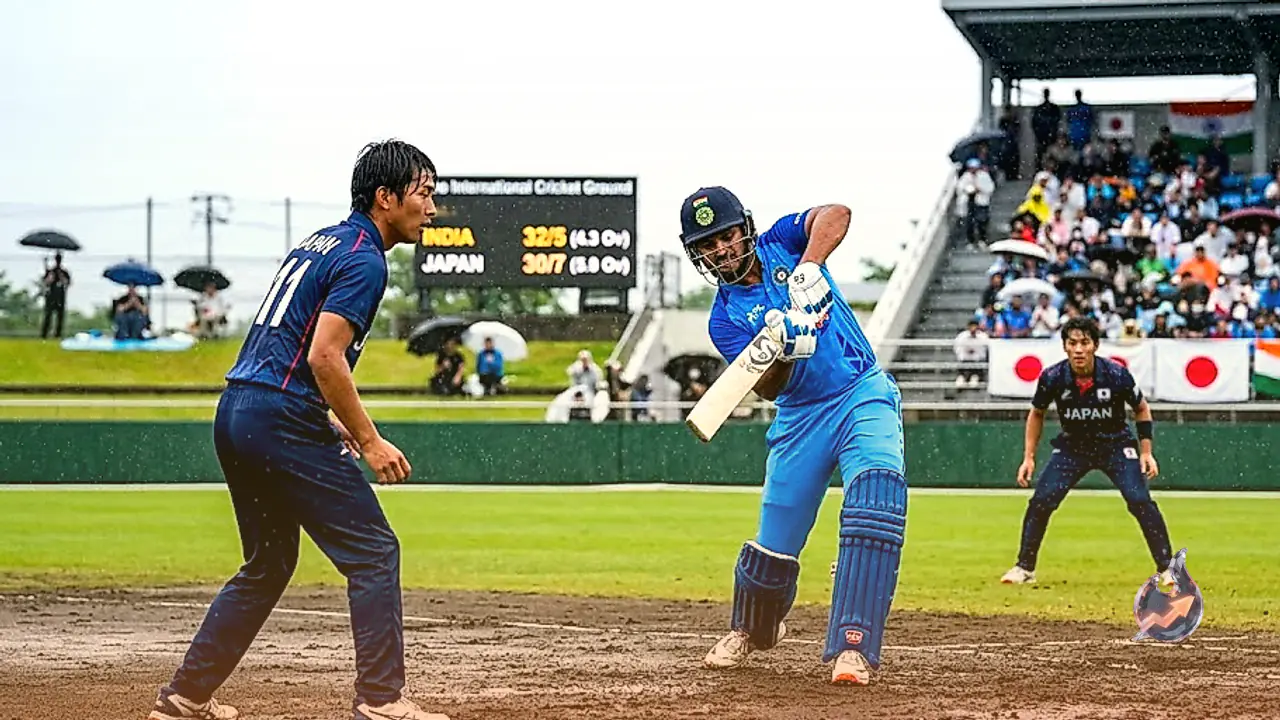

Indian batters encountered a severe test against sharp turn on a tricky surface during a shortened five-over contest at the Sano International Cricket Ground in Japan. Sporting their pink jerseys, Japanese spinners exploited the moist hybrid drop-in deck to perfection, delivering testing spells that recalled masterclasses of turn bowling. India entered the clash boasting top-four batters in formidable form, yet the lineup struggled to adapt quickly to the tactical demands of a frantic 30-ball innings on a heavily gripping pitch.
Slow Flight Stifles the Indian Top Order
Having won the toss, India opted to set a target with just 30 deliveries available to build a commanding total. Benefiting from home conditions, Japan deployed slow-paced spin bowling that extracted sharp movement off the turf, catching the batting order completely off guard. Across the entire five overs, the Indian side failed to hit a single six and managed only two boundaries. India crawled to a total of 32 runs, eventually sealing the fixture by a razor-thin margin of just two runs.
Charlie, Ibrahim, and Benjamin Apply Relentless Pressure
The behavior of the drop-in surface became obvious from the very first ball, which spun sharply and signaled an uphill battle for strokeplay. Left-arm spinner Charlie made an instant impact by dismissing Abhishek for a duck. Showing immense composure under pressure, Charlie also handled the crucial final over of the innings, where he successfully removed captain Shreyas. Complementing the left-arm spin, off-spinners Ibrahim and Benjamin kept constant pressure on Ishan Kishan, Sanju Samson, and Tilak Varma. A batting unit accustomed to scoring at nearly 10 runs per over in twenty-over contests was restricted to a scoring rate of just 6 runs per over.
Wet Conditions and Questionable Shot Execution
Continuous rainfall ahead of the start had allowed significant moisture to seep into the drop-in pitch, ensuring the ball gripped aggressively right from ball one. Credit belongs to the trio of Japanese slow bowlers, who recognized the behavior of the wicket immediately, dropping their pace significantly and giving the ball generous flight to prevent it from reaching the batters comfortably. An examination of the dismissals indicates that Indian batters attempted expansive strokes from the crease rather than stepping out to the pitch of the ball. Consequently, edges flew repeatedly and wickets tumbled in quick succession. Conceding only 32 runs in five overs illustrated Japan's tight line, immaculate length, and disciplined pace variation.
A Gritty Low-Scoring Finish
The extreme difficulty of the surface was underlined by the combined statistics of the match, as both teams combined for a mere 62 runs across 60 legal deliveries. Over the entirety of the fixture, only four boundaries were struck across both innings, with not a single maximum recorded. India held their nerve in the closing moments to secure the game by two runs and avert a major upset.