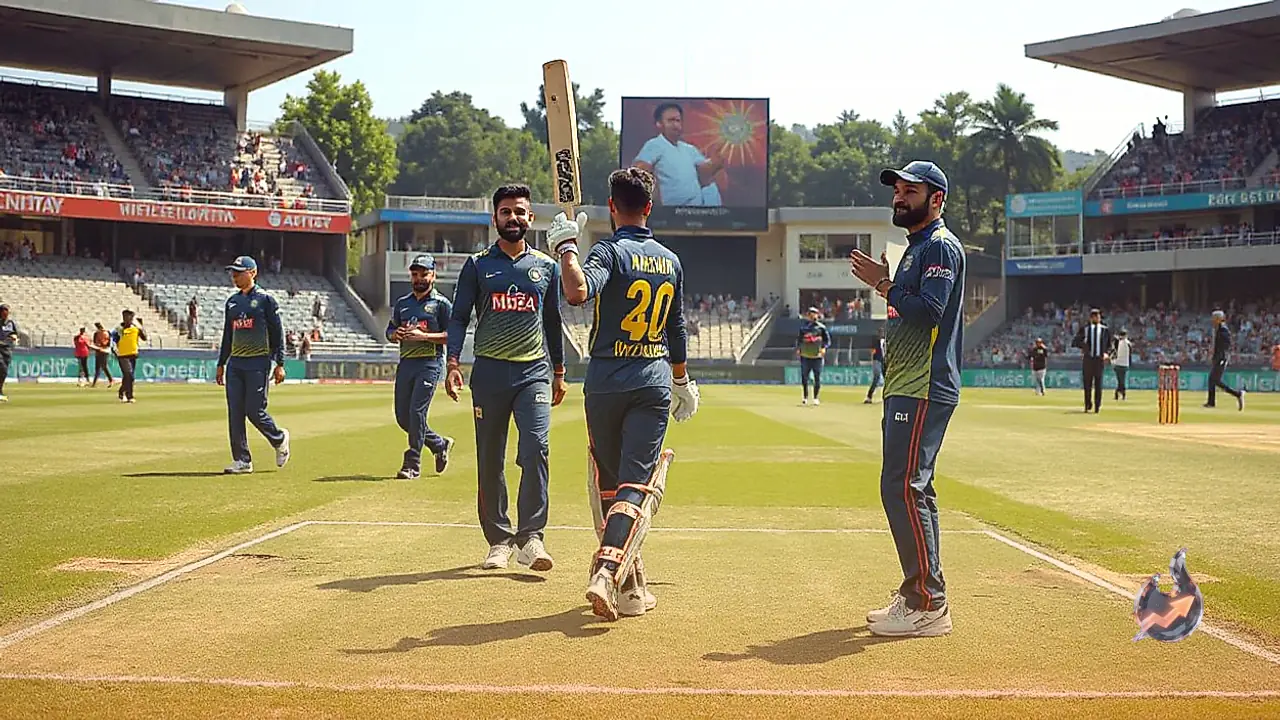
























Sanju Samson currently occupies one of the most precarious positions within the Indian national cricket setup. Whenever he experiences a solitary dip in form or registers a low score, discussions immediately surface regarding the viability of his international career. While volatile commentary from digital followers and casual supporters is commonplace, the immediate skepticism voiced by former cricketers and media commentators raises far deeper questions. In the contemporary sporting ecosystem, on-field performance often seems intertwined with deliberate visibility and active reputation management, leaving quiet contributors vulnerable to disproportionate scrutiny.
The Cost of a Quiet Demeanor in a High-Visibility Era
Samson has consistently maintained a reserved disposition, largely keeping away from promotional fanfare and maintaining minimal involvement across online social platforms. Yet, a cricketer's quiet nature should never serve as a pretext to restrict their opportunities at the highest level. The moment Samson endures an off day at the crease, calls quickly gather momentum urging the team management to drop him in favor of emerging talents like Vaibhav Suryavanshi. While integrating promising youth is vital for the future of any side, it raises questions about whether this transition should come at the cost of sidelining players who have already proven their capabilities under demanding circumstances.
Vaibhav possesses his own distinct approach to the game, just as Samson operates with a well-defined personal method. The unpredictable dynamics of the T20 format offer no absolute guarantee that a partnership between Vaibhav and Abhishek Sharma will unfailingly deliver 100-run stands in every single outing. Meanwhile, Abhishek's aggressive run tally has been significantly nurtured by the unwavering confidence shown by head coach Gautam Gambhir, whose steadfast backing and tactical clarity have earned widespread praise.
Batting Order Volatility and Divergent Yardsticks
During the recent tour of New Zealand, Samson made an impactful start by registering a convincing half-century. In that same series, Abhishek Sharma struggled to convert promising starts across the initial encounters, yet a single century later in the tour effectively masked those earlier shortcomings. Crucially, Abhishek's initial failures never triggered public conversations about demoting him to test a new opening combination featuring Vaibhav alongside Samson. Furthermore, when Samson anchors a victory with a half-century, the feat rarely generates widespread accolades across public platforms. Conversely, when Abhishek produces a substantial knock, prominent figures like Yuvraj Singh actively amplify his achievements across digital channels. Samson rarely finds such prominent advocates stepping forward to champion his corner, and while he maintains public silence on the matter, navigating such stark disparities inevitably exerts an emotional toll on any professional athlete.
Lack of Fixed Positioning and Repeated Compromises
Discussions regarding dropping Abhishek Sharma down to the number three slot are almost non-existent within team discourse. This raises the fundamental question of why Samson is perpetually expected to accommodate structural changes, shuttled between opening the innings, walking in at number three, or adjusting to middle-order duties. Across his tenure with the national side, Samson has rarely been afforded a settled, undisputed batting slot where he could construct his game with long-term security. Despite dutifully accepting whatever role the management requested, the readiness with which critics write off his career after a single subdued series underlines how much off-field perceptions influence a player's standing.
Addressing Inconsistency Amid Structural Uncertainty
It remains undeniably true that Samson's international record reflects intermittent lapses in consistency. However, the root cause of this fluctuating form requires careful examination. Scrutiny must be directed toward both team strategists and analytical commentators who demand his immediate exclusion after an unsuccessful outing, often failing to acknowledge that Samson has seldom received the consistent institutional faith he warrants. No cricketer can consistently produce peak performances under the persistent apprehension that an impending game might bring benching or another abrupt change in batting position. This ongoing atmosphere explains why Samson repeatedly finds himself cast as the easiest target whenever the team seeks tactical adjustments.