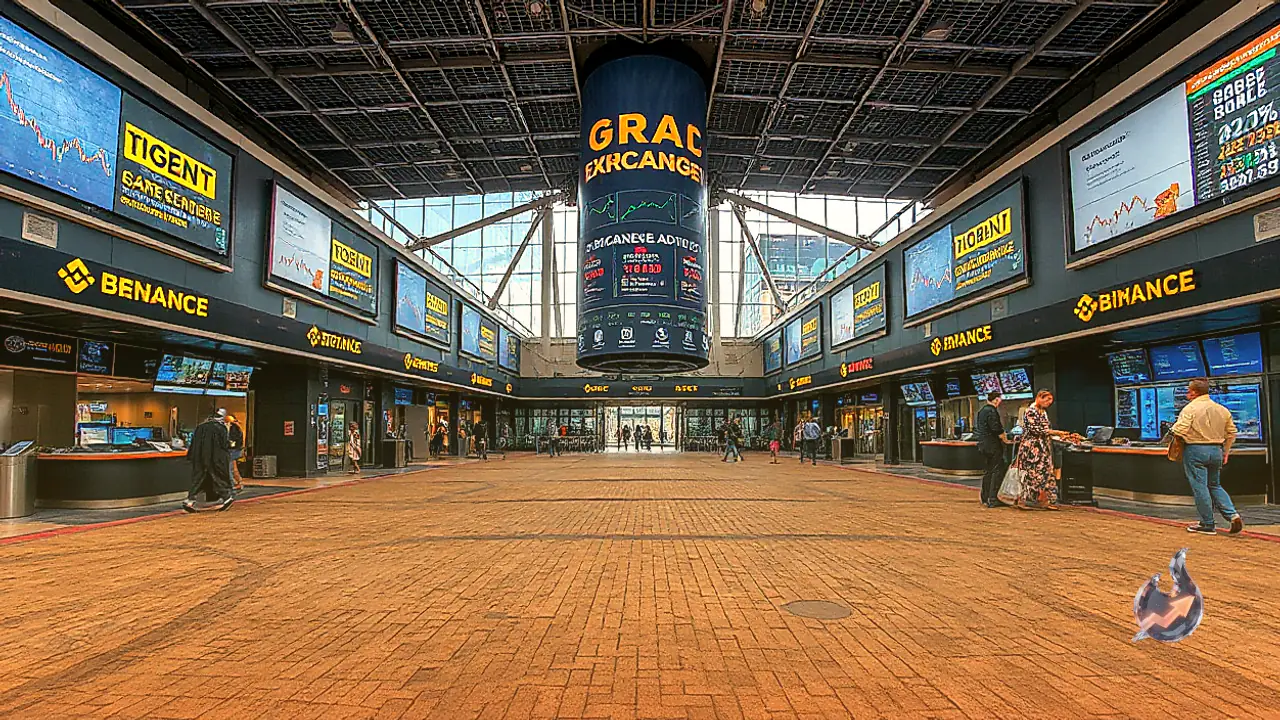























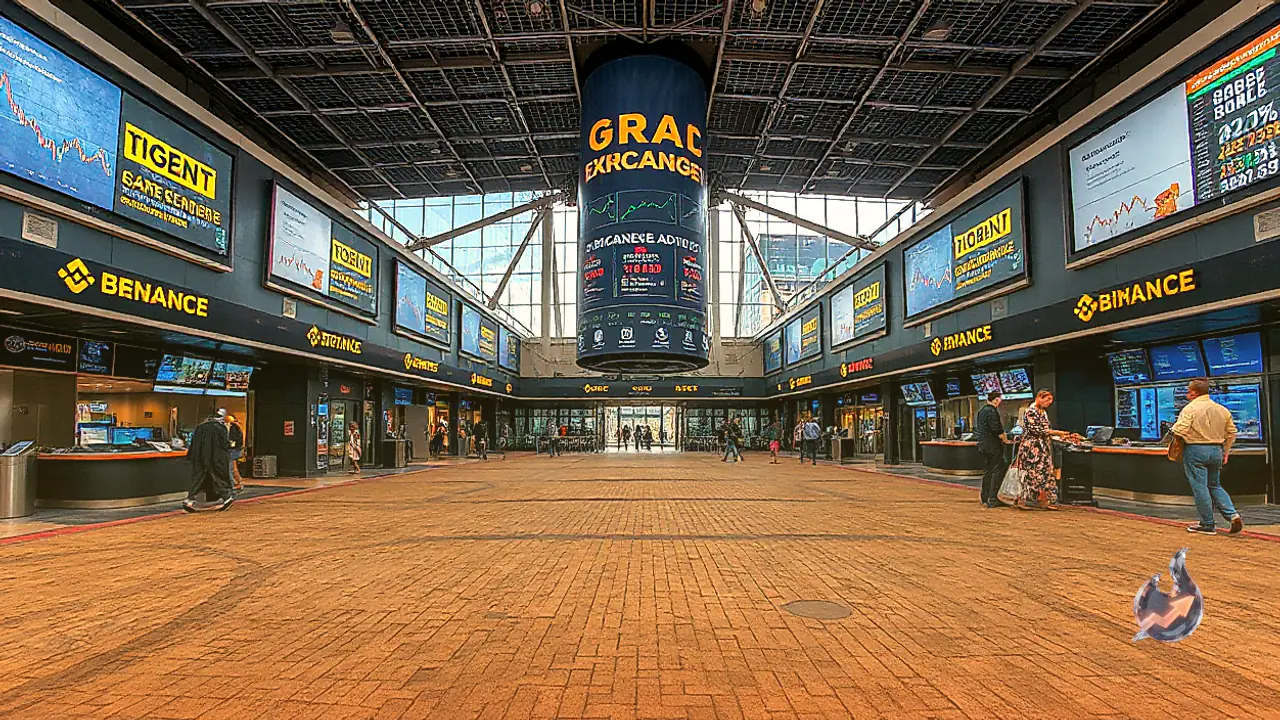

The market structure for real-world asset (RWA) perpetual futures is undergoing a significant transformation as centralized crypto exchanges (CEXs) capture a dominant share of trading volume. Decentralized derivative platform Hyperliquid has seen its market share in RWA perpetual futures fall from 80 percent in July to 26 percent. Over the same period, centralized venues secured 64 percent of total trading activity. On-chain data indicates that centralized platforms are absorbing new trading volume entering the market rather than merely displacing pre-existing decentralized flows.
Rapid Expansion by Centralized Venues
Binance spearheaded the shift by increasing its RWA market share from 3 percent to 30 percent within a two-week window. Concurrently, OKX expanded its market share to 14 percent, while platforms such as Gate and Bitget have also accelerated their rollout of RWA perpetual products. The advantage for centralized exchanges stems from their capability to offer traditional financial asset exposure alongside standard spot and derivative crypto instruments within unified account structures.
Hyperliquid previously enjoyed early-mover advantages by offering round-the-clock trading for assets that trade during restricted traditional market hours. Early in the year, amid geopolitical instability, oil perpetual futures on Hyperliquid experienced heightened trading activity as market participants sought continuous risk management outside conventional exchange operating hours. However, as major centralized exchanges launched competing 24/7 contracts on commodities and equities, that initial competitive moat has narrowed.
Tokenized Equities and Traditional Financial Integration
In July, OKX launched more than 40 tokenized US stocks and exchange-traded funds (ETFs), enabling continuous 24/7 trading against USDT in supported geographic regions. Through unified margin accounts, users can trade tokenized equity contracts of major companies including Apple, Nvidia, and Tesla alongside digital assets.
This shift aligns with broader moves across traditional financial infrastructure. In January, the New York Stock Exchange (NYSE) announced plans to develop a regulatory-compliant platform designed for 24/7 trading and blockchain-based settlement of tokenized securities. Following that, OKX and NYSE parent entity Intercontinental Exchange (ICE) announced their joint venture, OKXICE, aimed at establishing an on-chain tokenized securities venue. Additionally, the US Securities and Exchange Commission (SEC) introduced its Innovation Exemption in September, providing temporary, conditional regulatory relief for qualified venues trading tokenized US equities.
Hyperliquid (HYPE) Technical Analysis and Price Levels
Despite losing market share in the RWA segment, Hyperliquid remains a high-volume perpetual futures venue, recording $208.07 billion in total 30-day perpetual futures volume. The platform's native token, HYPE, trades near $77.8, reflecting a 3.8 percent decline over a 24-hour window.
From a technical standpoint, HYPE maintains a bearish short-term posture as price action remains below the 20-day and 50-day Exponential Moving Averages (EMAs), which cluster around $82.00. While the price recently rebounded off the 100-day EMA near $76, momentum indicators remain muted. The 14-day Relative Strength Index (RSI) stands at 41, while the Stochastic Oscillator sits near 17 in weak territory, indicating persistent overhead pressure.
Immediate downside support sits at the 100-day EMA near $75.69. A sustained breach below this level opens technical pathing toward secondary support floors at $67.64 and $61.16. On the upside, initial technical resistance aligns with the convergence of short-term EMAs at $82.10, followed by a primary barrier at $85.04. A definitive breakout above $85.04 would be required to shift bias toward the higher resistance region at $97.84.
Broader Altcoin Market Dynamics
In broader altcoin trading, Cardano (ADA) trades below $0.222 after failing to hold above its 50-day EMA at $0.228, with weakening derivatives metrics pointing toward a potential test of its 100-day EMA. Ripple (XRP) trades around $1.33 while Stellar (XLM) sits below $0.183, with both assets facing resistance amid mixed derivatives indicators.
In contrast, Zcash (ZEC) has extended its weekly recovery above $1,300, securing 15 percent gains over three consecutive positive sessions. ZEC futures Open Interest reached a 30-day peak of $2.89 billion, supported by net institutional and retail capital inflows exceeding $15 million, maintaining an upward technical bias.