















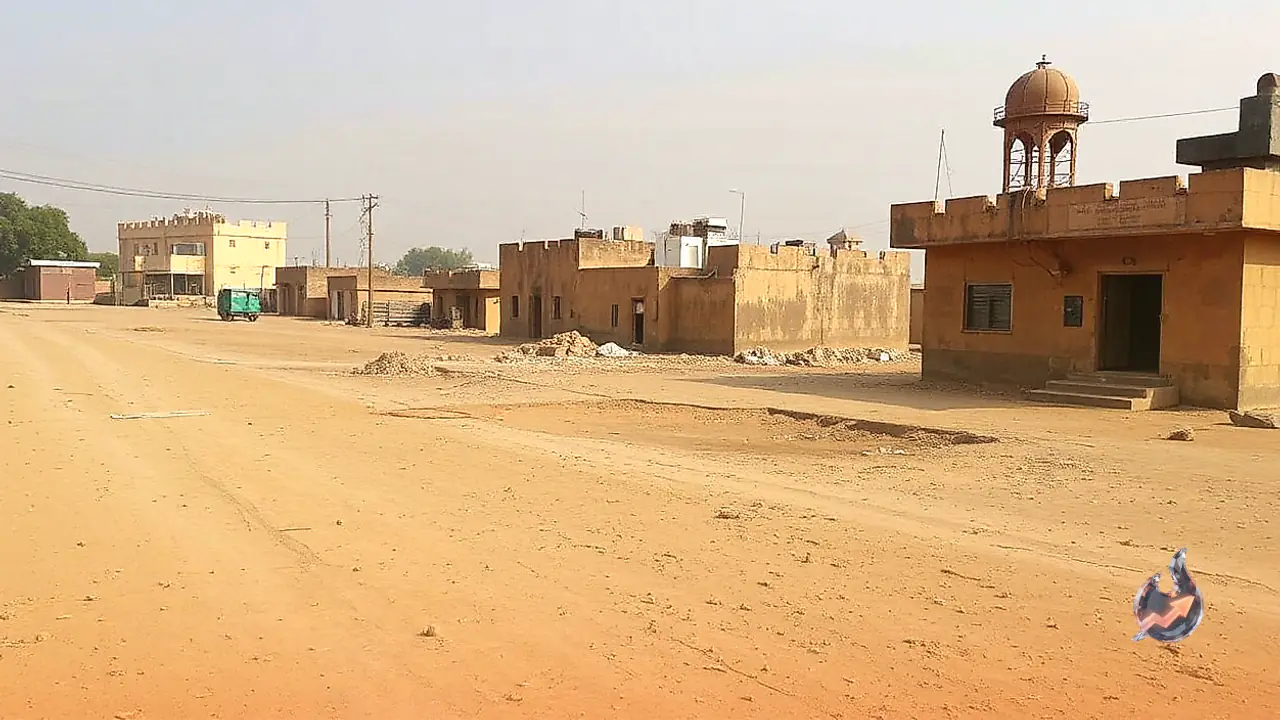

Atmospheric conditions across prominent urban centers and all seven divisional headquarters of Rajasthan continue to hover in the moderate air quality bracket. Arid weather patterns combined with constant vehicular exhaust and airborne dust have kept fine particulates suspended close to the surface. Environmental analysts and weather experts observe that due to the prevailing dry atmosphere, airborne pollutants are unable to disperse effectively, leading to a noticeable deterioration in ambient breathing conditions during early mornings and late evenings. A slight relief is anticipated once an upcoming western disturbance alters local meteorological patterns.
Wide Disparity Across Jaipur's Neighborhoods
Data gathered by the Central Pollution Control Board alongside localized testing facilities shows substantial micro-level variations across municipal zones. In the state capital of Jaipur, while the citywide average settled at 124, individual testing points told very different stories. The industrial belt around RIICO Sitapura emerged as the most polluted pocket within city limits, touching an index near 170. Conversely, the greener residential sector of Adarsh Nagar maintained relatively clean conditions, recording a much safer reading of 76.
Industrial Zones and Heavy Transit Corridors Face Pressure
Beyond the capital, manufacturing hubs and major transportation corridors throughout the state are dealing with elevated particulate concentrations. Belts such as Bhiwadi, along with Sikar and Bharatpur, continue to experience dense particulate accumulation driven by continuous factory operations and frequent heavy vehicle movement. These combined sources have raised the concentrations of PM10 and PM2.5 in the lower atmosphere, creating persistent haze across busy commercial corridors and factory zones.