





















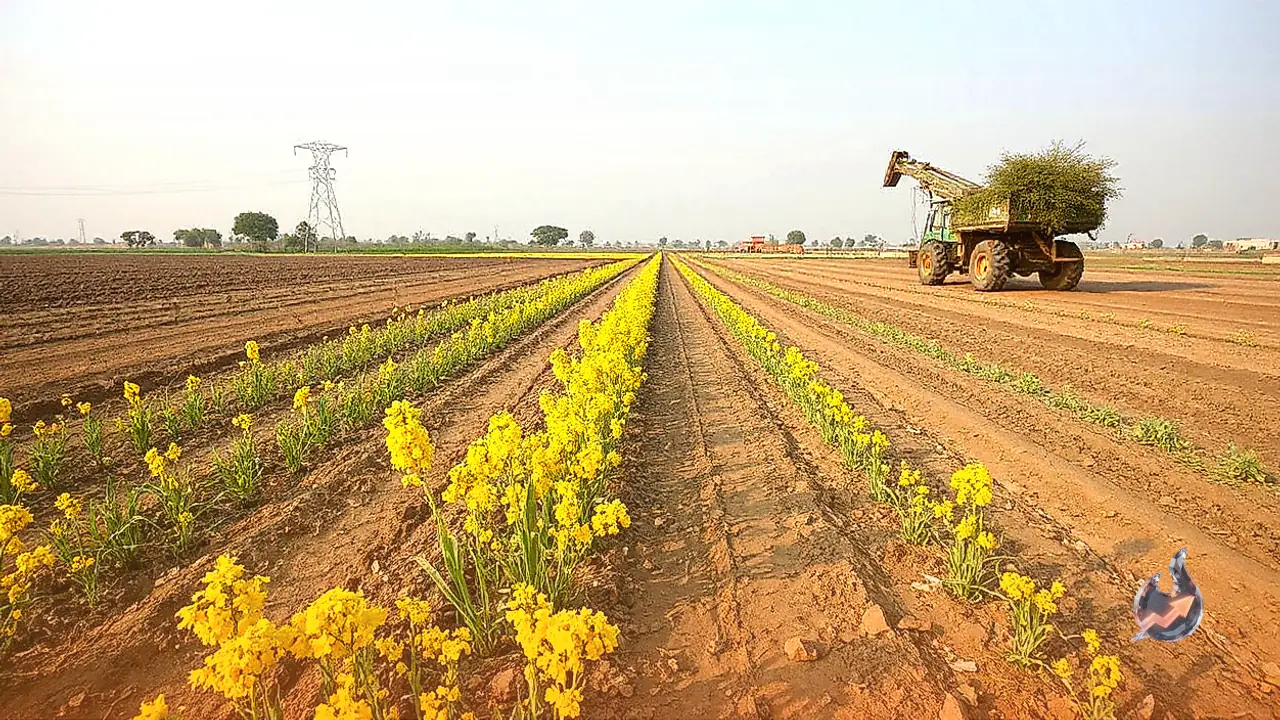

With the commencement of the Rabi agricultural season, farming communities across Nagaur district in Rajasthan have initiated extensive land preparations for cultivating Rayda, commonly known as mustard or rapeseed. October represents the decisive period for mustard operations across this arid and semi-arid terrain. Agricultural experts emphasize that achieving an abundant harvest depends squarely on three foundational pillars: adhering strictly to the optimal planting calendar, selecting genuine certified seed varieties, and ensuring immaculate soil readiness. Because mustard constitutes a vital commercial crop for local growers, avoiding basic management errors during sowing directly safeguards farm profitability.
Ideal Sowing Dates and the Role of Soil Moisture
Agronomists identify the window spanning October 10 to October 25 as the premier timeframe for planting mustard crops. During this specific fortnight, daytime soil temperatures and ambient atmospheric conditions harmonize perfectly with the biological requirements of seed germination. Nevertheless, precise planting dates should always be calibrated against ground-level variables, including prevailing local temperatures, the actual moisture profile of the seedbed, and the precise maturation cycle of the chosen seed variety. Rushing to plant during unseasonal heat spells can weaken initial seedling emergence.
Securing a resilient, uniform stand demands thorough initial soil tillage. Farmers should plow the land thoroughly to create a friable, fine tilth and subsequently level the surface with a plank. Proper leveling prevents irregular water distribution during subsequent irrigations, preventing both root suffocation from waterlogging and patch drying. Adequate seedbed moisture at the time of sowing is non-negotiable. Deficits in soil moisture sharply curtail seed emergence rates, resulting in patchy, sparse crop density across the acreage. Growers must systematically assess both topsoil and subsoil moisture levels prior to drilling, relying exclusively on tested, certified seeds.
Selecting High-Yielding Varieties Suited to Nagaur Climate
Agricultural specialist Bajrang Singh highlights that varietal selection must align with the distinct climatic realities and resource limitations of Nagaur district. Farmers can achieve superior outcomes by considering established high-performing cultivars such as RH-749, Giriraj, and RGN-73. These varieties are well recognized for robust growth habits, high pod counts, and stable yield trajectories under regional conditions.
Furthermore, in pockets where irrigation availability is scarce or groundwater reserves are constrained, Bajrang Singh advises growers to consult local extension officers regarding drought-resilient alternatives such as RGN-298. Before purchasing any variety, farmers need to scrutinize key biological parameters: ecological adaptability, total duration to maturity, total water requirement, and defensive tolerance against major pest attacks and diseases. Every seed sack should be obtained from authorized agricultural distributors, with farmers carefully reading the label credentials, germination guarantees, and packaging seals.
Advantages of Line Sowing, Seeding Depth, and Moisture Care
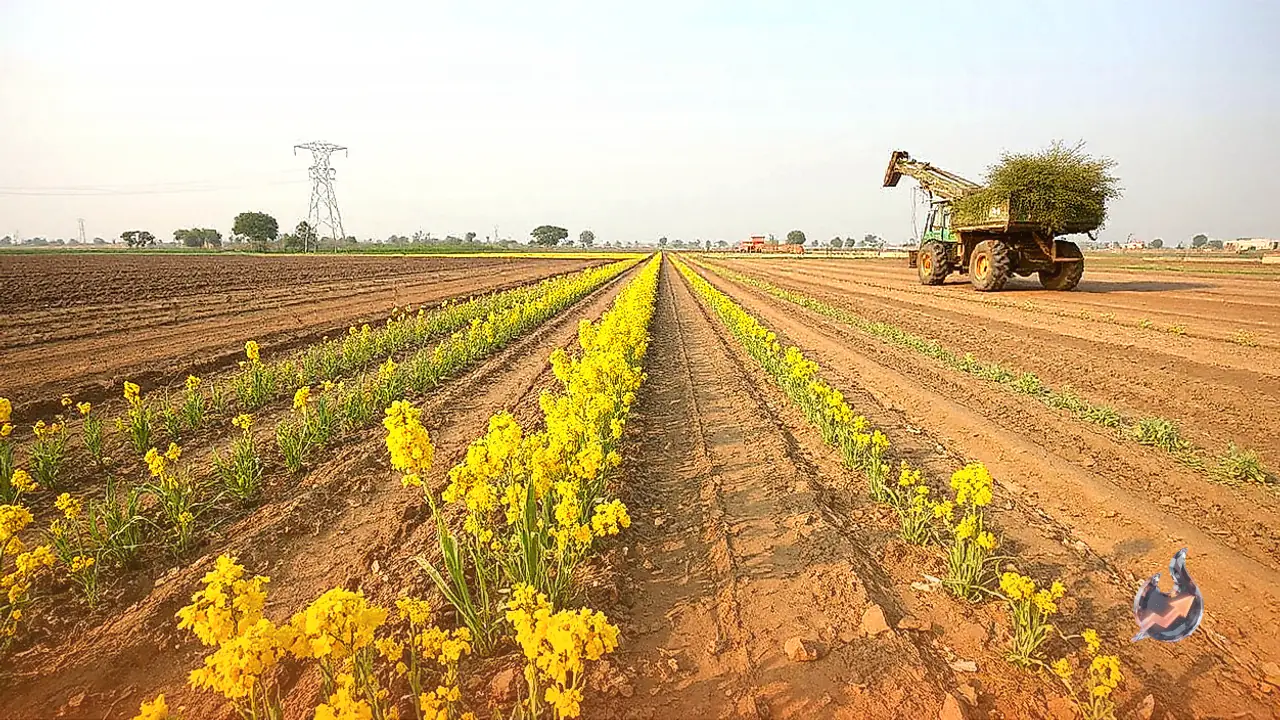
Offering valuable field insights, young progressive grower Arjun Choudhary underlines that maintaining systematic plant spacing serves as the foundation for bumper harvests. Instead of indiscriminate broadcasting methods, line sowing ensures that each mustard plant receives an unobstructed share of sunlight, soil nutrients, and aeration. The standard practice mandates maintaining a row-to-row gap of approximately 30 centimeters, while setting the seed depth strictly between 2 to 3 centimeters. Placing seeds deeper into the furrow hinders emergence, as young shoots expend excessive energy trying to break through dense soil crusts.
Sowing in organized rows preserves a uniform plant population per unit area while considerably simplifying agronomic interventions like weeding, inter-cultivation, and mechanical plant protection. Irrigation management also demands disciplined timing. It is critical that fields do not experience moisture deficits during sensitive physiological milestones, particularly during the flowering phase and the development of seed pods. Coupling this scheduled hydration with balanced, measured fertilizer application accelerates vegetative development, expands branching, and delivers plump, oil-rich seeds that fetch premium prices in wholesale markets.