






















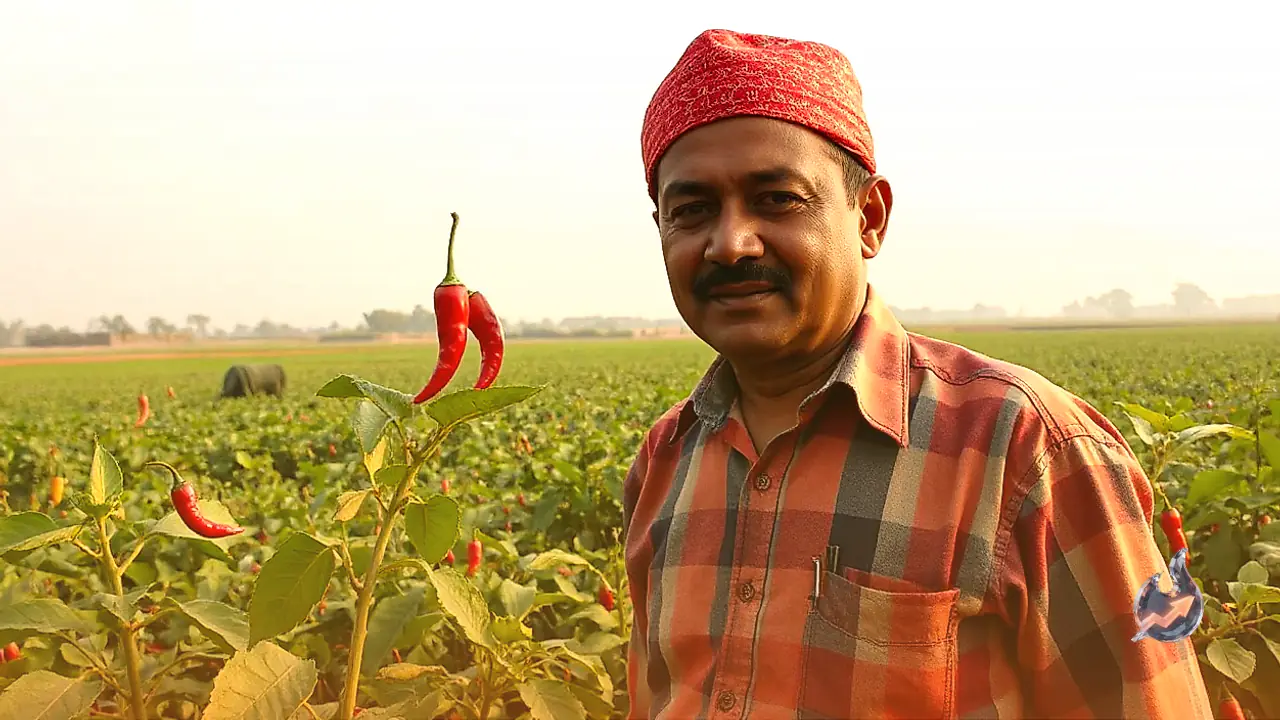

In the Bokaro district of Jharkhand, a substantial number of farmers rely heavily on commercial chilli cultivation for their seasonal income. While chilli can be a lucrative cash crop, growers frequently confront severe crop damage caused by plant diseases that go unnoticed or unmanaged during the critical growing periods. Inadequate crop supervision and delayed diagnosis often lead to aggressive outbreaks, drastically diminishing overall fruit yield and eroding farm profits. Addressing these concerns, Kuldeep Kumar, an agricultural expert based in Bokaro, has detailed the symptoms, causes, and precise control methods for three major diseases that pose the greatest hazard to chilli plantations.
Managing Whitefly Vectors and Leaf Curl Virus
Leaf curl virus stands out as one of the most debilitating conditions that chilli growers face in the field. According to Kuldeep Kumar, the virus is primarily transmitted from plant to plant by sucking sap insects, with the whitefly serving as the principal vector. When whitefly populations feed on infected vegetation and subsequently migrate to healthy plants, they rapidly disseminate the viral pathogen across entire plots.
The visual symptoms of leaf curl virus are distinct and easily detected upon careful inspection. Infected chilli leaves curl upward around their margins, forming a characteristic cup-like shape. In addition, the foliage remains abnormally small, wrinkled, and stunted. As the infection progresses, the overall vegetative growth of the plant is arrested, leaving the bushes visibly dwarf. In severe cases, the process of flowering and fruit set is critically disrupted, resulting in minimal harvestable chillies and substantial financial losses for the cultivator.
Mitigating this viral threat requires proactive sanitary practices combined with pest suppression. Farmers who observe individual plants showing leaf curling must promptly uproot them and remove them completely from the field area to destroy the infection reservoir. Concurrently, controlling the whitefly population is vital to halt further transmission. Spraying Imidacloprid at a concentration of 0.5 grams per litre of water provides effective control over the whitefly vectors.
Tackling Damping Off in Nursery Seedbeds
The nursery phase is equally vulnerable, with damping off serving as a destructive menace to young chilli seedlings. This disease is driven by soil-borne pathogenic fungi flourishing in conditions of excessive soil moisture and elevated humidity. Shortly after seeds germinate and emerge, the fungal pathogens attack the tender stem tissues situated near the soil line.
As the infection takes hold, the base of the seedling stem softens, turns water-soaked, and rots away. Lacking structural support, the diseased young plants collapse and topple over onto the soil surface. This rapid mortality can decimate seedling density in the nursery beds, leaving cultivators with an insufficient supply of robust saplings for transplanting into main fields.
Preventative cultural techniques implemented right from the nursery preparation stage offer the best protection against damping off. Seed treatment prior to sowing is essential. Furthermore, growers must construct raised nursery beds elevated approximately 15 centimetres above the surrounding ground level. This elevation ensures efficient drainage of excess irrigation or rainwater, avoiding waterlogging that favors fungal proliferation.
Incorporating bio-fungicides such as Trichoderma into the nursery soil in recommended doses provides biological defense against soil pathogens. If early symptoms of seedling collapse emerge within the nursery beds, drenching or spraying with fungicides such as Copper Oxychloride 50 percent WP or Mancozeb helps arrest the spread of the fungal infection.
Combating Fusarium Wilt Through Crop Rotation and Root Care
Once transplanted into the field, chilli plants face another lethal condition known as wilt or uktha rog. Under this disease, seemingly thriving plants suddenly begin to wilt during daylight hours and dry out completely within a short span of days. When an affected plant is uprooted to examine its root system, dark brown or black lesions and pronounced root decay are typically evident.
Adopting an effective crop rotation strategy is vital for long-term wilt suppression. Agricultural expert Kuldeep Kumar advises farmers against planting chilli continuously on the same parcel of land. Introducing crops such as coriander or various leguminous pulses after a chilli harvest breaks the fungal reproductive cycle in the soil, thereby reducing pathogen populations naturally.
Chemical management can be performed using Carbendazim. Dissolving 2.5 grams of Carbendazim per litre of water and drenching the root zone of the chilli plants suppresses fungal activity around the roots. The optimal window for applying this root drench is roughly one week following field transplantation, helping young plants establish resilience against fungal root invasion.
Integrated Field Management for High Yields
Achieving bumper chilli yields demands an integrated approach that pairs targeted chemical solutions with disciplined agronomic upkeep. Ensuring effective field and nursery drainage remains foundational, as standing water provides fertile ground for both fungal pathogens and root decay.
Farmers must consistently select certified, disease-free seeds and vigorous seedlings for planting. Following transplanting, routine field inspections should be carried out at frequent intervals. Identifying the earliest signs of leaf deformities, seedling weakness, or root distress allows for rapid, localized interventions, preserving crop vigor and safeguarding farmer revenue.