





















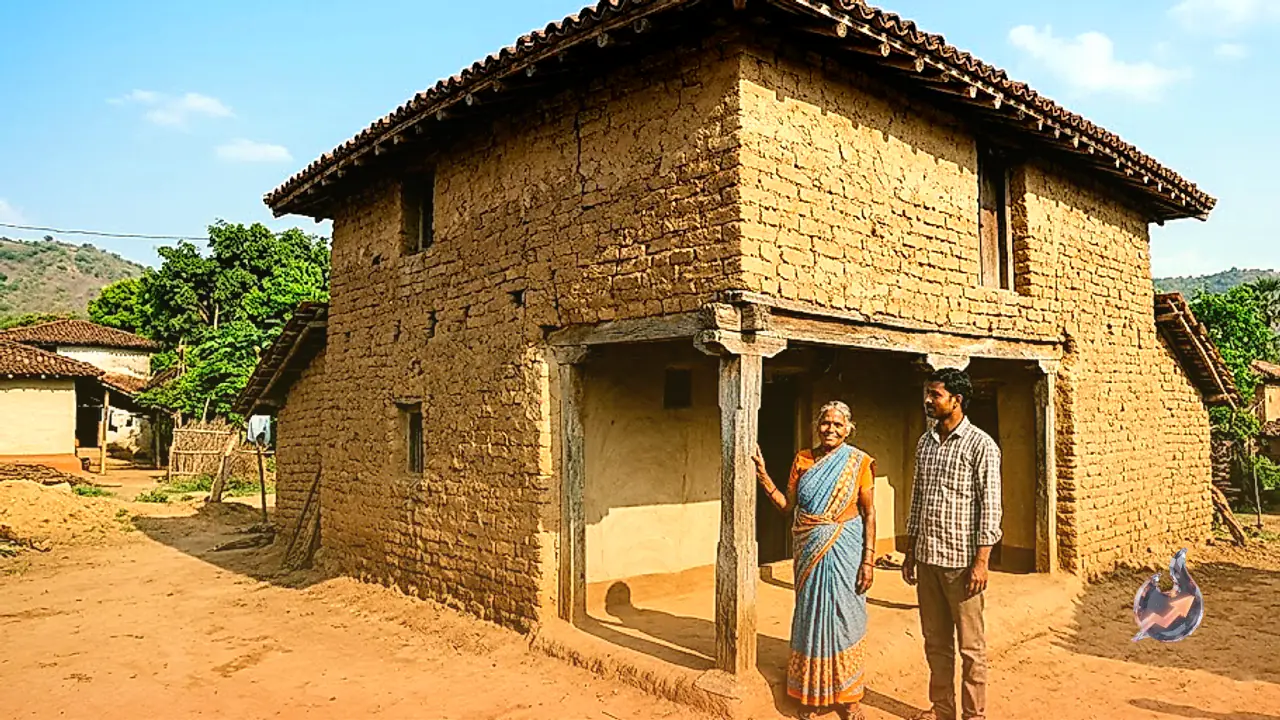

In modern construction, whenever a new house is built, ingredients such as cement, steel reinforcement bars, sand, gravel, and heavy machinery are considered indispensable. Modern structural engineers draft detailed blueprints, after which advanced equipment quickly erects structural walls and casts concrete roof slabs within days. In contrast, an extraordinary historic house located in the Jamui region continues to capture the attention of passersby and younger generations. Built approximately seven decades ago, this grand structure stands remarkably intact and structurally sound today. The most remarkable aspect of its construction is that not a single bag of modern cement was used during its creation. At that time, neither modern concrete casting techniques nor iron mesh frameworks were available. Despite facing decades of changing weather, scorching sun, and heavy monsoon rains, the house remains in excellent overall condition. Anil Kumar, a member of the local zamindar family that owns the residence, notes that building a home in that era was not merely a matter of shelter, but an exquisite showcase of architectural craftsmanship and traditional skill.
Traditional Building Heritage and Local Brick Manufacturing
According to Anil Kumar, most rural dwellings nearly seventy years ago were simple mud structures. During that era, constructing a durable, permanent residence was a privilege largely reserved for prosperous zamindar families. For this particular house, bricks were not imported from commercial markets or distant kilns. Instead, the raw materials were processed locally right within the village. Craftsmen molded local clay into bricks and subsequently baked them in traditional kilns powered by burning firewood. These wood-fired bricks possessed high strength and durability. To bond the brickwork, workers eschewed modern cement mortar in favor of a specialized composite mortar prepared from lime and surti. While lime was procured from local markets, surti was manufactured directly on site. Broken or aged clay bricks were finely pulverized into a fine dust, which was known locally as surti.
Formulating Mortar with Lime, Brick Dust, and Jaggery Residue
To enhance the structural bonding and flexibility of the mortar, a unique organic additive was integrated into the mixture. During the traditional extraction of jaggery from sugarcane juice, a sticky viscous byproduct known as choa is left behind. Masons blended slaked lime, finely ground surti, and sugarcane choa in precise proportions, thoroughly kneading the mixture into a thick binding paste. This organic composite mortar was utilized for laying brick courses, assembling structural joints, and rendering plaster surfaces across the entire structure. Anil Kumar explains that the masons of that period were far more than manual laborers; they were master builders well-versed in traditional structural engineering. Zamindar households typically engaged these skilled artisans and workers on annual retainers. These craftsmen constructed family estates and personally took charge of routine inspections and periodic maintenance over the years.
Roof Construction via Beams, Tiles, and Manual Compaction
Roofing methodology during that era differed fundamentally from modern reinforced concrete casting. Rather than tying intricate grids of steel rebar and pouring liquid concrete mixes, workers relied on timber and iron frameworks. First, sturdy beams made of iron or wood, locally called barga, were laid across the top of the walls. Over these structural beams, large brick-like clay tiles known as tali were laid sequentially to form the primary base platform. Once the tile base was complete, the prepared mortar of lime, surti, and sugarcane residue was poured across the surface. Laborers then used hand tools to systematically beat and compact the mortar layer continuously for several days. This manual beating eliminated air pockets and dense-packed the mixture into a solid, waterproof roof slab. Thus, roof casting relied entirely on human labor, physical endurance, and manual craftsmanship rather than automated mechanical mixers.
A Seven-Decade Legacy of Traditional Craftsmanship
During that historical period, construction prioritized durability, longevity, and structural integrity over speed of completion. Anil Kumar emphasizes that their family home, completed roughly seven decades ago, remains in prime condition today. The thick exterior walls and robust roof continue to tell the story of the extraordinary skill and dedication of past builders. Standing proudly in Jamui, this old structure is not merely an assembly of brick and mortar; it serves as a living monument to the wisdom, hard work, and traditional engineering practices of historical masons. It proves that even before the advent of modern power tools and synthetic materials, master craftsmen possessed the knowledge and artistry to erect buildings that could withstand the test of time.