



















A recent address on the floor of the United States Senate has placed an unexpected spotlight on the personal lives of commercial airline crews. Alabama Republican Senator Tommy Tuberville ignited a public conversation after claiming that a significant number of commercial airline pilots, flight attendants, and air traffic controllers belong to the furry fandom. The subculture revolves around enthusiasts who create anthropomorphic animal personas, create themed artwork, and occasionally wear elaborate animal costumes. Characterizing the subculture as a matter of concern, Tuberville questioned the implications of having community members operating commercial airliners.
To substantiate his arguments, the senator circulated an audio recording from Ronald Reagan Washington National Airport featuring flight crew members exchanging animal sounds, specifically barking and meowing, over standard radio frequencies. However, no evidence connected the individuals in the recording to the fandom; analysts and aviation observers noted that the exchange likely referenced a well-known comedic running gag from the 2001 movie Super Troopers. Tuberville contended that passengers boarding a commercial aircraft might be flying with pilots holding unconventional personal interests. In reality, involvement in the furry community does not inherently involve sexual motivations, nor does every participant engage in dressing in fursuits.
Media Reactions and Aviation Industry Insights
The legislative remarks prompted swift parody and discussion across late-night television, with figures like Jimmy Kimmel and programs such as The Daily Show mocking the inflammatory rhetoric. Yet beneath the sensationalism, industry insiders pointed out that Tuberville had inadvertently highlighted a genuine cultural phenomenon: a noticeable crossover between aviation professionals and the furry fandom actually exists.
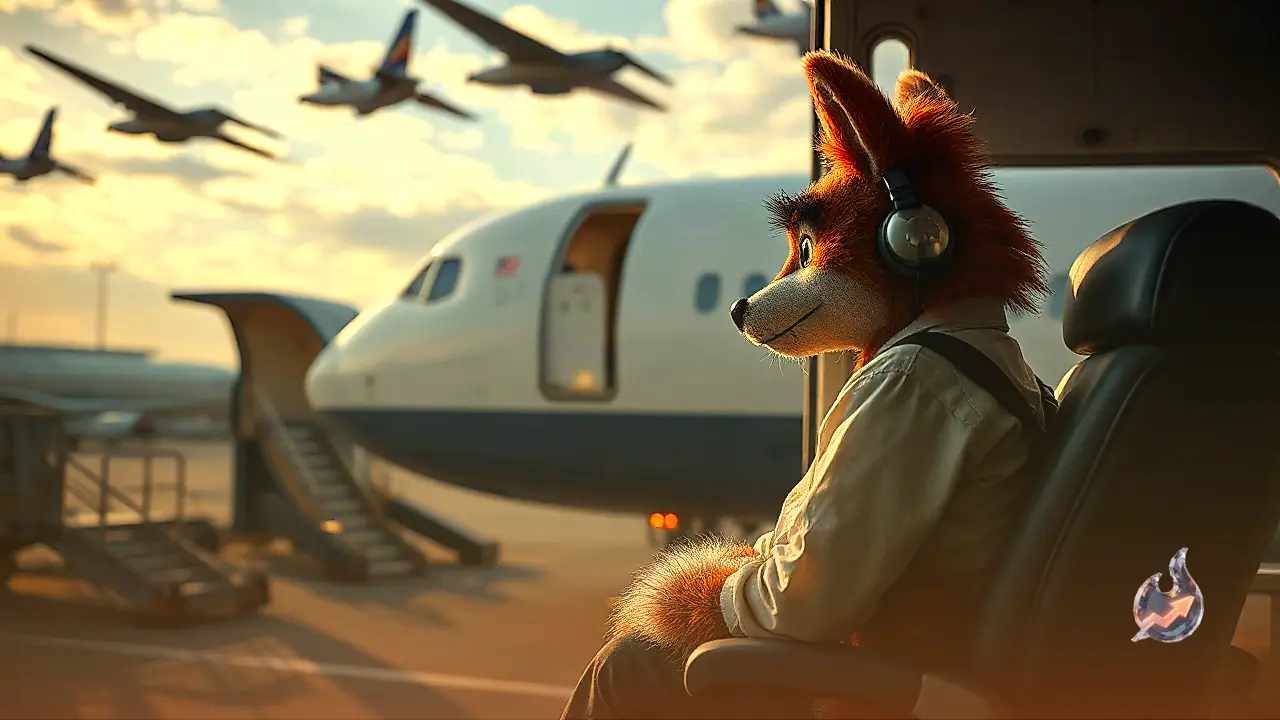
Toby, a licensed flight instructor who has managed a flight training academy for eight years, acknowledged that this overlap is a frequent subject of conversation among peers. Identifying within the fandom through a wolf fursona—a term denoting an individual's animal-inspired alter ego—Toby actively observes the subculture's vocational trends. Similarly, an airline captain named Vulan, who flies for a major carrier in the United States, uses they/them pronouns, and adopts a fox persona, coordinates an active digital messaging group catering specifically to aviation professionals within the community. Vulan notes the existence of nearly a dozen comparable networking groups across the industry, describing the strong presence of aviation personnel as a recognized dynamic within the fandom.
Scale and Workplace Boundaries in Aviation
Because of social stigma and an absence of comprehensive demographic surveys, precise employment statistics regarding the fandom remain unavailable. Nonetheless, communal events demonstrate considerable interest in aeronautics. Toby regularly organizes aviation panels at large furry conventions, reporting that these discussions routinely draw substantial crowds, with recent sessions exceeding 400 attendees. While diverse animal archetypes participate, Toby noted that commercial pilots often gravitate toward avian personas.
Personal accounts from ground operations reinforce these observations. A former employee who worked for four years at an airport retail kiosk recalled encountering several colleagues within the community, including a baggage handler who sported a tattoo of his fursona. The general consensus remains that while some individuals are more open than others, the majority maintain strict discretion regarding their private passions.
Vulan confirmed knowing of at least 40 self-identified furries within their own airline alone, encompassing roles from cockpit crews to ramp agents and air traffic controllers. However, they emphasized that such personal interests are never introduced into the professional sphere. Operating with a clear boundary between home and career, workers understand that private creative pursuits have no bearing on job performance, just as colleagues in any other field separate their family or leisure time from duty.
Examining the Crossover: Fiction, Mechanics, and Mindsets
Cultural observers and fandom figures have analyzed why aviation holds such appeal for this specific community. Patch O'Furr, who serves as editor-in-chief of the dedicated outlet Dogpatch Press, explains that a broad intersection exists between the fandom and transit enthusiasts. Because the subculture centers on expansive worldbuilding and imaginative roleplay that transcends typical boundaries, it frequently attracts individuals who possess intense, detail-oriented interests.
Fictional media from formative years also played a foundational role for many current pilots. Members frequently cite memorable animated characters as the original catalyst for their aviation ambitions, such as the anthropomorphic pilot protagonist—half human, half pig—in the 1992 Hayao Miyazaki animated feature Porco Rosso, which translates to red pig in Italian, or the aviator bear Baloo from the 1990s Disney animated series TaleSpin. These cultural touchstones inspired early curiosity about flight mechanics and aeronautical careers.
Additionally, observers point out the prevalence of neurodivergent members within the community, whose focused interests often align with the rigorous technical demands of aviation. However, obtaining and maintaining pilot certification from the Federal Aviation Administration entails strict medical examinations, where neurodevelopmental conditions such as autism or ADHD often present formidable regulatory hurdles that aspiring pilots must clear.
Shared Lifestyles and Professional Realities
A further parallel between the two worlds lies in the mobile lifestyle required by both. Fandom enthusiasts frequently travel across the country throughout the year to attend specialized conventions, cultivating an affinity for frequent transit. As Toby observed, aviation is viewed by its practitioners not merely as standard employment but as a dedicated vocation. The analytical mindset and passion demanded by complex technical operations naturally mirror the deep dedication found within enthusiast subcultures.
The broader subculture has experienced recurring political scrutiny in recent years, often utilized as a talking point within broader cultural debates. In 2024, political commentator Megyn Kelly circulated false claims regarding students exhibiting disruptive animalistic habits at a middle school in Utah, sparking protests that subsequently resulted in bomb threats against the institution. In 2022, an elected Republican lawmaker was compelled to issue a public apology after propagating an unfounded rumor alleging that public classrooms were providing litter boxes for students identifying with animal personas.
Senator Tuberville's remarks arrived against the backdrop of approaching midterm elections, leading commentators to view the comments as an effort to revive cultural anxieties. Nevertheless, public reaction leaned overwhelmingly toward amusement rather than alarm. Within aviation networking chats, pilots dismissed the controversy with humor. Emphasizing the division between their roles, Vulan noted that donning a bulky costume inside a commercial cockpit would be physically impossible due to severely restricted visibility, reiterating that professional focus and safety remain absolute priorities on every flight.