






















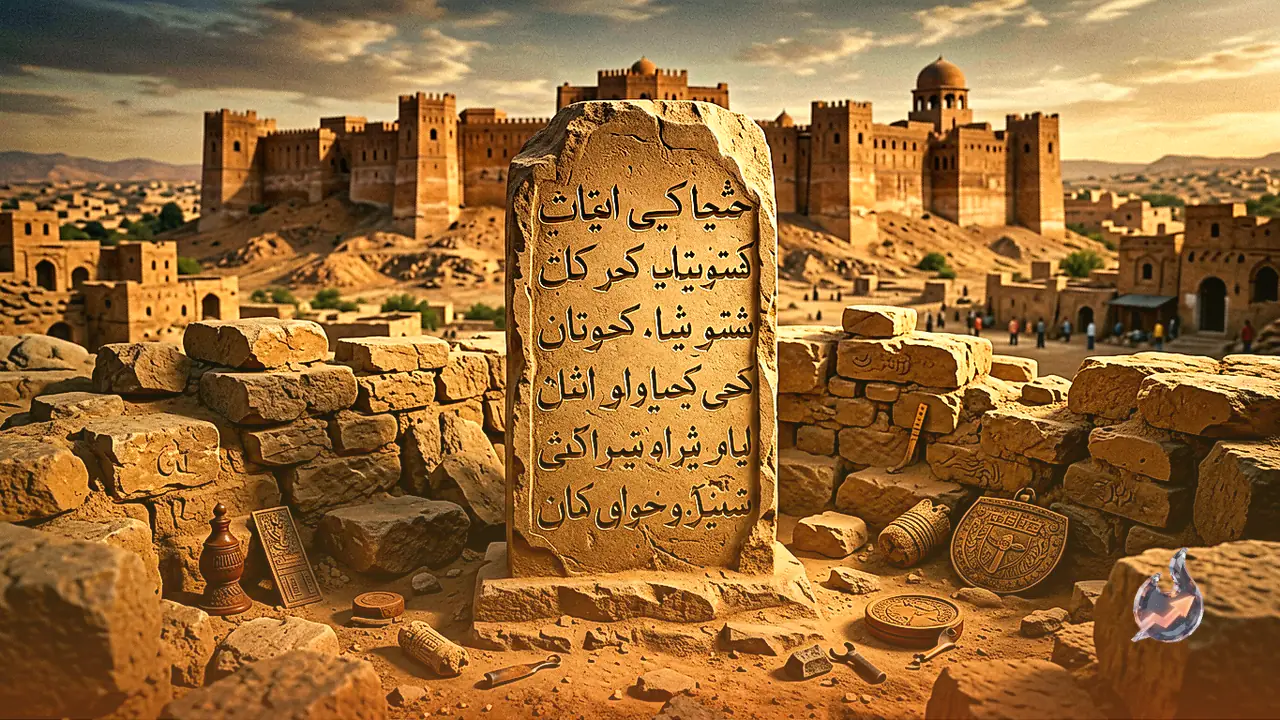

Archaeologists have uncovered a significant historical artifact within the historic Golkonda Fort in Hyderabad. The discovery features a rare bilingual inscription pillar, standing nearly two feet tall, retrieved from a heap of stones in an area that once housed the fort’s camel stables. Originating from the 16th-century Qutb Shahi era, the stone block contains carefully carved inscriptions in both Persian and Telugu. This structural find offers fresh insight into the linguistic harmony and administrative traditions of the medieval Deccan region.
Discovery in the Former Camel Stables
Teams from the Archaeological Survey of India (ASI) identified the carved pillar while clearing a mound of debris in the section of Golkonda Fort previously utilized as camel stables. The short pillar measures approximately two feet in height and displays traditional symbols of the Sun and Moon etched across its upper section. Experts note that these celestial engravings closely align with the decorative and epigraphic traditions of the Vijayanagara Empire and regional Telugu inscription styles.
Administrative Decree from Ibrahim Quli Qutb Shah
According to historical expert Akmal, analysis of the text dates the pillar to the reign of Ibrahim Quli Qutb Shah, the fourth monarch of the Qutb Shahi dynasty who ruled between 1550 and 1580. Historians believe the bilingual text functioned as a public administrative order issued for civil welfare. During that era, rulers erected multi-script pillars so that official decrees could be effectively communicated to local communities while according formal dignity to the Telugu language in governance.
Royal Patronage for Telugu Literature and the Name Ibhram
Ibrahim Quli Qutb Shah was widely recognized as a major patron of regional languages and vernacular literature. Throughout his reign, scholars and Telugu poets received prominent state patronage and honor within the royal court. In appreciation of his governance and encouragement of literature, contemporary Telugu poets affectionately referred to the monarch as Ibhram, a title preserved across several poetic compositions from that period.
Preservation at the ASI Office and Historical Significance
The historical artifact has been safely relocated and installed for public display at the ASI office complex inside the Golkonda Fort premises. Historians and archaeological scholars emphasize that finding such intricate carving involving multiple scripts on a single stone structure is exceptionally rare today. Beyond its physical form, the pillar stands as enduring proof of Hyderabad's Ganga-Jamuni tehzeeb, peaceful coexistence, and rich literary heritage, highlighting the importance of conserving it for future generations.