























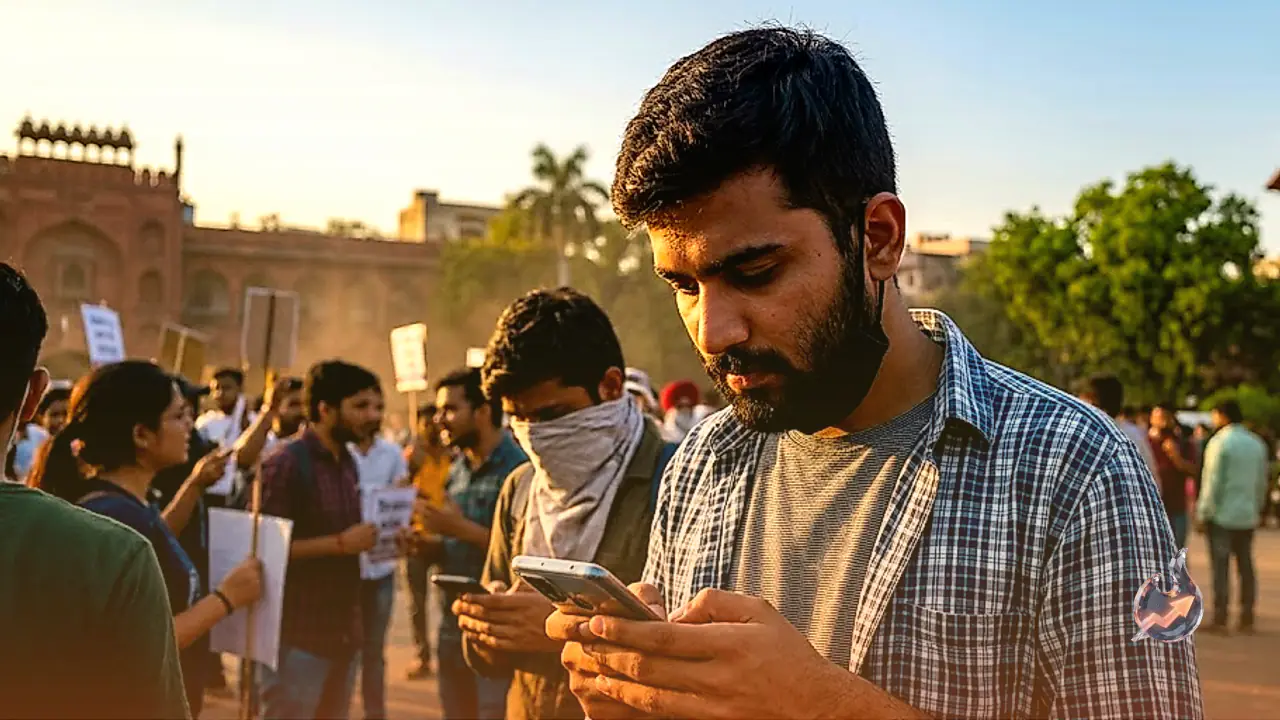

An ongoing investigation into the recent violent protests at Delhi's Jantar Mantar has revealed a shocking new dimension to the unrest. Police inquiries have uncovered that the rioters did not just rely on conventional methods to gather crowds and incite violence; instead, a highly sophisticated plan was set in motion long before the chaos erupted. According to authorities, anti-social elements embedded within the crowd during the Parliament march had a comprehensive strategy prepared for both the lead-up to the violence and its aftermath. The most startling discovery is that when the situation deteriorated and internet services were suspended, the agitators seamlessly transitioned to using a specialized messaging application. Through this technology, they maintained continuous contact with one another offline, completely evading the radar of security agencies and intelligence forces.
How Offline Bluetooth Communication Fueled the Clashes
For investigating agencies, one of the most perplexing questions was how the protesters managed to coordinate their movements so precisely when mobile data in the area had been completely shut down. The probe has now clarified that the rioters utilized a specific Bluetooth-based application. These types of apps are designed to function effectively without any active mobile network or Wi-Fi connection, allowing users to create a localized mesh network. The protesters leveraged this Bluetooth technology to exchange critical messages during their violent confrontation with the police force during the Parliament march. In response to this revelation, law enforcement officials are now preparing to formally request detailed information from the developers and service providers of these specialized apps in order to expose the full scale of the conspiracy.
Shifting Tactics: From WhatsApp to Offline Apps
The investigation has also traced the digital footprint of the March 20 Parliament march, which was originally announced by CJP. Police findings show that conventional internet platforms were actively used in the initial phases of the planning. WhatsApp groups were extensively utilized to mobilize thousands of people and bring them to Jantar Mantar. However, the strategy quickly adapted to the circumstances on the ground. As soon as the march turned violent and the administration preemptively shut down internet access, the rioters immediately switched tactics. They activated the pre-downloaded Bluetooth application, allowing them to bypass the internet blackout and continue sharing real-time updates about police deployments and their own subsequent movements.
Over 100 Police Officers Injured, 150 Videos Under Scrutiny
The March 20 demonstration saw thousands of individuals taking to the streets, but the massive gathering quickly degenerated into severe violence. Relentless stone-pelting and coordinated attacks by the rioters left more than 100 police personnel grievously injured. Now that the immediate situation has been brought under control, the police have registered multiple FIRs under various sections of the law to hold the perpetrators accountable. To ensure that the actual culprits are identified, investigation teams are currently analyzing approximately 150 viral videos captured during the unrest. Authorities are using this footage to pinpoint the exact faces of those directly involved in throwing stones and those who aggressively misbehaved with the deployed security forces. By matching these visual records with the digital trail of the offline apps, investigators hope to bring the masterminds of the violence to justice.