























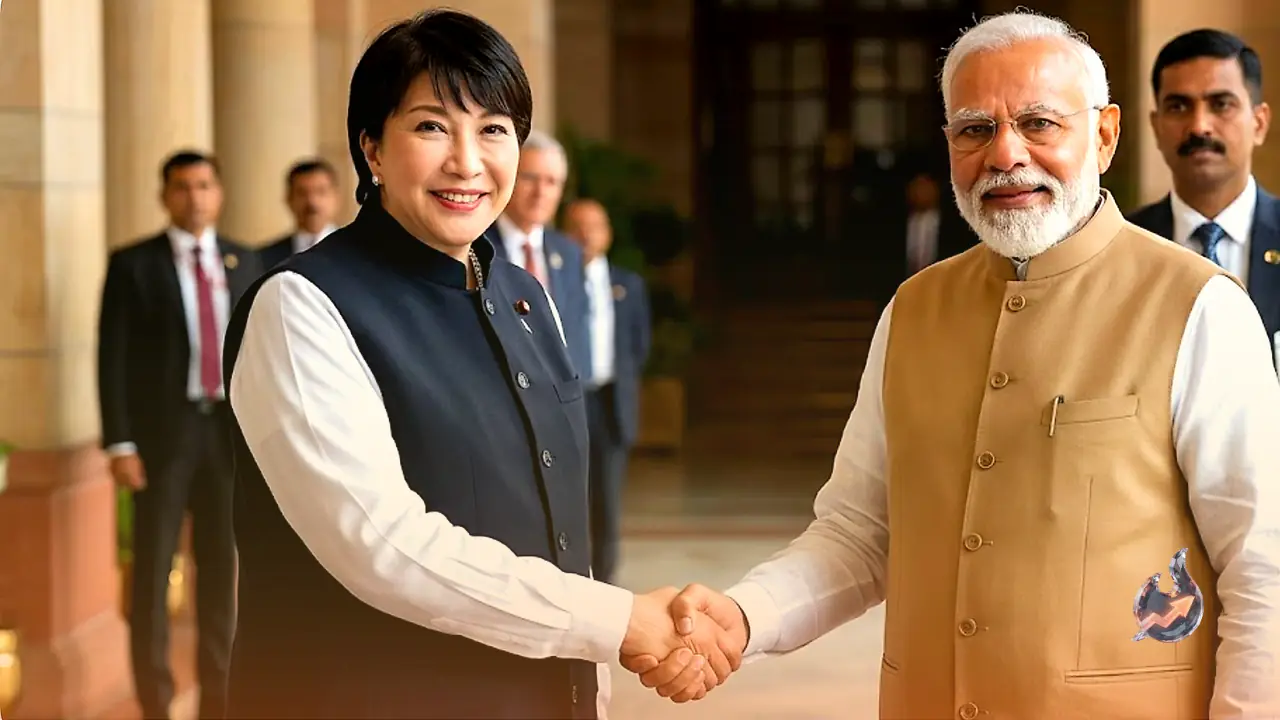

Two of Asia's key power centres are set for a high-stakes meeting in New Delhi today, one that capitals from Beijing to Washington will be watching closely. Japanese Prime Minister Sanae Takaichi is in the Indian capital on her first three-day visit to India, and her talks with Prime Minister Narendra Modi on Thursday mark the start of the India-Japan summit. This is being seen as far more than a ceremonial exchange: the agenda includes a firm strategy to counter China's regional influence and an ambitious plan to position India as a major global manufacturing hub. Economic security, cooperation on semiconductors and strengthening the QUAD grouping are expected to dominate the conversation, with the outcome likely to shape the broader geopolitics of the Asia-Pacific region.
Economic security takes centre stage
Economic security is expected to be the single biggest theme of this historic meeting. Following the coronavirus pandemic and recent global tensions, both India and Japan have been working to reduce their dependence on China and build a more resilient and secure global supply chain. Modi and Takaichi are expected to finalise a detailed roadmap covering Japanese investment and technology transfer for semiconductor manufacturing in India. The two countries are also set to collaborate on securing supplies of critical minerals needed for future technologies.
QUAD commitment and Indo-Pacific strategy
On the geopolitical front, the two leaders are expected to reinforce their strategic response to Chinese assertiveness in the Indo-Pacific region. The summit will see both nations reaffirm their commitment to the QUAD alliance. Discussions will also focus specifically on expanding defence cooperation between the two navies, with the goal of tightening maritime security and keeping trade routes at sea free and open.
Over 100 Japanese companies join the visit
A major highlight of the visit is the India-Japan Joint Economic Forum, which is drawing business leaders and CEOs from more than 100 top Japanese companies. Big steps are expected to boost private investment in sectors such as defence, pharmaceuticals and oil and gas, a push that is expected to generate fresh jobs and draw in significant global investment for India.