




















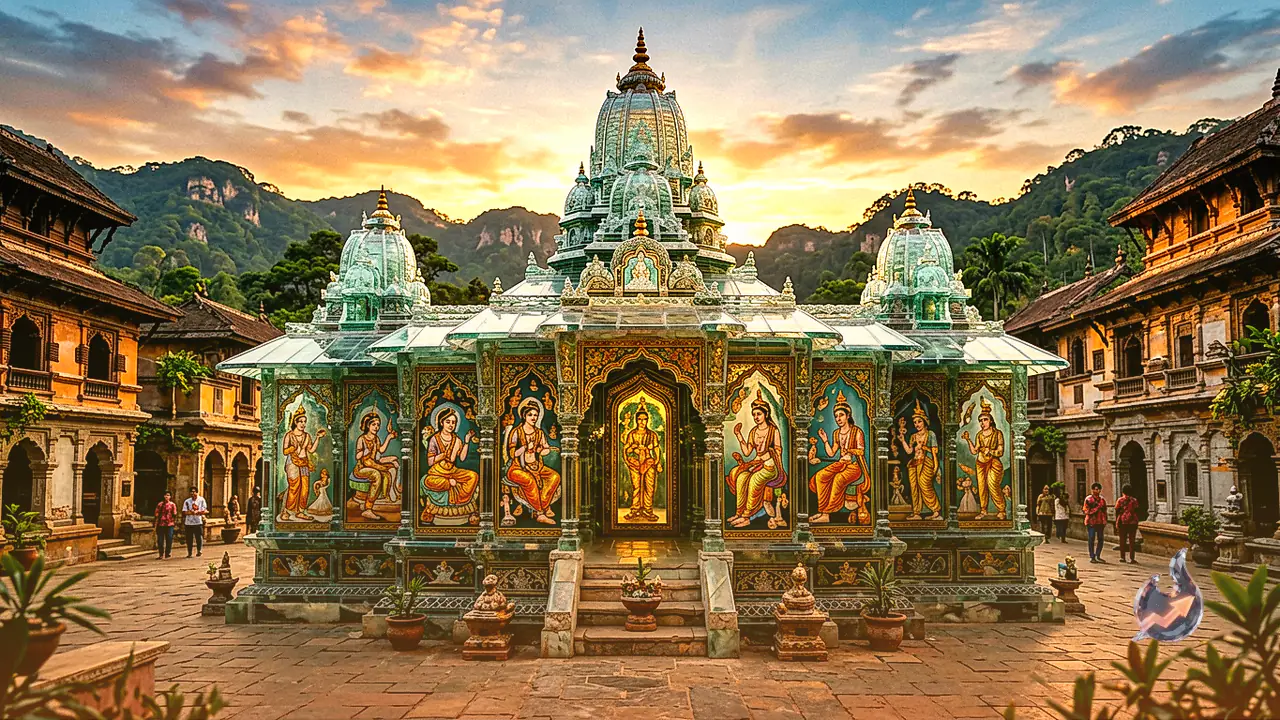

Chitrakoot, a revered holy town associated with the divine deeds and penance of Lord Shri Ram, serves as a prominent pilgrimage destination for devotees across India. Among the numerous temples and sacred sites located in this region, the Glass Temple situated within the Tulsi Peeth Seva Nyas complex holds a unique position due to its distinct architectural style, religious significance, and artistic elegance.
Glass Architecture and Artistry Depicting the Ramcharitmanas
The primary highlight of this temple lies in its intricate glass craftsmanship. The windows and entrance doors of the structure are constructed entirely out of glass. Inside the temple, the walls feature delicate glass paintings that vividly illustrate several pivotal events from the sacred epic Ramcharitmanas. These detailed artworks capture the immediate attention of visitors, bringing ancient spiritual narratives to life through reflective media.
Grand Deities and the Sacred Legacy of Bharat Milap
Upon entering the temple premises, devotees are greeted by grand idols of Lord Shri Ram, Goddess Sita, and Lord Laxman. Flanking these central figures, an idol of Lord Hanuman is installed on one side, while an idol of Maharishi Valmiki stands on the other. Viewing these sacred images provides a deep sense of spiritual tranquility to pilgrims. Tradition holds that Chitrakoot is the sacred ground where Lord Shri Ram entrusted his holy wooden sandals, or charan paduka, to his brother Bharat. Bharat had traveled to Chitrakoot to persuade Lord Ram to return to Ayodhya, an event commemorated as an eternal symbol of devotion and brotherhood.
Ceiling Artworks and the Prismatic Play of Sunlight
The aesthetic appeal of the temple extends to its ceiling, which features colorful glass carvings depicting divine incarnations and themes related to Lord Shri Ram. The most captivating sight occurs when natural sunlight passes through the stained glass windows and ceiling designs. As rays filter through, the interior of the temple illuminates in a spectacular display of multicolored light. This striking visual spectacle makes the Glass Temple at Tulsi Peeth a major attraction for visitors, who often record the glowing interiors on their cameras.